Get 10 free trees with your membership contribution. GET STARTED

How to Ready Your Trees Before Storm Season
A little prevention now can help protect your trees, and your property, when storms arrive.
May 5, 2026
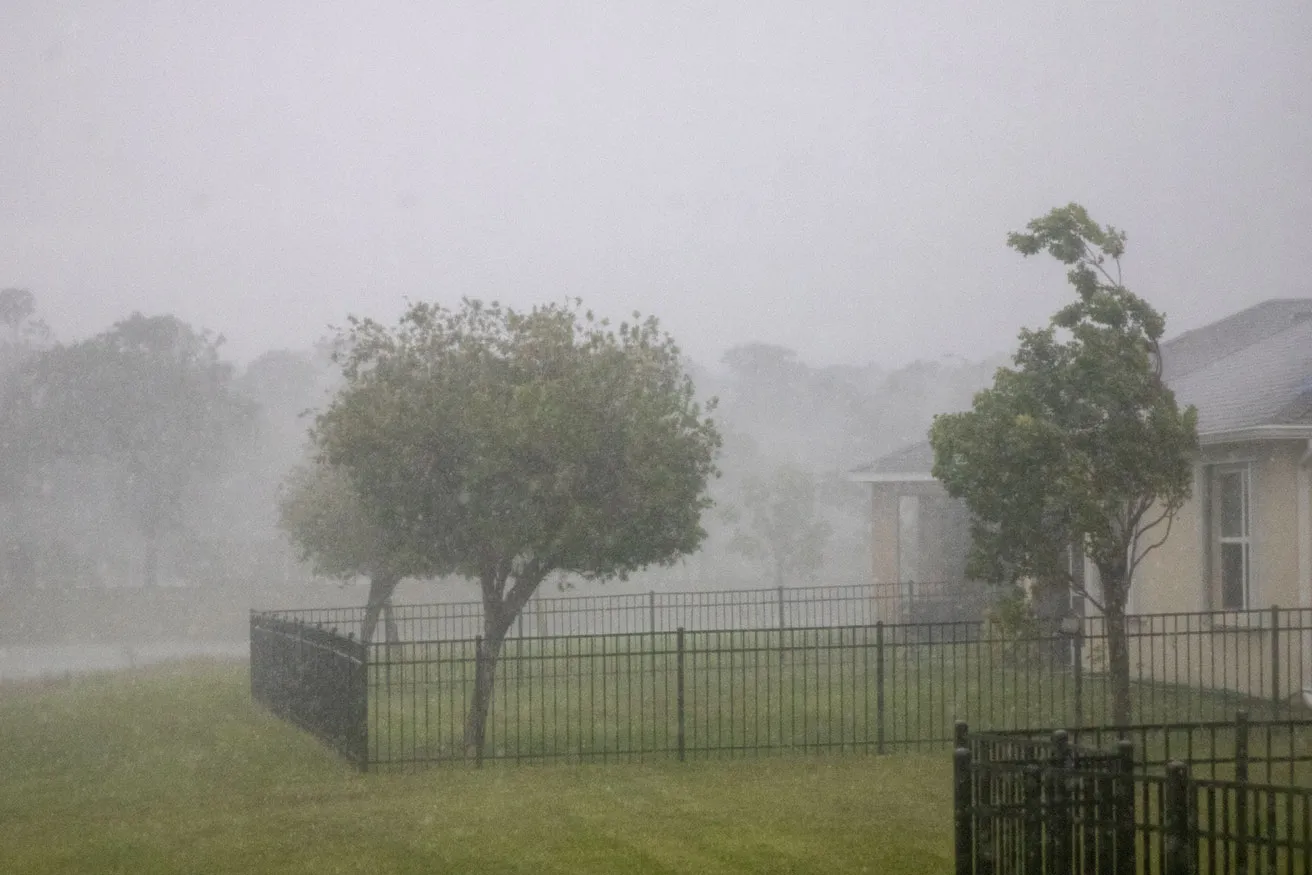
Storms are inevitable, but tree damage doesn’t have to be.
Strong winds, heavy rain, and lightning are part of summer in many places. While you can’t stop the weather, you can take steps to help your trees weather the storm. A little preventative care now can reduce the risk of broken branches, property damage, and costly cleanup later.
START WITH A PROFESSIONAL INSPECTION
Trees growing near homes, driveways, or other structures should be inspected regularly by an arborist who is certified by the International Society of Arboriculture (ISA), especially before storm season arrives.
A trained arborist can evaluate a tree’s structure and potential risk factors that might not be obvious from the ground. Regular inspections help catch small issues before they become major problems during severe weather.
REMOVE DEAD OR DISEASED BRANCHES
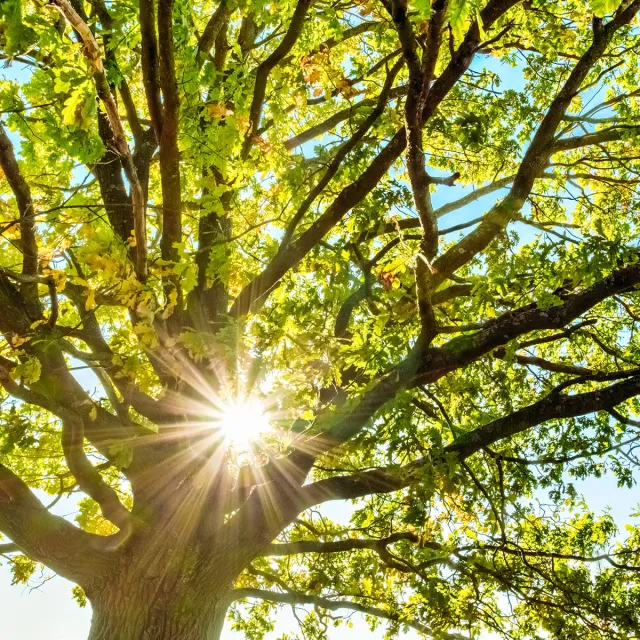
Dead or declining branches are more likely to snap during storms. Pruning these limbs ahead of time can significantly reduce the chance of damage to your tree or nearby structures. Removing weakened branches also helps direct a tree’s energy toward growth.
WATCH FOR STRUCTURAL WEAKNESS
Some branches are prone to failure because of how they grow. Poor branch structure, cracks, or multiple trunks competing for space can create weak points in the tree’s structure. In some cases, arborists can install support systems such as cabling or bracing to stabilize vulnerable limbs and reduce the risk of storm-related breakage.
CONSIDER LIGHTNING PROTECTION
Large, mature trees that serve as focal points in the landscape may benefit from lightning protection systems. These systems help safely redirect lightning strikes into the ground, protecting the tree from severe damage.
An ISA Certified Arborist® can determine whether lightning protection is appropriate and install the system properly.
KNOW WHEN TO DIY AND WHEN TO CALL AN EXPERT
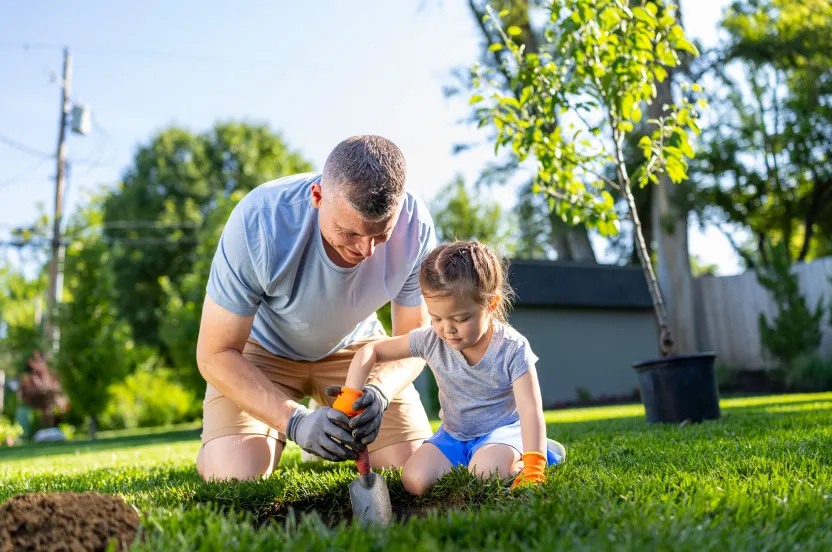
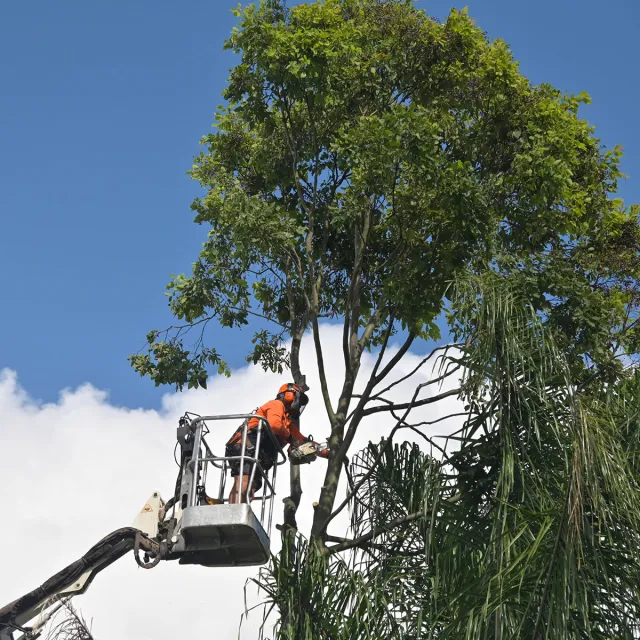
Homeowners can safely prune small branches from small or young trees using the three-cut pruning method to prevent tree damage. But if the job requires pruning above your head, power equipment, or a chainsaw, it’s best to bring in a professional arborist. Proper pruning protects both the tree and the person doing the work. As a general rule, avoid removing more than about one-quarter of a tree’s living branches in a single season.
TIME YOUR PRUNING CAREFULLY
While pruning can happen throughout much of the year, some tree species have seasonal restrictions due to pests or diseases. Oaks, for example, are vulnerable to wilt, and pruning during oak wilt season can attract the insects that carry the disease. Before pruning, check whether your tree species has recommended timing guidelines in your area.
A LITTLE PREVENTION GOES A LONG WAY
Storm-proofing your trees isn’t about making them risk-free; it’s about developing good structure for a stronger and more resilient tree when rough weather arrives. And often, a little attention today can save a lot of damage tomorrow.