The AP’s Peter Prengaman talks news and hope in Unearthing Optimism. LISTEN NOW

The Trees That Made Altadena Home
After wildfire transformed their hometown, two sisters are helping Altadena rebuild and reconnect.
October 1, 2026
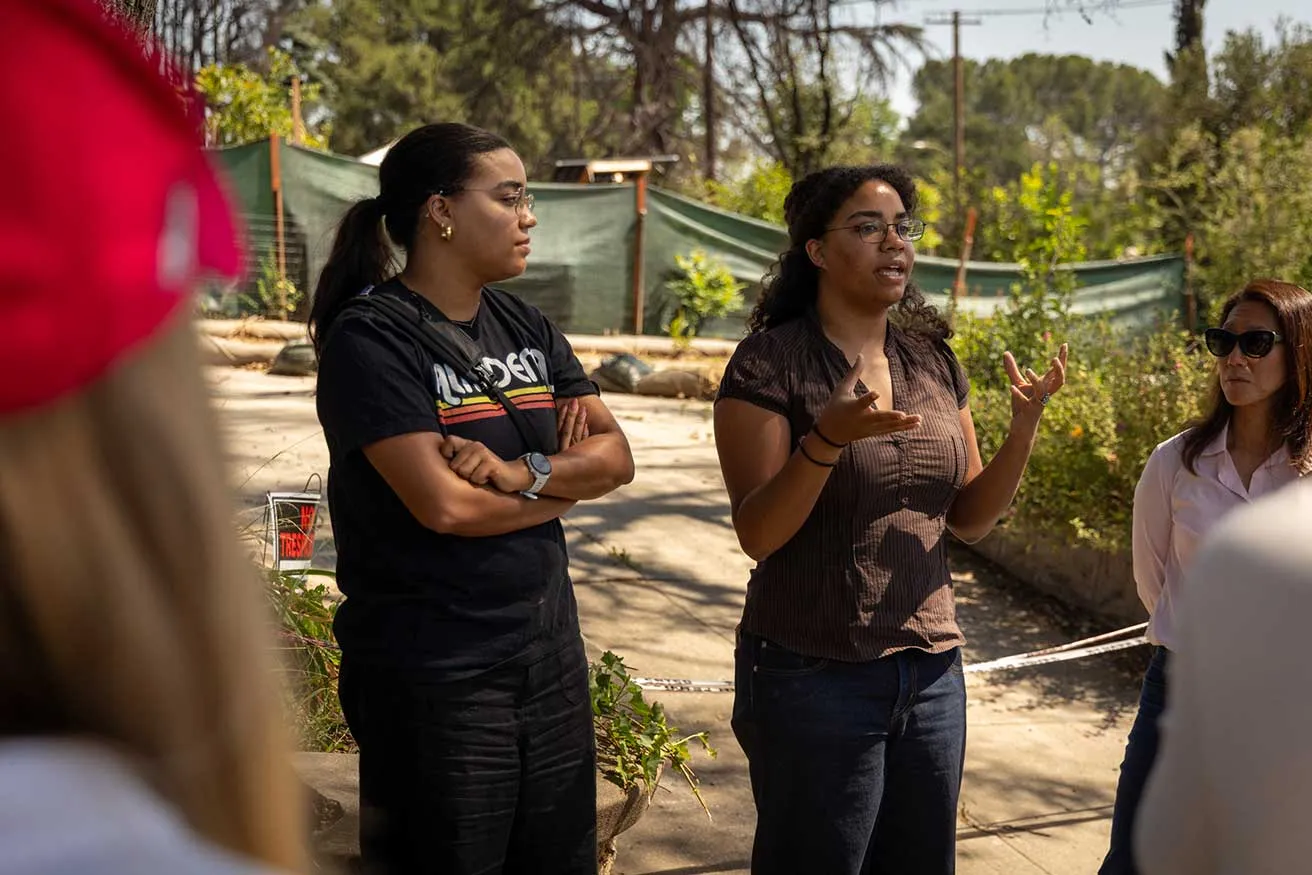
The loss of thousands of trees has left a visible mark on Altadena. For Lu and Mona Patterson, restoring the landscape and preserving what makes this community special are part of the path forward.
For twin sisters Lu and Mona Patterson, Altadena has always been home.
Their family has been part of the Southern California community for decades. As children, the sisters spent their days biking, playing with neighbors, making mud pies and collecting roly-polies. Their mother, an avid gardener and camper, helped nurture their appreciation for the natural world.
“Being able to live in an urban city where you have a bunch of trees, and you have coyotes, bears, and bobcats, and a bunch of different animals — it really just made a magical world to grow up in and made me really curious about this landscape,” Mona says.
Trees were woven into everyday life, too. Neighbors shared the fruit from their trees, and buckets of free oranges and lemons were a familiar sight around the close-knit community. For the sisters, that abundance was part of what made Altadena feel rooted. Many families had lived there for generations, creating a community that Lu describes as warm, artistic, and deeply connected.
“There was such so much life in Altadena that expanded for so many generations,” she says. “And it felt like people were really rooted in place.”
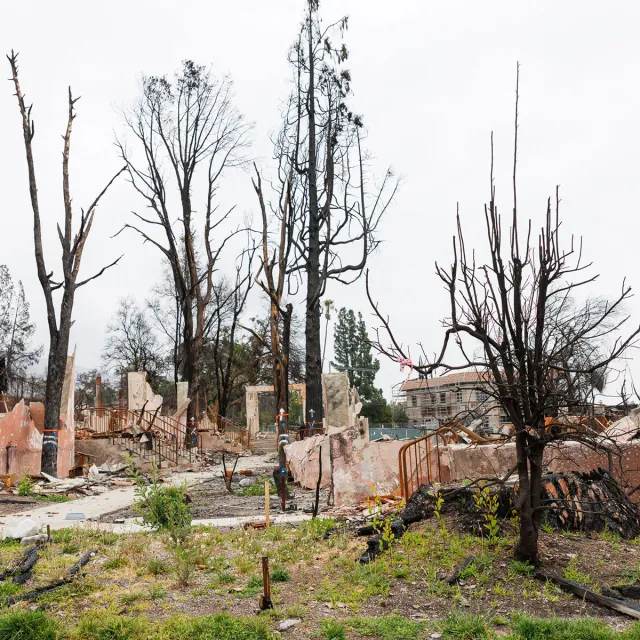
Then, in January 2025, the Eaton Fire tore through Altadena, burning more than 14,000 acres and destroying more than 9,400 structures, including thousands of homes.
Neither Lu nor Mona was in town that night, but their parents and grandmother were. Their family homes were destroyed, along with belongings and memories collected over decades. Their family’s home has since been rebuilt, but returning to Altadena has meant confronting a landscape, and a sense of permanence, that has fundamentally changed.
“Before the fires, it was so green,” Lu says. “Altadena is so unique because it’s a minority community that is nestled beneath this tree canopy, and that's so rare to find within L.A. County or the wider Southern California area.”
Driving through Altadena today, the loss of that landscape is impossible to miss. For Lu, the missing trees represent more than the disappearance of a familiar view. They are a visible reminder of everything else the fire disrupted: homes, belongings, memories, and the history that made the community feel secure.
"One of the biggest things that’s noticeable is the loss of the trees, [and the] fear of that generation being gone. How do you repair that?"
REBUILDING MORE THAN A LANDSCAPE
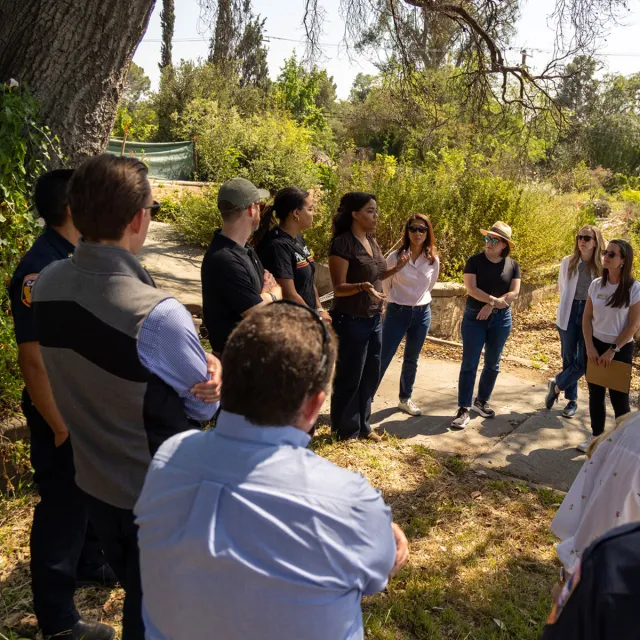
In the months since the fire, the sisters have each found ways to contribute to Altadena’s recovery, drawing on their individual passions, skills, and connections.
Their efforts are part of a broader network of organizations working to restore Altadena's urban forest. Through its disaster recovery work, the Arbor Day Foundation is supporting long-term replanting efforts and collaborating with community-led partners such as Altadena Green to help ensure recovery reflects the needs and vision of local residents.
Through Altadena Green, Lu has helped with tree assessments and connected residents with resources as they navigate recovery and think about the future of their neighborhood’s urban forest.
Mona helped launch the Altadena Tree Stories Project, documenting the memories and connections residents have with the trees that shaped their lives.
Together, their work reflects a shared belief: rebuilding Altadena is about more than replacing what was lost. It is about understanding what made the community special in the first place and carrying those qualities forward. It also means thinking carefully about what trees belong in Altadena’s future.
“We are living in a time of rapid change,” Mona says. California is getting hotter, precipitation and water storage are changing, and communities are increasingly exposed to extreme heat and wildfire. That makes restoring an urban forest about much more than making a neighborhood look green again.
“It’s really important, not just that we say, ‘Oh, we want to plant trees because it looks pretty,’ but that we actually look at the science and take the effort to know the right trees to plant in a community,” Mona says. That includes understanding what residents want, looking at the landscape’s history, and considering which trees are suited to the place and its future.
As Altadena rebuilds, the trees planted today will become part of the community’s future — providing shade, cleaner air, and cooler temperatures while helping reconnect residents with the landscape that has long defined home.
“To ensure that we have clean air and cooler temperatures, it's important that we really care about the natural landscape of the communities that we're living in, especially when they go through ecological disasters like this,” Mona says.
LEARNING FROM FIRE
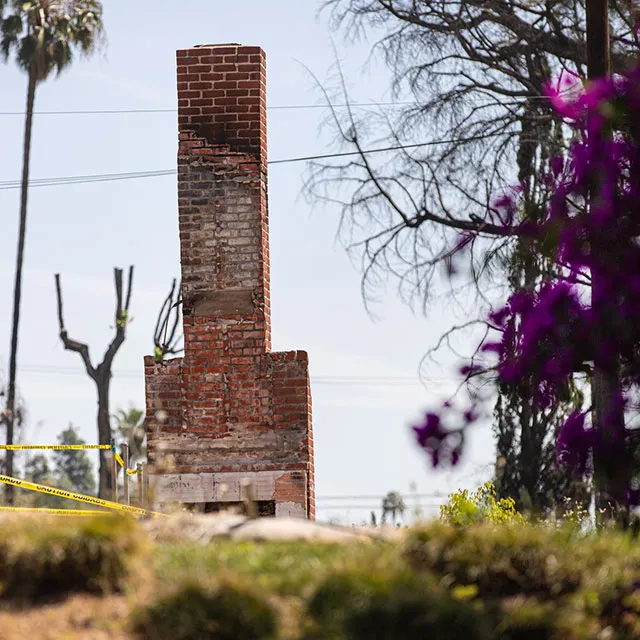
The sisters’ experience has also changed the way they think about wildfire and recovery. Lu, who studied landscape architecture in Berkeley, says she has come to think differently about fire’s role in natural ecosystems. Some landscapes, including California’s redwood forests, have evolved alongside fire and depend on it as part of their ecological cycle.
“For so long, just as a society, we've seen fire as something negative and something that we should be scared of,” Lu says. “When in reality, trees have adapted for centuries to repair themselves after fire.”
That perspective raises complicated questions for communities like Altadena, where wildfire intersects with homes, infrastructure, and an urban landscape.
“We really don't know how fire works in urban settings,” Lu says.
For her, recovery is an opportunity to ask those questions and to think intentionally about what comes next.
COMING BACK TO COMMUNITY
The physical work of rebuilding is only one part of recovery. For the Patterson family, the fire also disrupted a sense of security and identity tied to the belongings and places that had been part of their lives for generations.
“Just rebuilding your home, but then all the other things that come with that, like losing your connection to your community, to losing your connection to security,” Mona says. “When you have everything — for my parents, their belongings from their whole entire life growing up — lost, what does that do to your identity? To your sense of self?”
That experience has reinforced something the sisters already knew about Altadena: its greatest strength has always been its people.
“Coming back to Altadena is such an individual experience and a family experience,” Lu says. “But I think we often forget that our neighbors are also going through this and that Altadena as a whole is going through this. And it’s so important to build back with community.”
Mona saw that firsthand in the aftermath of the fire.
“When you go through something like this and you don't have anything, the only people you can lean on are those in the community and share the resources,” she says. “I think that is the biggest takeaway that I've had from this whole thing — just how important community is.”
Everyone in Altadena experienced the fire, Mona says, even though each person experienced it differently. That shared experience has created new connections among neighbors, businesses, and community organizations. And those connections are part of what gives the sisters hope.
PLANTING FOR WHAT COMES NEXT
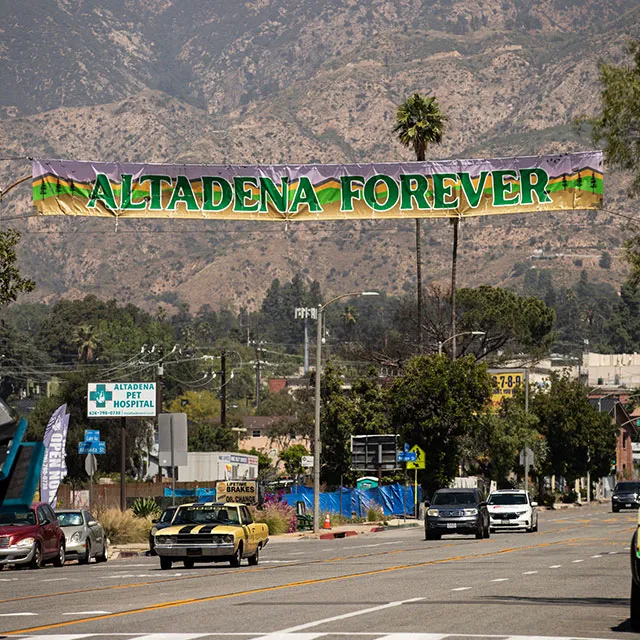
For Lu, returning to Altadena has brought grief for the landscape she remembers — but also a desire to help create it again.
“It was like my little piece of that nature back home is gone,” she says. “But also feeling super inspired to rebuild that and have those experiences again.”
That spirit runs through the sisters’ work. Their approaches are different, but their purpose is shared: to help Altadena recover not simply by replacing what was lost, but by strengthening the connections between people, place, and nature.
And as they look toward the future, they find hope in the people doing that work alongside them.
“What keeps me hopeful is the people, my fellow Altadenians, all of the community organizations that are supporting,” Mona says. “When you see how people are actually still supportive of each other and they're still there to support you, it just makes me think about how I want to show up in my life.”
The trees that made Altadena home may take years to grow back. But already, Lu and Mona are helping their community rebuild by caring for the landscape, supporting their neighbors, and imagining what comes next.
Help people and places recover
Give today to support restorative tree planting in the months, years, and decades following natural disasters.