New on Unearthing Optimism: Growing resilient communities starts with trees. LISTEN NOW

How to Care for Evergreen Trees in Winter
A few simple steps can help your evergreens stay healthy and resilient through the coldest months.
November 11, 2026
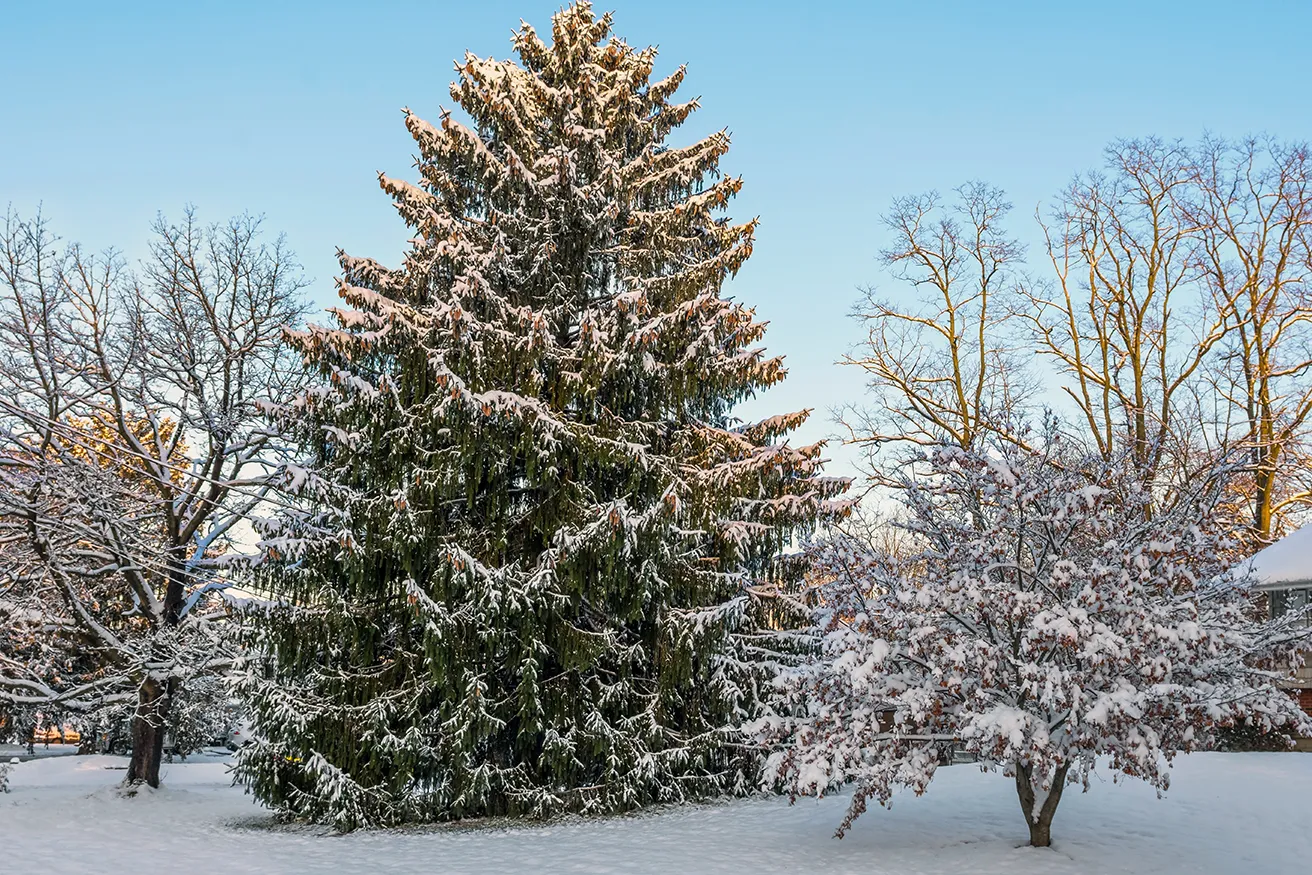
Evergreens may make you think of Christmas, but their value extends well beyond the holiday season. From spruces and pines to junipers and cedars, evergreen trees and shrubs bring year-round beauty to the landscape while providing shelter and habitat for birds and other wildlife.
Because evergreens hold onto their foliage throughout the year, they face some unique challenges when temperatures drop. A little extra attention in fall and winter can help protect them from stress and keep them healthy until spring.
KEEP WATERING UNTIL THE GROUND FREEZES
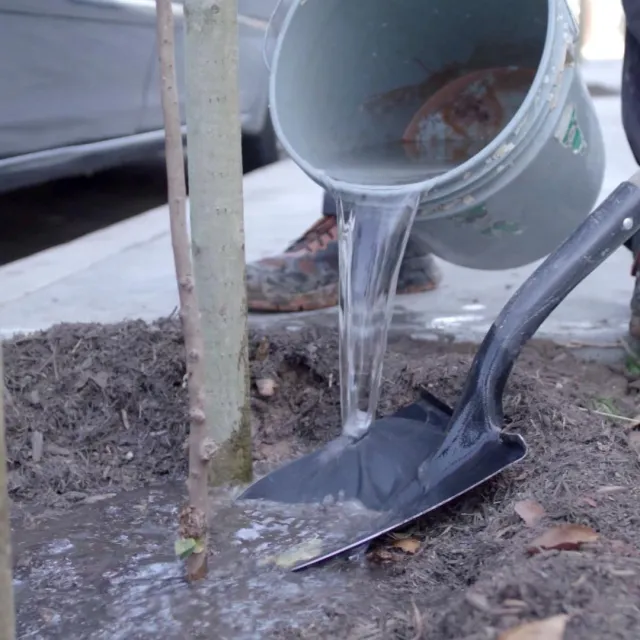
Evergreens continue to lose moisture through their foliage during winter, making adequate water especially important in fall and early winter. During dry periods, give your evergreens a thorough watering and continue until the ground freezes. Avoid frequent, shallow watering, and pay particular attention to newly planted evergreens, whose developing root systems make them more vulnerable to dry conditions.
DON’T PANIC IF EVERGREEN FOLIAGE CHANGES COLOR
Not every winter color change is a cause for concern.
Evergreen foliage, particularly on plants such as junipers and cedars, can take on reddish or bronze tones during winter. This natural response can help protect foliage when temperatures are freezing and water is less available.
Brown needles or foliage, however, are different. They indicate that the affected foliage has died. If you notice browning during winter, resist the urge to prune right away. Wait until spring, when you can better see which branches and foliage are still healthy before removing damaged growth.

PROTECT SMALL EVERGREENS FROM WILDLIFE
Winter can be a challenging time for small trees and shrubs — not just because of cold temperatures, but because hungry wildlife may turn to them for food. Rabbits and other small animals can browse on young evergreen plants when other food sources are scarce. A simple barrier made from hardware cloth or another type of small-gauge wire fencing can help keep them away. Place the fencing around the plant, leaving enough space between the barrier and branches so animals can’t easily reach the foliage.

PROTECT EVERGREENS FROM SUN, WIND, AND SALT
Winter sun, drying winds, and road salt can all contribute to damage, particularly for evergreens growing in exposed locations. A shade wrap can help protect foliage from these conditions. If you use burlap or another breathable material, keep it several inches away from the foliage rather than wrapping it directly around the plant. This allows air to circulate and helps prevent heat from building up around the foliage. For smaller shrubs, consider placing wire fencing around the plant first, then adding a wrap outside the fencing.
A little winter care can go a long way toward keeping evergreens healthy and resilient. By protecting these trees and shrubs through the colder months, you’re helping them continue to provide beauty, shelter, and habitat for years to come.