The AP’s Peter Prengaman talks news and hope in Unearthing Optimism. LISTEN NOW

Your Top Tree Planting Questions, Answered
Plant with confidence using science-backed answers to the tree planting questions people ask most.
February 20, 2026
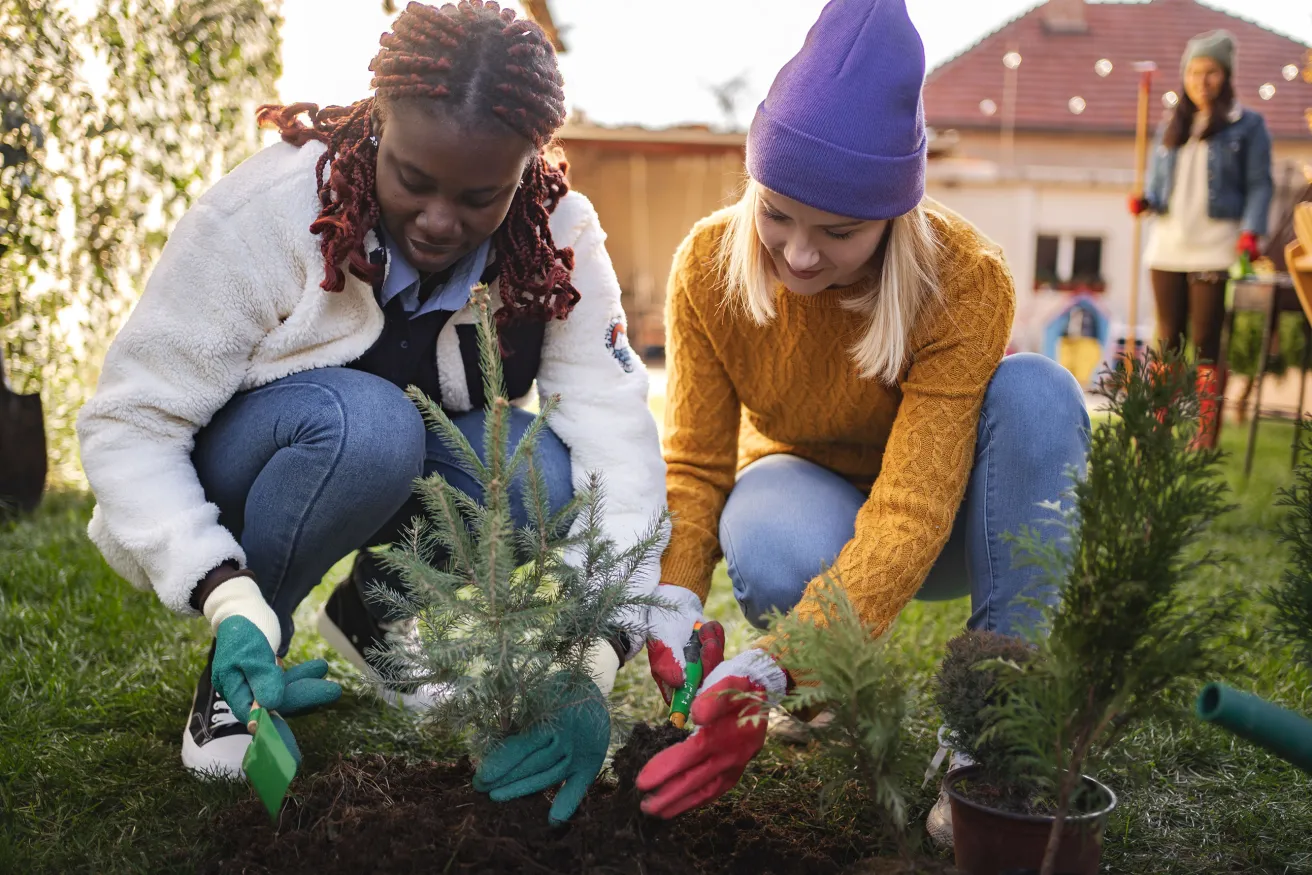
Planting a tree is one of the most impactful things you can do for your home and the planet, but it also comes with questions. When should you plant? What should you plant? How deep should the hole be? How much water is enough?
Whether you’re planting your first tree or adding to an established landscape, these are the most common tree-planting questions people ask, answered with science-backed guidance to help your tree thrive for generations.
Q: When is the best time to plant a tree?
A: While spring and fall are best for most trees, it’s important to match planting time with your local climate.
Cooler temperatures and consistent moisture give trees time to establish before facing extreme heat or cold. Fall planting may be effective in many regions, but climate matters. In warmer regions, winter planting may be ideal, while colder climates benefit from spring planting once the ground thaws.
Q: How do I choose the right tree for my yard?
A: Choosing the right tree starts with your site. Before planting, it’s important to consider factors like your climate, available sunlight, soil type and drainage, and space at maturity (height and spread). It’s also critical to determine your goal — whether that’s shade, privacy, wildlife, or beauty. Native and climate-resilient trees are often the best choice, as they’re adapted to local conditions and support healthier ecosystems.
Q: How deep and wide should I dig the hole?
A: This is a common (and costly) mistake. Dig the hole 2-3 times wider than the root ball, and no deeper than the root ball itself. The root flare (where the trunk widens at the base) should sit at or slightly above ground level. Planting too deep can suffocate roots and lead to long-term health issues.
Q: Should I add fertilizer when planting a trees?
A: Usually, no. It’s tempting to add fertilizer, but research shows fertilizing newly planted trees can do more harm than good. Unfertilized tree roots will explore the surrounding soil increasing tree resilience. If your soil has drainage issues, you can improve site conditions by adding compost to the top of the planting hole and loosening soil around the planting hole.
Q: How much water does a newly planted tree need?
A: New trees need consistent watering but don’t drown them. General guidance is to water deeply right after planting and continue watering regularly for the first 1-3 years. Be sure to let the soil dry slightly between waterings. Deep, infrequent watering encourages strong root growth; while shallow, frequent watering does the opposite. Pro tip: Pick a day of the week to water, creating a memorable routine (like Watering Wednesdays, for example).
Q: Do I need to stake my tree?
A: Most trees actually don’t need staking. Trees naturally develop stronger trunks and roots when they can move with the wind. Stake only if the tree has a large canopy, is planted in a very windy area, or the root ball is unstable. If staking is necessary, keep the stake loosely tied to the trunk to allow movement and remove stakes within the first year to avoid weakening the tree.
Q: How close can I plant a tree to my house or sidewalk?
A: When planting a tree, spacing matters. A lot. Always plant based on the tree’s mature size, not its current size. Planting too close to structures can lead to root damage, increased maintenance and pruning, and/or branch conflicts with roofs and power lines. When in doubt, give your new tree more room than you think it needs.
Q: Should I mulch around my tree?
A: Yes, mulch helps retain moisture, regulate soil temperature, and protect roots. You should apply a 2-4 inch layer in a wide ring around the tree, never piled against the trunk (Think: no mulch volcanoes). As mulch decomposes, add new mulch on top of the old mulch, never exceeding about 4-inches. Proper mulching supports healthier root systems and reduces stress on young trees.
Q: How long does it take for a tree to become established?
A: Establishment takes time, but patience pays off. Most trees take 1-3 years to establish, depending on size, species, and site conditions. The larger the tree you plant, the longer it takes for the tree to establish, sometimes up to 10 years. Smaller trees often establish faster. During this period, consistent watering and minimal disturbance are key.
Thoughtful, informed planting matters so much because the right tree, planted in the right place, delivers so much more than beauty. Trees cool neighborhoods, improve air and water quality, support wildlife, strengthen communities, and have the power to create lasting environmental impact. By doing this right, you’re making a long-term investment with powerful returns. With the right knowledge and a little preparation, your tree can thrive for generations to come.


