New on Unearthing Optimism: Growing resilient communities starts with trees. LISTEN NOW

Turning Gray Asphalt Into Green Opportunity At Georgia State University-Clarkston
Students and staff work together to transform a campus landscape through trees.
June 4, 2026
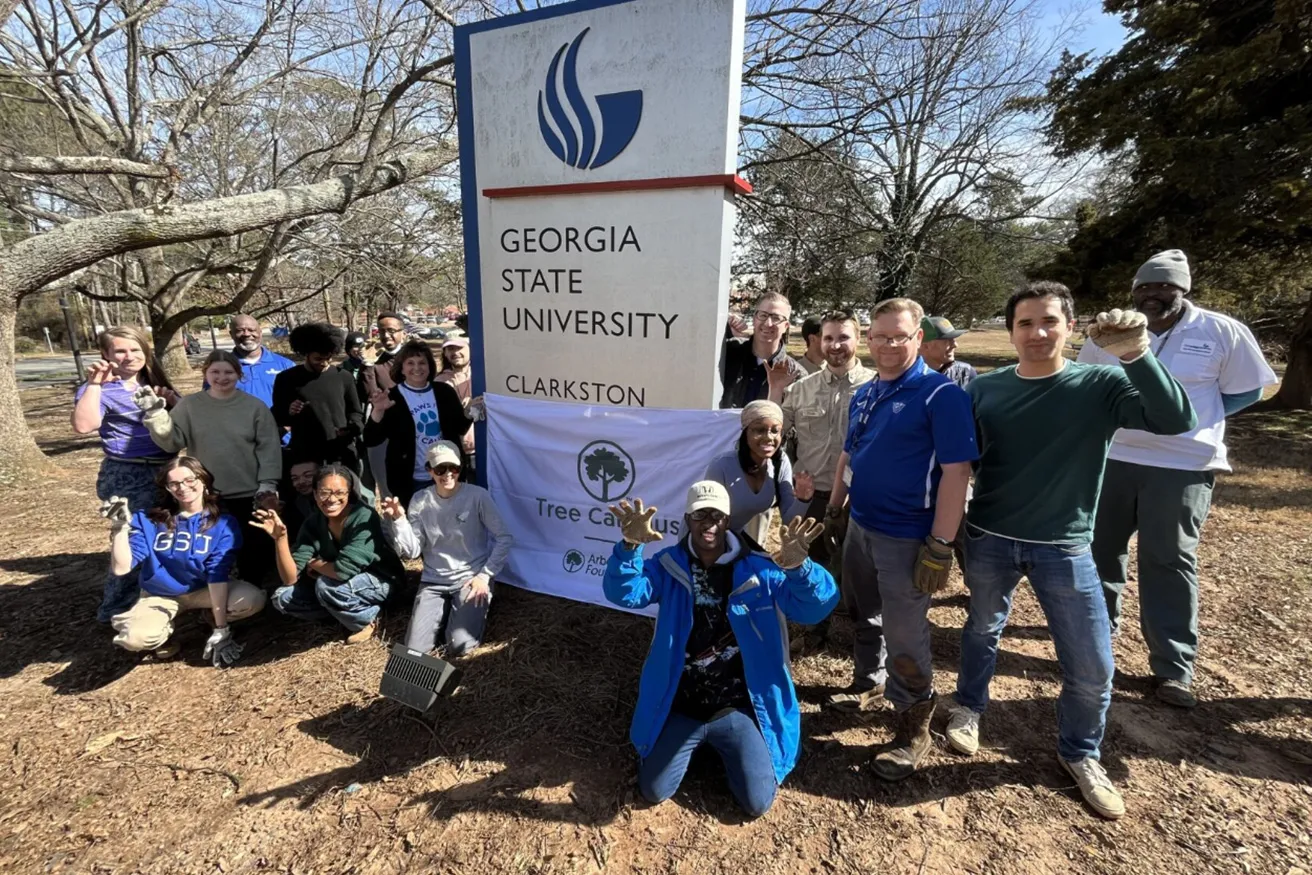
Like many urban college campuses, Georgia State University-Clarkston had a parking lot problem.
More than 5,000 square yards of asphalt dominated the campus, absorbing heat and exacerbating stormwater issues.
Then, a group of campus leaders decided to transform the gray scape into a thriving green space.
Now, in place of pavement, there are hundreds of new trees — and a new energy for nature on campus.
STUDENT STEWARDSHIP AND CAMPUS COLLABORATION
The intentional design of the reconstruction aimed to ensure the trees planted continued to thrive as they grow. Student sustainability interns also played a key role in that effort.
Throughout the nursery warranty period, the interns conducted regular inspections of newly planted trees, monitoring their health, tracking survival rates, and identifying stressors early. It turned the parking lot into a living laboratory as the student captured data about which tree species would perform best in high‑heat, high‑traffic conditions. The information not only benefitted the parking lot project but will also help inform the future planting decisions made on campus.
“Inspired by the campus-wide re-planting, student interns created the campus tree inventory, leveraging their GIS skills and passion for tree identification, to create a virtual record of tree size, variety, and placement across campus,” said Jennifer Wilson, Director of Sustainability Initiatives at Georgia State University-Clarkston.
The internship gave students real-world experience monitoring trees, data organization, and problem solving. They learned how infrastructure choices affect living systems, and how small interventions can prevent larger failures.
“They also assisted with the development of a canopy map, which documents the current coverage and sets future growth goals for the campus. Our hope is to revisit this canopy map in five-year cycles to study the tree growth over time,” Wilson said.
Of course, the interns didn’t work alone. They were supported by campus sustainability staff, facilities teams, and project leaders who understood the importance of maintenance and monitoring. Together, they bridged academic learning and campus operations—showing how students and staff can work together to solve real‑world challenges.
Students gained professional experience in urban forestry and sustainability, while staff gained capacity to manage a large, complex tree project more effectively.
“This is the kind of hands-on opportunity that helps students not only build confidence and expertise but helps them understand that stewardship doesn’t end after the tree is first planted,” said Dayna Berry, program manager for the Arbor Day Foundation. “By embracing the priorities of a Tree Campus, higher-education institutions can help students learn the value of nurturing nature for long-term success.”
A MODEL FOR URBAN CAMPUSES EVERYWHERE
Georgia State University’s Clarkston Campus demonstrates what’s possible when campuses treat trees as essential infrastructure, and students as key partners.
The transformed parking lot now offers shade, supports healthier trees, and contributes to a more comfortable campus environment. Behind that progress are people who ensured the project didn’t stop at construction drawings or ribbon cuttings.
From planners who designed the project with trees in mind, to staff who supported long‑term care, to the student intern who walked the site month after month—this project succeeded because stewardship was shared.
As urban campuses nationwide grapple with aging infrastructure, rising temperatures, and the need for climate‑ready landscapes, Clarkston’s experience is a clear reminder when you invest in people as much as projects, transformation can take root.