The AP’s Peter Prengaman talks news and hope in Unearthing Optimism. LISTEN NOW

What Does a 20-Person Town Have in Common with New York City?
How two vastly different communities share common purpose through the iconic Tree City USA program
March 17, 2026
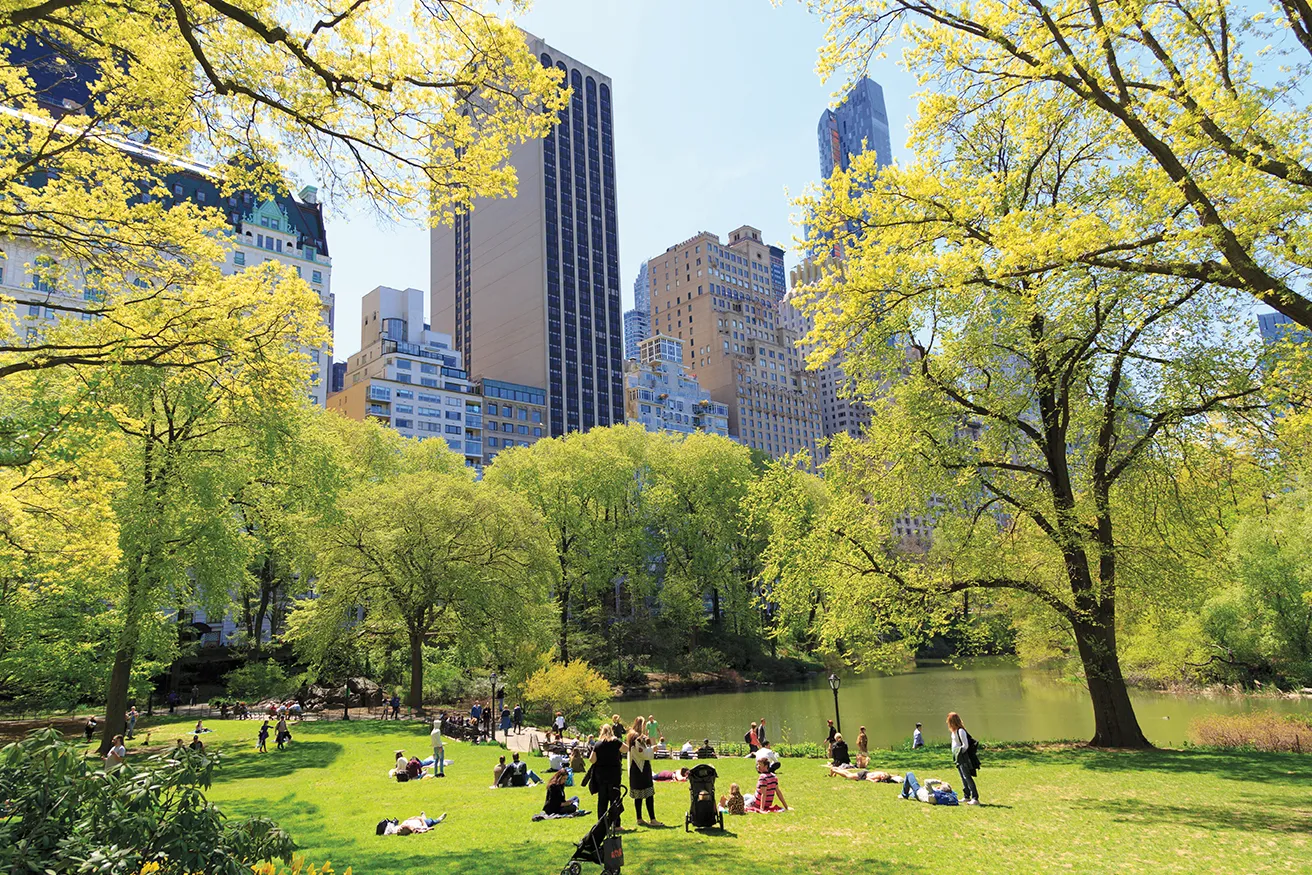
From the bright lights of New York City to the quiet prairie of Sibley, communities across the country are proving that stewardship isn’t measured in square miles. It’s measured in commitment and care.
One community is home to 20 residents.
The other, 8.4 million.
One has a single beloved park.
The other manages millions of trees.
And yet, both are proud Tree City USA communities.
For 50 years, the Arbor Day Foundation’s Tree City USA program has united communities of every size around one shared belief: trees make life better. The standards are the same whether a town spans 25 acres or five boroughs — even if stewardship looks very different from place to place.
Here’s what that looks like at the smallest and largest ends of the Tree City USA network.
SIBLEY, NORTH DAKOTA: STEWARDSHIP ON A FIRST-NAME BASIS
Tucked into 25 acres about 80 miles northwest of Fargo, Sibley, North Dakota, is home to just 20 residents. It has one park — Tootsville Park, named after one of the town’s founders, Edythe “Toots” Hagglund. What it lacks in size, it makes up for in its deep-rooted commitment to trees.
Sibley has been a recognized Tree City for 13 consecutive years, and much of the tree care that happens within the park is supported in part by grant funding.
“With our grant program, we offer priority points for being a Tree City; with grants being so competitive, it’s an extra incentive for communities to participate in the Tree City program,” said Craig Lingen, Community Forestry Manager at the North Dakota Forest Service.
Tree City USA recognition helps Sibley compete for funding but, locally, it means something deeper: honoring a tradition that began when the town’s founders planted the first trees. Today’s residents continue that legacy, ensuring the next generation inherits shade, beauty, and a place to gather.
Nancy Cossette and her husband Dennis help maintain the park. She washes the picnic tables; he mows and trims.
“For places like Sibley, there’s a lot of pride associated with having the Tree City sign in their community,” said Grace Ivesdal, Community Forestry Specialist at the North Dakota Forest Service.
Sibley celebrates Arbor Day during its annual “Sibley Days,” when the population swells as lake visitors and seasonal residents return. The celebration includes park clean-up, games, a parade, and community gathering — proof that even the smallest towns can build traditions around trees.
NEW YORK CITY: STEWARDSHIP AT SCALE
Nearly 1,300 miles east, New York City tells a very different story.
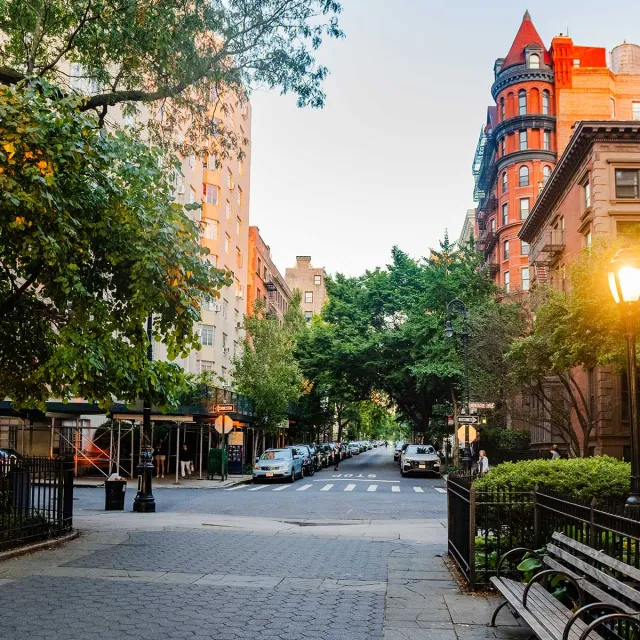
Home to 8.4 million residents, the city manages nearly 700,000 street trees and 5 million park trees across five boroughs — all overseen by roughly 300 forestry staff at full strength. Central Park alone could fit 34 towns the size of Sibley.
New York City has earned Tree City USA recognition for 30 consecutive years, along with five years of Tree Cities of the World recognition.
“There are countless environmental benefits of trees in an urban setting,” said Gabriel Piazza, Chief of Staff, Forestry and Horticulture at the NYC Department of Parks & Recreation. “I think the number one challenge we face is preserving trees in the face of development and new construction. It’s a constant challenge because as we know, large, mature trees derive most of the benefits for the city in terms of air quality and shade, those cooling benefits.”
With dense infrastructure, constant growth, and competing for space, protecting canopy in New York City is complex.
“People don’t necessarily think of New York City as having a lot of trees, so having Tree City status reinforces that New York City isn’t just about buildings and culture — it’s also about trees,” said Julie Heffernan, Communications Coordinator for the NYC Department of Parks & Recreation.
In fall 2025, the city achieved a record-breaking tree planting season, adding more than 9,500 trees along streets and in parks.
To continue building canopy, the city has set an ambitious goal of reaching 30% tree cover. This year, New York City will release its first urban forest plan, a citywide strategy for reaching that target.
The plan takes a more strategic, equity-based approach, working neighborhood by neighborhood and focusing first on communities most vulnerable to extreme heat. Entire streetscapes are addressed at once — planting new trees, removing damaged ones, grinding stumps, and improving planting spaces.
“It creates a sustainable cycle and, in theory, we will have planted every available planting location across the city after nine years,” Gabe said.
Even in a city with a large team of trained forestry professionals, Tree City USA recognition is about connection as much as expertise.
“We see signs of stewardship everywhere as we’re walking around,” Julie said. “People plant flowers and bulbs in tree beds and care for the trees on their blocks. Many residents really love trees and want to see more of them.”
Advocacy is also part of the work.
“Trees don’t always rise to the top of major city issues, even though they solve so many of them,” Julie said. “Being recognized as a Tree City helps elevate the importance of tree care — not just planting, but maintaining and protecting our canopy — and supports the residents, staff, and elected officials who champion this work.”
In a place this big, trees offer something powerful: common ground.
DIFFERENT CITIES, SAME COMMITMENT
These two cities couldn’t be more different. And yet, they share the same standards. The same recognition. The same belief that trees make life better. That’s the strength of the Tree City USA program.
Today, over 3,500 cities and towns across the country proudly fly the Tree City flag. Some are bustling metropolises, while others are quiet prairie towns. All are proof that when people come together to care for trees, the benefits ripple outward — cooler neighborhoods, cleaner air, stronger social ties, and a legacy that lasts.