The AP’s Peter Prengaman talks news and hope in Unearthing Optimism. LISTEN NOW

Philadelphia: 50 Years of Growing a Greener City
From Tree City USA pioneer to equity-driven leader, Philadelphia shows how urban forestry grows stronger over time.
January 30, 2026
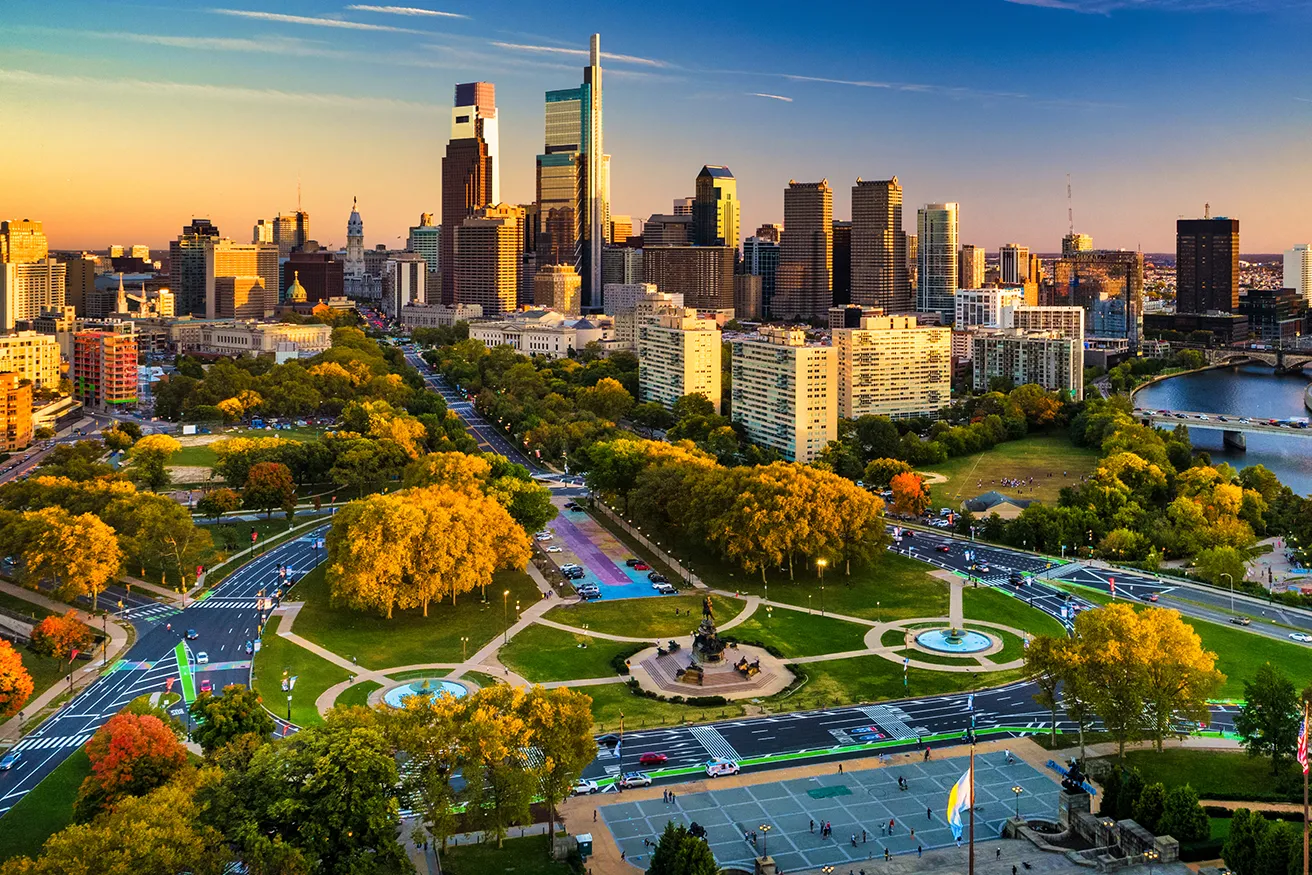
Fifty years of Tree City USA recognition didn’t happen by accident. In Philadelphia, it’s the result of persistence, people-powered stewardship, and a growing understanding that trees thrive only when communities do.
In 1976, through the Arbor Day Foundation’s newly launched Tree City USA program, Philadelphia was one of just 42 communities to step forward and say: trees matter here. Fifty years later, the city’s uninterrupted Tree City USA recognition stands as one of the longest-running commitments in the nation — a testament not to ease, but to consistency.
Philadelphia’s legacy offers a clear lesson for communities across the country: progress in urban forestry isn’t linear, but showing up year after year makes all the difference.
SEEING THE SYSTEM FROM THE INSIDE
For Erica Smith Fichman, Philadelphia’s City Forester, that legacy is deeply personal. When she joined the department 15 years ago, one of her early responsibilities was compiling the city’s Tree City USA application — a behind-the-scenes task that revealed how the urban forest truly functions.
“It gave me a panoramic view,” she said, as funding streams, staffing realities, maintenance cycles, and community partnerships are all converged in that annual process.
Today, Erica oversees 130,000 street trees and more than 10,000 acres of parkland, carrying forward lessons learned early in her career.
“Trees are crucial to the livability of our city,” she said. “People in Philadelphia don’t need to be convinced that trees have value. What they need is trust that we will help them care for them.”
And that trust is central to Philadelphia’s story.
Creating a fuller canopy across the city
While the city’s iconic canopy provides shade, cleaner air, improved water quality, and mental health benefits, the reality is that not all neighborhoods experience those benefits equally. In fact, Philadelphia’s tree canopy tells two stories at once.
In some neighborhoods, mature trees cool streets, filter air, manage stormwater, and provide a sense of calm. In others — particularly in parts of South Philadelphia — low canopy correlates directly to extreme heat, higher asthma rates, and fewer public green spaces. Some areas can be up to 20 degrees hotter than other parts of the city.
Residents notice the disparity. And many, Erica explains, aren’t resistant to trees — they’re cautious. A tree is a living thing that can grow unpredictably, require maintenance, and carry financial risk if support systems aren’t clear. In communities where resources are already stretched thin, that uncertainty can feel like a deal-breaker.
WHY MAINTENANCE BUILDS TRUST — AND HOW THE CITY IS RESPONDING
That reality has shaped how Philadelphia approaches urban forestry today. The city’s focus has evolved from simply planting trees to building systems that help people feel supported — viewing maintenance as a critical form of trust-building.
“We can’t plant at scale until people feel supported,” Erica said. “A well-maintained tree is a good ambassador. A poorly maintained one becomes a barrier.”
The city’s boldest step toward building that trust is the Philly Tree Plan — a 10-year, equity-focused blueprint shaped by input from more than 9,000 residents, including 60% from neighborhoods with the highest need.
Rather than focusing solely on planting targets, the plan tackles the root causes behind low canopy: funding challenges, workforce gaps, policy barriers, and decades of uneven investment. To help carry the plan forward, the city — along with community-based organizations and partners like the Public Health Management Corporation — is preparing to launch a new cross-sector Philly Tree Coalition. This is designed to coordinate implementation, expand fundraising, and ensure the plan moves from paper to planted roots.
POWERED BY COMMUNITY FORESTRY
This work doesn’t happen in isolation. For decades, Philadelphia has nurtured one of the strongest community forestry networks in the country. Organizations like the Pennsylvania Horticultural Society, whose Tree Tenders program has inspired similar efforts nationwide, the Fairmount Park Conservancy, neighborhood volunteers, business corridor ambassadors, and dozens of community-based groups form the backbone of the city’s progress. Together, they train residents, maintain young trees, and bring thousands of volunteers into the fold each year.
Woven through this history is the passion of leaders like Lori Hayes, who served the city for 42 years and championed Tree City USA recognition year after year. Lori organized school Arbor Day celebrations, mentored emerging arborists, and proudly tracked the city’s Tree City history.
“Awareness and importance,” she said simply, when asked what kept Philadelphia committed to the Tree City USA program for five decades — a belief that trees are not just infrastructure, but a source of joy, identity, and community pride.
LOOKING AHEAD: THE NEXT 50 YEARS
Philadelphia’s Tree City USA legacy is more than a milestone. It’s proof that showing up year after year creates momentum. Today, the city is redefining what urban forestry can look like when equity, trust, and community are treated as essential infrastructure.
As the next 50 years begin, Philadelphia isn’t just maintaining its canopy. It’s growing a healthier, more equitable future for everyone who calls the city home.
For communities just beginning their Tree City USA journey, Philadelphia offers a powerful takeaway: lasting impact grows from patience, partnership, and the willingness to listen.