The AP’s Peter Prengaman talks news and hope in Unearthing Optimism. LISTEN NOW

Podcast: The Science of Weather, the Power of Hope
Chatting with Stephanie Abrams, veteran meteorologist at The Weather Channel.
January 19, 2026
Click here to listen to this episode of Unearthing Optimism on Spotify, Apple Podcasts, or your preferred podcast platform.
In the first episode of Unearthing Optimism, host Dan Lambe sits down with Stephanie Abrams, veteran meteorologist at The Weather Channel, to explore her journey from a curious science student in Florida to becoming one of the most trusted voices in weather reporting.
Stephanie reflects on her firsthand experiences covering disasters like Hurricane Katrina, evolving environmental challenges, and the role technology plays in forecasting. She also shares how being grounded in nature and community keeps her resilient, and why optimism is vital in the face of uncertainty.
Check out this inspiring episode to hear Stephanie’s unique perspective on science, storytelling, and the hope that emerges even after devastation.
Dan Lambe [00:00:00]:
Hi, I'm Dan Lambe. On today's episode of Unearthing Optimism, we're joined by someone who has guided millions of people through both blue skies and some of the worst storms of our time, meteorologist Stephanie Abrams. For more than 20 years of the Weather Channel, Stephanie has covered everything from historic hurricanes to changing climate trends, always with clarity, compassion and curiosity. In this episode, we talk with Stephanie about her thirst for understanding the evolving challenges of extreme weather and why she remains optimistic even after witnessing devastation. We'll also explore how nature helps her stay grounded and what it means to inspire action in a changing world. Stephanie, welcome to Unearthing Optimism. It's great to have you with me.
Stephanie Abrams [00:00:49]:
I am so excited to chat with you. Dan. You know that we love having you on the Weather Channel. We, we've really formed a friendship with you and your whole team. So it's really an honor to be here.
Dan Lambe [00:00:57]:
Yeah. I will tell you, I have loved the opportunity to join you in studio several times. And you and Jim and Jordan, you make me feel so comfortable there. And it's really always exciting to come in studio. It's nerve wracking for sure, but it's a lot of fun.
Stephanie Abrams [00:01:16]:
You can't tell. You come in, just like hanging out with us, no problem. So knowledgeable, so friendly, so entertaining. You basically do it all. It is really impressive, Dan.
Dan Lambe [00:01:26]:
Well, that's nice of you to say.
Stephanie Abrams [00:01:28]:
You make trees exciting for those of us that don't necessarily know all the details about trees.
Dan Lambe [00:01:33]:
Well, when I come into the studio, it's always intimidating because the studio itself is massive and insane. But so you've been a staple on the Weather Channel now for more than two decades. Tell us what keeps you excited. When you wake up early in the morning to come in and tell the world about the weather, what keeps you excited? What's keeping you motivated?
Stephanie Abrams [00:01:55]:
Well, the weather is different every single day. And no matter how much you study it, no scenario is exactly the same. And so I really thrive on the fact that I'm coming in and every day it's like, okay, well that's a little bit different. How is that going to impact this? That might be a little bit different difference. So how will that make a difference? So I think that because it's constantly changing is really interesting. The technology is constantly getting better. We now have AI weather models. And also you're really helping people.
Stephanie Abrams [00:02:27]:
You feel like you're making a difference in people's lives, which is something that's really important to me as well. You know, there is a Hurricane coming, a tornado coming, and you're giving people the warnings and telling them what to do and helping them through a storm and, and then of course working here is just, it's just a great team, as you know, working with my entire team in front of and behind the camera, it's just really a fun environment.
Dan Lambe [00:02:50]:
Here it is. Your team is amazing. And every time I've come in to work with you, Jim or Jordan or anyone else on the team, whether it's in front of the camera or behind the camera, what is so impressive to me, not only the set, that enormous green screen you have, but also just how, the lack of scripts, the knowledge that you all have around, the science, the storms, the geography. And you make it look so easy. And I know you've been doing it for a while, but how do you make it look so easy? What is. Well, thank you for. That makes you guys do it so well.
Stephanie Abrams [00:03:28]:
Well, I grew up playing a lot of video games and so I have good hand eye coordination with the clicker and the maps. No, I'm just kidding. A lot of studying. I mean I have a degree in a bachelor's in meteorology, a bachelor's in geography and a minor in math. And so there's a lot of schooling that goes into meteorology and a lot of physics that goes into it in mathematics. But it's practice, let me tell you, on my first tapes back in the day when I first started, and they actually were tapes like VHS tapes, not as probably smooth as they are now.
Dan Lambe [00:04:02]:
Well, you could tell you have a lot of confidence in there too, and you started to mention this, but one of the things I wanted to ask you. So when we have a storm sweeping through our area, my wife is glued to the television. She's counting on that local meteorologist to guide her through what she should be doing, what she should be worried about or not worried about. And you, I'm just guessing, you and your team have to feel a sense of responsibility and as millions of people are tuning in to hear what's going on with extreme weather, what's that like for you?
Stephanie Abrams [00:04:32]:
It's literally our job, it is our job to know what's going to happen, when it's going to happen, how it's going to happen and how that you can protect your family and yourself. And I will say over the 20 plus years I've been at the Weather Channel, I have experienced all types of weather. And so I think being in the field has helped me understand whether it's a flooding, whether it's a fire, whether it's a tornado, whether it's a hurricane, what you should be doing, and also what people are feeling as they're going through that, and how to stay calm and keep calm and what viewers need in that moment. I think having the 20 years of experience and a lot of that being in the field, I can relate to them, and I know how. And what people need in those moments.
Dan Lambe [00:05:16]:
Well, it's a big part of it is trust also. And as something I've seen, as I've been to the Weather Channel, is how the Weather Channel for a long time has been considered the most trusted news source in America. That is a big deal. And so why do you think so many Americans trust the Weather Channel? And what does that mean to you to be a part of that legacy?
Stephanie Abrams [00:05:46]:
It's a huge honor that people look at us in that way. And as you said, it's also a huge responsibility to take on, too. And we don't take that lightly. But you have to remember, deep down, yes, my hair is brushed, I have makeup on. I'm in a pretty dress. But we're really just nerds in the end that love the weather and love helping people. I mean, I grew up going to Space Camp. I grew up looking through my dad's telescope.
Stephanie Abrams [00:06:12]:
I mean, we're just geeks that have, you know, a costume on, if you will. Um, and so people can see through that, and they can see who we really are, which is really just people who love the science of it, love the weather, and want to help people be safe.
Dan Lambe [00:06:28]:
Yeah, yeah. And you are a scientist, so. And you grew up in Florida, right?
Stephanie Abrams [00:06:32]:
Yes. Yeah.
Dan Lambe [00:06:33]:
Right. So you are. You have experienced all kinds of extreme weather, all. All the different versions of weather that come through Florida. It's kind of the front lines of weather in a lot of ways. And you. You had mentioned going to Space Camp. You had mentioned studying meteorology.
Dan Lambe [00:06:50]:
So was it. Was it some kind of weather event? Was it some kind of experience you had that helped make you say, I'm going to study science. I'm going to study meteorology? And now here you are, the Weather Channel.
Stephanie Abrams [00:07:02]:
Every meteorologist that you ask that question to will have a story to tell you about when they were like, I want to be a meteorologist. And I have two. That really did it for me. I grew up playing tennis in South Florida, and I remember as a young kid, it being sunny on one side of the street and raining on the other side of the street and thinking, well, that's strange how in the world, does that happen? And that kind of intriguing me. And then Hurricane Andrew came through. I grew up in West Palm, but of course it came down into Homestead and whatnot. And I remember seeing the effects of that with my own eyes and thinking, how in the world does wind and rain cause. Cause that type of damage? And it was when after Andrew, I'm like, that's it.
Stephanie Abrams [00:07:43]:
You know, I want to be a meteorologist. I knew I always wanted to do some sort of science. Like I said, my dad was very science heavy with us. He took us to national parks. He would Halley's Comet when I was very little. So there was all this science influence where it really. I clung to it. My sister is not a scientist, she's a musician.
Stephanie Abrams [00:08:02]:
But I just loved it and couldn't get enough of it.
Dan Lambe [00:08:05]:
That's great. Do you have your friends texting you further on?
Stephanie Abrams [00:08:11]:
I mean, and let me tell you, being born and raised in Florida, so many of my friends still live down there, but it doesn't matter anywhere in the country. I get. Even when the, you know, there was a tsunami potential along the West Coast, I friends on the West Coast. I mean, it is like, especially when there's a hurricane, I can't keep up. You know, it's just like. And I'm like, watch the Weather Channel. You know, that's what I was going to say.
Dan Lambe [00:08:32]:
That's great. That's awesome. Well, okay, so 20 years. You've been in the Weather Channel for 20 years. Just so you. I've been at the foundation now for 20 years as well.
Stephanie Abrams [00:08:40]:
Congrats. That's huge.
Dan Lambe [00:08:43]:
Same to you. It's really cool. And I know you were doing amazing things before the Weather Channel as well. But I was just thinking it was also 20 years ago that Hurricane Katrina swept through the Gulf coast shortly after I had started a foundation and probably you at the Weather Channel and just did tremendous damage across the Gulf Coast. And it was. Hurricane Katrina was the first time the Arbor Day foundation took a step into disaster recovery work in communities. And it's when we started working with state and local nonprofits to do tree distribution and tree planting in communities in Mississippi, Louisiana and in Texas. And it's been a game changer for us.
Dan Lambe [00:09:25]:
And of course, now, now we're following all kinds of storms, helping with recovery efforts. But you've had that front row seat. And you talked about this a little bit already, but how has covering extreme weather changed over the last 20 years? And what's it like now compared to when you started?
Stephanie Abrams [00:09:47]:
There's A lot more people out there that are doing it. I was really, when it came to the Weather Channel, I had been here. So I started in 2003. Of course, that was in 2005. And I remember seeing the forecast and the surge ended up being 28ft. And they were warning for this surge. And I just thought in my head, how in the world can water get. I mean, an average one story building, just on average.
Stephanie Abrams [00:10:12]:
Obviously some are more. But a good way to think about it is an average one story building is like 10ft. So you're talking almost 30. It's like, how in the world is that possible? And sure enough, you know, they verified at 28ft. And I remember we had moved over to Florida and I was on air literally all day. I think I was on air for over 12 hours, just carrying, you know, the coverage and whatnot. And then seeing the aftermath, I felt like I was on a movie set. Like it couldn't be real.
Stephanie Abrams [00:10:42]:
It was so shocking, shocking. I mean, casinos literally ripped and moved. A whole casino moved. And you could see where the air conditioning unit was. I remember that. Big barrels of paper, I don't know where those came from. Homes gone, just foundation. You couldn't even drive on the.
Stephanie Abrams [00:10:58]:
I mean, it was shocking to see. And I think that going through Katrina and all the other hurricanes I have over the years, I remember after Katrina coming home and I did have survivor's guilt and I get that with some of these storms when I get back. You wish you could do more to help people because, you know, they have lost everything and that's really, really challenging to see. But we try to bring their stories to light and continue to share their stories, to try to get them help and shine a national spotlight on them so the whole world can really help these people recover.
Dan Lambe [00:11:36]:
Well, I'm going to come back to that recovery part of it. But how do you think extreme weather. Do you have a sense of. Do you feel like, I mean, there's science out there to talk about increasing frequency and severity, but from your own perspective, what's your take on over the last 20 plus years? Do we just. Is your experience and perspective that extreme weather is just more frequent, more serious? What's your take on that?
Stephanie Abrams [00:12:02]:
Yeah, like you said, the data shows that with the changing climate, you have a warming atmosphere. And when you have a warming atmosphere, you have all these molecules in the atmosphere kind of dancing around when it's hot and they're just chilling and dancing around. Not, not only until it gets cold enough do they then coalesce and basically rain out. And so you're getting just a lot more moisture in the atmosphere, which is causing heavier rain events. And you see these hurricanes, so many rapid intensification with them. They're so strong. You know, we're seeing a lot of hurricanes getting super strong. So you're definitely seeing the data in real life at times.
Dan Lambe [00:12:41]:
Yeah. So you have been on the ground for these extreme weather events. We talked about Katrina. I remember being down in Biloxi and seeing those foundations, and you were talking about those casinos and homes just gone right after the aftermath. But how has that, how has that experience changed your perspective as a storyteller, as a reporter, as a, again, this trusted ally for many, many people? Like, how has it changed your experience?
Stephanie Abrams [00:13:11]:
When you go through something, you just understand it a lot better. When you see it with your own eyes, you understand it a lot better. That's why I love to travel and I love to have experiences, because you can then understand people and cultures. And when someone's telling you a story about something, you can understand it that much better. And so I think with being in the field for all those years, I can understand the weather a lot better. I can warn a lot better because of it. I remember covering a hurricane once, and I said, well, this is going to happen. That's going to happen.
Stephanie Abrams [00:13:45]:
And someone on, you know, social media, which I ignore all the haters, I just move along, block them. I don't. I don't get involved with them. But they were like, oh, you know, you're making this too big of a deal. That's not really going to happen. And sure enough, it did, you know, but the best thing I can do is say I have 20 years of experience. I was in this storm, that storm, and this is what happened. And this has similar attributes.
Stephanie Abrams [00:14:09]:
So there's a good chance that this is going to happen. And. Or I know that the surge is going to come in here because the winds are going in this direction, the storm is going in that direction. There's nowhere for the water to go but onto the land. So I think that because I've experienced it, because I understand the science of it, I. I'm really able to articulate you are going to have surge or winds or hail or whatever the case may be because of this, this, and this.
Dan Lambe [00:14:37]:
So this podcast is called Unearthing Optimism. And the reason is, is because we know we need to bring hope. We need to try and bring optimism and healing back. And for us, it's through trees, as a matter of fact, I just a couple weeks ago, had the opportunity to be in Maui, in Lahaina on the two year anniversary of the fires. How is it there about working with.
Stephanie Abrams [00:15:00]:
I'm sorry, how is it there, by the way?
Dan Lambe [00:15:02]:
It is devastating, yes. If you've ever been to Lahaina to see the trees gone, to see the homes gone, to see the, you know, the wailing village gone, it is devastating. But the people there are so determined, so resilient, and so committed to bringing that community back. And it's going to take years to do it. But we were there helping to distribute about 500 trees to local residents to bring shade back, to bring some just buffer from the winds and the heat. And people were just jazzed. They were so excited. And that's one of the things I see, is this resilience.
Dan Lambe [00:15:45]:
And of course, we see it through the trees and the forest that we're working in. But I'm curious if there are any particular stories in your experience where you've seen the resilience and the efforts of recovery show up and just what that's been like for you.
Stephanie Abrams [00:16:02]:
I would say no matter the storm, whether it's a fire, like in Lahaina, which I've seen on the west coast, whether it's horrible flooding, where the flooding's up to someone's roof, a hurricane, tornado, everyone I talk to, they are like, this is my home. I'm not leaving. I don't care what it takes. We're going to build back. And what is always such a beautiful thing to see is you're there, there's a storm. It's utter devastation. The community, no matter where you are, the community always just comes together. They wrap their arms around each other and they get right back to work, and they always build back.
Stephanie Abrams [00:16:43]:
Yes, it takes some time, but that's something that we always say kind of after the fact of, Listen, I know this is hard to even look at right now, even if you're not from here, but everyone that you talk to here says, we're gonna build back. We don't care. This is my home. I'm gonna stay here. And we've seen that time and time again. There was a woman actually, from Katrina, and there was this tree that some people survived in. I can't remember if she did or not. And she now has this Airbnb there, and it was gone.
Stephanie Abrams [00:17:13]:
And the tree. There was people that survived in this tree, and. And the tree managed to live. You know what? This would be a great story for you guys. I have to remember exactly what it was. I want to say it was in Bay St. Louis, and people survived it. And they now have a plaque.
Stephanie Abrams [00:17:25]:
And the tree is still standing somehow, because there was trees, like, in the middle of the ocean. It was crazy.
Dan Lambe [00:17:30]:
It was probably like a live oak or something. Yeah.
Stephanie Abrams [00:17:32]:
And it is still standing. And there's a plaque about how people survived in this tree in Katrina. And they built back this Airbnb and they tell their story, and she's the sweetest woman on the planet. We stayed with her, you know, several years back. Now we went back for another storm. But that's their home. They want to come back, they want to build stronger, and they always do that.
Dan Lambe [00:17:49]:
That's cool. I've seen that as well. Well, we saw it in Lahaina, and of course, that banyan tree, the famous banyan tree is doing great. They had to cut amazing about a third of it. But it is thriving right now. And so that gives people hope. That gives people in some inspiration, for sure. But we've seen that again and again, again.
Dan Lambe [00:18:10]:
And I know after Hurricane Michael in Florida, I remember being in Panama City one day for a tree distribution that started at about 9 in the morning, and by 7 in the morning, we had about 100 people already lined up just to get a tree. Because to your point, like, this is our home, and we want our homes back. We want those natural landmarks back, we want those trees back. And it's. It's pretty cool. And people are pretty. People are pretty inspiring. And that's what I've seen, anyway.
Dan Lambe [00:18:40]:
So. Yeah, so you in your work have to make some really complex stuff simple so people understand the science, people understand it. I'd love to know more about how you've trained yourself to not nerd out and lose everybody, but actually be able to communicate in plain terms. And also how in this moment, people can feel kind of overwhelmed as there's more. So how do we help them understand in plain terms how to still give them hope, how to give them the optimism that things are going to be okay? Yes. We've got to deal with these disasters, but how do you, one, simplify it? And then two, what's your take on helping to make sure people still have hope and they just don't go bury themselves in their basement?
Stephanie Abrams [00:19:35]:
Okay, so let's start with the simplification of complex information. When I was in school, I was always the kid. I had to really study. It didn't come super natural to me. Like, some kids just understand physics and math and all these things. And I Had to really study. And I was forever raising my hand. What do you mean? What does that mean? Like, I was that kid in class.
Stephanie Abrams [00:19:58]:
I went to every professor's office hours. I'll sit here. Can I please sit here and do my homework with you? Literally, I would just sit in their office hours and do my homework because so smart. It was. It was complex. And I listen, I have a minor in math, like calc. 1, 2, 3, diffieq. And then I did Fortran for computer programming.
Stephanie Abrams [00:20:18]:
And I literally. I remember going to my computer programming professor and I was like, okay, start from the beginning. How did somebody connect two wires and then make this computer and figure out this and that and the other? And he was like, okay, well, it's actually a circuit. If you think about it, the zeros and ones are like a circuit. So if you flip two zeros, I'm like, okay, I get the circuit thing. I'm like, but then how did that go? He goes, honestly, you're just gonna have to accept that some things, like, you know, I mean, who can really explain how that all came about, right? But every class I was explaining. So when I'm talking about something or anyone's talking about anything, I'm forever asking questions whether it's medical, whether it's science, whether it's grammar, no matter what it. Where did that word come from? I just.
Stephanie Abrams [00:21:03]:
I have this thirst for understanding things. And so I came up with. This is actually years ago, I started a Ms. Wizard thing on the Weather Channel where it was taking complex thing, and now it's transformed into science with Stephen. And now anytime I can think of something, I just do it. So what I also saw was on social media, everything has to be 60 seconds or less. And I saw people doing how you hang a picture in 60 seconds or less using like a fork and whatever to get it on there easy. And making recipes, they would all be real quick.
Stephanie Abrams [00:21:37]:
You throw this, this, this, this is done. So I was like, I need to do that with science. And so I started my science with Steph. And it is really challenging to do that, but I have several of them now that I'm really proud of, and it can be done. And people now, I mean, I don't know if you're a big social media guy, but I love me, you know, some of these platforms that everything is just real quick. And so I just sit down and think about, okay, how can I smush this into a minute, but also make it understandable. For instance, when we just had the tsunami that happened and There was at risk. And I was like, well, I said to our floor director, I'm like, hey, do we have any two square things? So I can explain what time of fault this was.
Stephanie Abrams [00:22:20]:
And it started off with wipes. He found two wipes bags. And I was like, okay, that'll work. And then Cantore said to him, he's like, do we have any Apple boxes? Which are these square boxes that people stand on in tv? And then we started using the Apple boxes and. And so many people had such a good reaction to that. Like that made so much sense. And you don't need to give all the details, just people want the main. This is what happened that made the water go up end of.
Stephanie Abrams [00:22:46]:
And so it's really important for me that I understand and that other people understand because knowledge is power. Knowledge is everything. Knowledge is hope. In the same sense where I think that you can't feel hopeful. To answer Khandi, your second question, knowledge gives you hope. If you know that a house has been destroyed and it can build back, it just takes a little time, then you'll feel more hopeful because you have the knowledge. If you know how to build a house back, if you know how to cook healthy, if you know how to work out, then it's not as stressful. I didn't like to used to go to the gym because it's intimidating.
Stephanie Abrams [00:23:21]:
I don't know what everyone's doing. I don't know how to do this, that and the other. But the second you have knowledge, then you feel more hopeful that you can get in shape and you can do these things.
Dan Lambe [00:23:30]:
Well, you guys are great storytellers. And I also know you're using all kinds of new technologies and videos to help people understand. And it does help to simplify it. And I think it does help give people hope.
Stephanie Abrams [00:23:46]:
Yeah, I mean, look, I don't know how to really plant a tree. I'm like, you dig a hole, you put it in there, but that can't possibly be it. Then how do you water it? Do you water before? How big's the hole? Does it need to dah, dah, dah dah. And, and so it's. So that would be overwhelming to me. But if you guys did a. I'm sure you could put in 60 second video if you don't have it somewhere already. Like you need to make sure it has this much.
Stephanie Abrams [00:24:04]:
And that did it. And I'm like, okay, I can plant a tree.
Dan Lambe [00:24:08]:
Well, okay, so let's talk about nature. So you report on nature every single day like that's your job. But when you're not in the studio or chasing storms or whatever it might be, how does, how is nature important in your life? What's that look like for you, your family? Like, what's your, what's nature for Stephanie?
Stephanie Abrams [00:24:28]:
Well, you know, just yesterday I didn't sleep well the night before. And I don't know about you, but when I don't sleep, I am just like, I have a hard time, you know, being in a good mind space. I, I definitely have a. It's challenging for me. So just yesterday I hadn't slept well the night before and I was so exhausted I'm like, oh, should I go home and nap? Or should I say, nope, you're going to go out and you're going to take a run because that is going to make you feel good that you're in nature, that you're in the trees. I, it's. I do it on a dirt path, so it was like really in nature. And, and sure enough, I was totally energized after I went out and did.
Stephanie Abrams [00:25:00]:
It was just a quick three mile run and I have some injuries so I kind of had to really push myself through it. But I felt so much better the rest of the day. After being in nature and moving my body, it just does something for me. The other thing I really do like to do too is when the eclipse happened last year where I was in Texas, it was forecast to be overcast skies. I'm like, no, I'm going to manifest this. We're going to see totality here. And so what I did is I took my shoes off and I grounded myself. And I don't know if no people know about grounding, but essentially just getting your feet into the soil, into the grass, I'm like, I'm going to be one with nature.
Stephanie Abrams [00:25:39]:
These clouds are going to move. I'm going to be one with nature. We're going to ground ourselves in the grass here. And sure enough, the clouds parted, we saw totality and I had a major freakout on air. So I think nature is so important. I, like I met, I'm a meditator. I love meditating in nature and just listening to the sounds while I'm meditating. I think that being cooped up in a house is not good for anybody.
Stephanie Abrams [00:26:02]:
I don't care what age you are, getting out and just taking a walk in nature, it is a game changer.
Dan Lambe [00:26:10]:
You know, I feel the same way. Like just being outside, I just feel better. And I think, I think a lot of People that way. We did polling with the Harris Poll. Almost 90% of Americans recognize trees, forests. Just nature is a part of their wellness. So people, I think, recognize that doing it is something different. But I'd love to hear that you.
Dan Lambe [00:26:34]:
Is there a favorite place you love to go? Do you have a. Whether it's that running trail or otherwise. Is there a kind of a go to place for you?
Stephanie Abrams [00:26:41]:
Yeah, this running trail that's actually not too far from the Weather Channel, but I won't say where it is exactly. I love it because it is not paved. There's a lot of paved trails, but this one is dirt. So I really like that. I like having the dirt on me too. And I grew up in Florida. I was raised primarily by my dad. So he always was like, let's get outside.
Stephanie Abrams [00:26:59]:
And we're not staying in the house. We're going for a bike ride, we're going for a walk, we're gonna go play tennis, we're gonna do something outside. So he really influenced me going outside. And then I also. I mean, I feel like it's our natural state and nature mimics us. I mean, trees, they look like lungs, which is so interesting because that's how we breathe and that's how they breathe. You know, walnuts, they look like a brain. They're good for your brain health and stuff.
Stephanie Abrams [00:27:20]:
So nature really mimics so many things in our body. And I don't think that's just like, oh, well, that's just interesting. That just happens to be. I mean, I think that's. We are one with nature, we're one with each other. And so I think that's why it's so healing for us to be in nature.
Dan Lambe [00:27:37]:
Yeah. So let me ask you this. Being outdoors is critically important, and I will tell you more and more. I think one of the biggest extreme weather issues that we are facing is extreme heat.
Stephanie Abrams [00:27:47]:
Yeah. It's a number one weather killer, by the way, around the world. I don't know if you know that.
Dan Lambe [00:27:51]:
Number one killer more than all other extreme weather events combined. And I'm curious to hear your take on how you've seen extreme heat emerge and as an issue over the past 20 plus years in covering the weather.
Stephanie Abrams [00:28:07]:
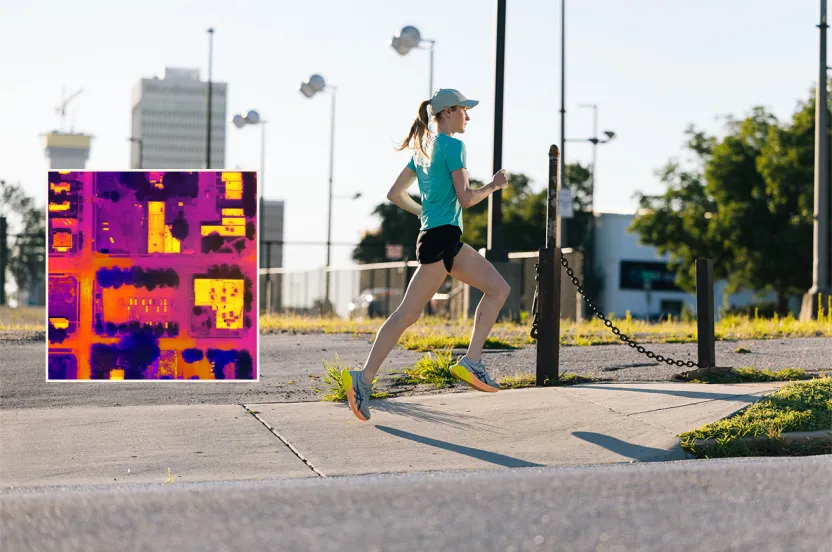
Well, two things. One, yesterday was really hot and I couldn't go until after work. So I'm kind of going in the peak heat of day. And there's one side of this trail, it's just kind of a loop that's about three miles. One side of the trail has trees overarching it and Then the other side is exposed. So I made sure to stay on that tree side. As you know, it can easily be 10 degrees cooler under the trees versus in the direct sunlight. Easily.
Stephanie Abrams [00:28:31]:
And so that is something that people obviously need to remember and to do all the time is to make sure to stay even just in the shade of a tree is huge. Shade of an umbrella or anything can really be a lifesaver. And what we've seen, as you know, we have a show on the Weather Channel called Pattern, which is a climate talk show where we really try to focus on the good things people are doing to help the changing climate. And I tell you what, month after month, year after year, hot, hot, hot, we just keep breaking records. It just keeps getting hotter and hotter and hotter and hotter. And I've known to notice too, when we're doing them on the Weather Channel and I'm showing records like, why do we breaking records that were set three years ago, five years ago, even 10 years ago. I mean, these records are falling a lot faster, I've noticed, than in the past when they've stood for 30, 40, 50, 100 years. We're starting to break records.
Stephanie Abrams [00:29:26]:
There was just one the other week. I wish I could remember where it was, where we literally broke the record the, like the last three to five years. I mean, it was absurd. I'm like, no, these records should be standing, but they're not. We keep getting hotter. And we're seeing that.
Dan Lambe [00:29:38]:
Yeah, we're seeing it as well. And like you, I know when I'm walking my dog or going for a walk or a run, I'm just chasing that shade on these hot, hot days. And so I know it's a big part of what we're seeing a lot of cities do as a part of that optimistic effort towards resilience is planting more and more trees all over the place.
Stephanie Abrams [00:29:59]:
What's interesting too is I lived in New York for a while, and it's funny because one of my co anchors, Jordan, we had this whole discussion about, like, oh, he's, he's really an outdoorsy guy. And I'm an outdoorsy person too. But he was like, oh, I couldn't live in a city. I said, you know, oddly enough, when I lived in New York City, I think I was outside more than when I live in Atlanta, which is a driving city, because in New York you're constantly getting outside and walking. You're taking the train and walk. I mean, I was outside a ton. And there's so many parks. And I know they had Some initiatives in New York where you could call and get a tree planted in your neighborhood.
Stephanie Abrams [00:30:35]:
I said, you wouldn't believe how many green spaces there actually are in New York where you don't feel like you're in a city if you just don't look up, you know, at some of the buildings and some of the trees block it. Um, but there are. And you can probably speak obviously, way better to this than me, that some of these big cities really are making space for trees and grass. And you're. You're outside a lot in some of.
Dan Lambe [00:30:56]:
These cities, they recognize that it's one of the biggest issues for livability, for bringing more people in. And you're right. When I go to New York City, I get way more steps in than when I'm in Atlanta. I'm driving from. From meeting to meeting in New York. I. It's nothing for me to go walk a mile to a front to a meeting, and I'll pick the shaded street. Pretty.
Dan Lambe [00:31:18]:
Yeah, I'll. I'll pass through the park, that sort of thing. Yeah. So, okay, here's a question for you. So I'm back. Back to kind of your experiences. So for. I know you've got a ton of fans out there and.
Dan Lambe [00:31:31]:
And a lot of followers on your social media, for sure, so. And it's always fun seeing you in studio. It is. You guys are awesome. You make me feel so comfortable. But what is one of the craziest moments as you've been covering, whether. Whether it's in the studio or outside the studio, any kind of just fun memory or story that you can share that is just like. This was like, one of the craziest, most unusual moments.
Stephanie Abrams [00:31:56]:
Hmm. I mean, obviously with the storms, we could tell you stories for days, some which we can't do on the podcast, Dan, which we'll share with you, you know, offline and everything. There are some crazy stories. But what I will say, you had mentioned the fans, and I think what's really cool about the Weather Channel is whenever we go into a town, we're. Well, I'll say we're welcome there. Unless there's a storm coming. They're like. But everyone is super kind.
Stephanie Abrams [00:32:23]:
They know that we're there just to protect and to serve and explain the weather. No matter if, you know, we're trying to get it. People always do interviews with us. They're happy to see us. People are very kind. They're respectful, come up, want pictures and, you know, give you gifts and whatnot. And I've had a slew of things given to me over the years. They bring you food, but everyone when you're in the field, they're super duper kind, and it's really nice to engage with people and also just get information, like, what are you doing? What are your concerns? So that way, we talk with some of the people and then can be like, okay, we have to remember this is what people are concerned about or thinking about, and then share more with everyone on air.
Dan Lambe [00:33:04]:
That's really cool. Yeah. I'm not surprised you get that kind of reception, but it's great to hear that you do. That's awesome. Okay, well, so this is unearthing optimism, and I work with the Arbor Day foundation, so I have to ask you, is there a tree story you have? Is there a tree memory you have? Is there a fa. You already shared a really cool one from the. From the Hurricane Katrina recovery. But is there any other kind of, like, significant tree in your life and memory from trees that you might be willing to share?
Stephanie Abrams [00:33:36]:
Absolutely. I grew up in Florida, and I remember climbing trees as a kid a lot. I would say my favorite tree from growing up to climb were the banyan trees. I mean, they're just. I just even got the chills. I find them so majestic and beautiful. There's a security in them. There's a safety in them because they're so kind of big and thick.
Stephanie Abrams [00:34:01]:
Sometimes you have to get a little boost up to that first branch, but you felt safe in this tree. And I remember my. My dad used to let us climb trees as a kid, and I would say, let your kids climb trees. You'd be there, you know, kind of spotting them, but let them climb trees. And I do remember being going up a little too high once and then getting a little scared and be like, dad, can you come get me? You know, he'd always come get us out of the trees. But banyan trees are my favorite, and my nieces and nephews, in fact, they don't live where we live. And we were with them last December, and I remember them asking me, we were in a park and just playing in the park, and they were like, can we climb the tree? I'm like, heck, yeah. I'm like, get your butt up there.
Stephanie Abrams [00:34:40]:
Start climbing. And I gave them a little boost. And there was just something about climbing trees as a kid, and even as an adult, I tried to get up on it type of a thing that. I don't know what it is. That trees, they kind of wrap us in their leaves and in their branches, and they just feel like such a safe space and a peaceful space where you could just sit and read a book or, you know, a hammock between two trees underneath. I just, it does something to me and I think to a lot of people.
Dan Lambe [00:35:09]:
Thanks for sharing that. And I will tell you, banyan trees are fantastic. And down in Florida, out in Hawaii, in those great warm weather places, they are just spectacular, aren't they? Yeah, it's really cool. Thank you, Stephanie. Well, listen, Stephanie, I am so grateful you've joined us on this podcast Unearthing Optimism. You are a pro. You are authentic, you are smart and you are welcoming and that is why people love tuning into you. To the Weather Channel, it has been honestly my honor to get to become your friend and work with you from time to time.
Dan Lambe [00:35:45]:
And I can't wait to be back in studio with you and everybody else again sometime.
Stephanie Abrams [00:35:49]:
Please know you're welcome whenever. We all love you. Well, you're part of the family here.
Dan Lambe [00:35:53]:
Well, it feels like it when I'm there, so I look forward to it again and just can't wait to see you again. And thanks for everything and thanks for being with us today.
Stephanie Abrams [00:36:01]:
Thank you. I appreciate it.
Dan Lambe [00:36:04]:
That's all for this episode. Our journey towards a more sustainable, resilient future is one we're all on together. And as Stephanie reminded us, even in the eye of the storm, knowledge can give us hope. So to our audience, thanks for tuning in to Unearthing Optimism. If today's episode moved you, inspired you, or simply made you think a little differently about the power of weather and the strength of community, we hope you'll subscribe, leave a review and share the show with a friend. Until next time, keep planting seeds of hope.