Get 10 free trees with your membership contribution. GET STARTED

Alliance for Community Trees Day
November 17, 2026
Join community tree advocates from across the country at this dedicated gathering that uplifts grassroots leadership and celebrates the people who grow change one neighborhood at a time. Registration is open.
Date
November 17, 2026
Type
Event
Presented by the Arbor Day Foundation
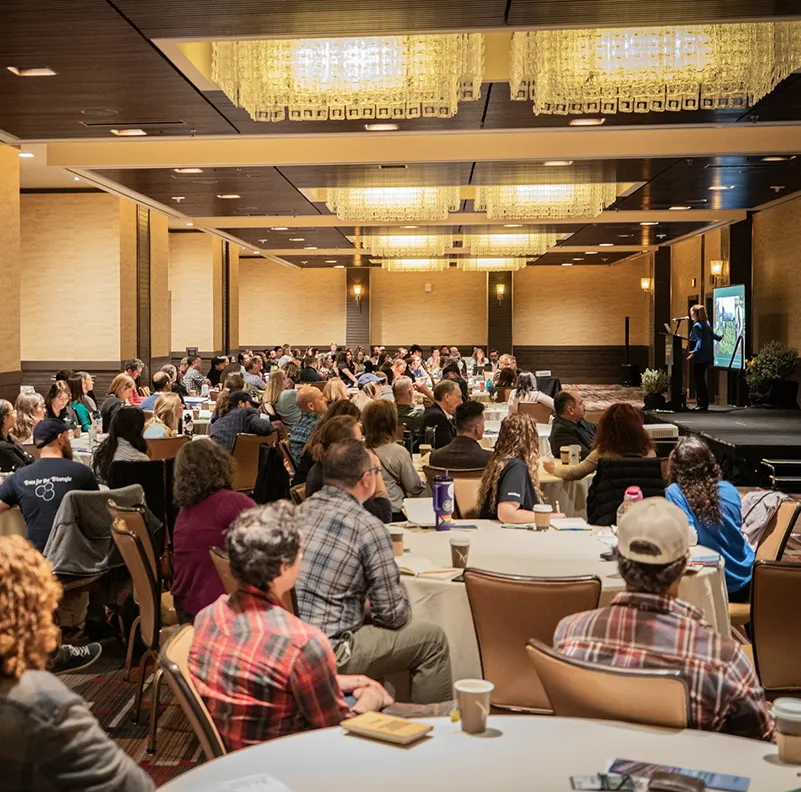
Join your peers in the urban forestry space at the 2026 Alliance for Community Trees Day on November 17, 2026, in St. Louis, Missouri.
Part of Peer Network Day during Partners Week, Alliance for Community Trees Day brings together the dedicated members, passionate individuals, and communities at the heart of urban forestry. This special event highlights their commitment to exploring innovative solutions, sharing valuable insights, and collaborating to shape the future of green, thriving urban landscapes. Join these leaders as they strengthen the bonds between people and trees, champion sustainable practices, and drive meaningful change.
This year's convening will be held at Union Station, a centrally located destination that places attendees within easy reach of restaurants, attractions, and downtown experiences.
Member: $210
Non-member: $310
Tuesday, November 17
2026 Agenda
Details subject to change.
7 a.m. - 5:30 p.m. | Registration Open
Location: Foyer C
Location: Grand Ballroom A-C
Hear from urban forestry leaders as we kick off the conference:
- Matt Spitsen, Arbor Day Foundation
- Nausheen Iqbal, USDA Forest Service
- Scott Jamieson, Bartlett Tree Experts
- Meridith Perkins, Forest ReLeaf of Missouri
Location: Grand Ballroom A-C
Urban Forestry as Community Infrastructure in Housing-Focused Organizations | Jack McDonnell, SavATree
Urban forestry is often treated as an amenity that follows housing and economic development rather than a core piece of community well-being. This session draws on the evolution, partnerships, and successes of a nearly decade-long effort to make urban forestry part of housing and community development work in North St. Louis County. By considering urban ecology alongside housing stability and economic opportunity, programs were built around long-term stewardship and benefits for residents. The presentation will share lessons learned from this work, examples of successful programs
and partnerships, and the value of considering trees, soils, and green infrastructure early in the community investment process rather than after plans are already in place.
A New Approach to Neighborhood Management of Greenspace | Joe Wheelock, Bridging the Gap
This new collaborative model demonstrates how community-driven forestry and restoration can intersect on public lands, blending technical expertise in arboriculture, invasive plant management, and long-term forest health monitoring with a shared neighborhood commitment to stewardship. By working side by side, these teams demonstrate how urban natural areas can be actively managed to support biodiversity, improve canopy resilience, and connect people to the landscapes that create a more resilient Kansas City.
Tech-Enabled Neighborhood Volunteer Tree Care | Erin Godwin, STL Neighborhood Foresters
Staffing community forestry programs is often prohibitively expensive. STL Neighborhood Foresters (STLNF) organizes volunteers to care for street and park trees in the City of St. Louis by training them and providing a user-friendly web app with editable tree inventory and tree care tracking to support the planning of care and sharing of information with City Forestry staff. Tech enables more decentralized leadership, requires fewer resources, and provides greater oversight than would otherwise be possible for such a small organization. This presents an opportunity for other municipalities that currently have no tree care volunteer programs beyond annual planting events.
Missouri Innovations in Community Forestry Q&A
Location: Foyer C
Take a mid-morning break and enjoy light refreshments. It’s the perfect chance to recharge and catch up with fellow attendees before the next session.
Location: Grand Ballroom A-C
From Volunteer Days to Strategic Partnerships: Designing Experiences That Deliver | Aleah Likas and Ashley Vernon, The Giving Grove
This interactive presentation explores how to design volunteer events that move beyond one-day activities to become meaningful, mutually beneficial partnerships. Drawing on case studies from The Giving Grove’s national network, participants will learn practical strategies to create engaging, efficient, and impactful volunteer experiences that benefit both the host organization and volunteer group/business. Attendees will leave with tools to align partner goals, leverage participant skill sets, and design adaptable events that strengthen relationships, enhance community impact, and extend value well beyond the volunteer event.
Growing Together: How Cities and Nonprofits Can Enhance Community Forestry | Sharen Hauri, City of South Salt Lake, and Amy May, TreeUtah
Ask most city officials what they know about community forestry, and you'll get an honest answer: not much. Ask most urban forestry nonprofits what they know about how a city actually works and you'll get the same answer. This is not a criticism. It's an opportunity. Cities and nonprofits have a lot to gain by integrating their work in community forestry. Drawing on a real, ongoing collaboration between South Salt Lake and TreeUtah, this session will offer an honest, practical, and energizing look at what genuine partnership can accomplish.
Building Strategic Partnerships Q&A
Location: Grand Ballroom F
Take this time to connect, share, and learn from peers during a facilitated working lunch. Be ready to participate in a small-group conversation focused on real-world challenges, ideas, and solutions in community forestry. Each table is designed to encourage open dialogue and practical takeaways so you can leave with new insights, fresh perspectives, and connections to carry forward in your work.
Location: Grand Ballroom A-C
A Practitioner's Guide to Equitable Urban Greening | Lincoln Larson, North Carolina State University, and Sally Ross, Black Environmental Prosperity Group
From 2020 through 2023, our research team at NC State University worked with a variety of federal, state, municipal, and NGO partners across the United States to study best practices for maximizing social equity in tree planting initiatives. In 2025, we published a Practitioner’s Guide based on our findings. In this session, we will provide an overview of this new resource and explore key recommendations for enhancing equitable and community-centered urban greening, highlighting specific actions that could be taken and next steps for research and practice.
Beyond the Tree Count: Community-Centered Approaches to Urban Forestry | Rachele Lopez, Justice Outside
What happens when you let communities define what urban forestry looks like? You get fruit trees feeding refugee families. Cultural burns honoring Indigenous land stewardship. Drone pilots mapping tree canopy. Bat nurseries and monarch butterfly gardens. Through Justice Outside's grantmaking partnerships with the USFS and William Penn Foundation, we've funded 35+ Black, Indigenous, and People of Color-led organizations taking radically different, deeply effective approaches to building healthier urban forests. This session explores what we've learned about trust-based grantmaking, intersectional programming, and why the most impactful forestry work often doesn't look like forestry at all.
How to Plant a Dual Language Urban Forestry Program | Layla Farahbakhsh, Woonasquatucket River Watershed Council
In Providence, Rhode Island, low-income, predominantly Spanish-speaking neighborhoods bear much of the brunt of the effects of low canopy coverage. The Woonasquatucket River Watershed Council has developed a dual-language urban forestry program, Árboleros, to learn with neighbors how to mitigate and correct these effects by caring and advocating for local trees. In this presentation, you’ll hear how we harnessed the momentum from established classes, collaborated with partners, and encouraged resident leadership. We’ll share what we planted, what we pruned, and what we are excited to see grow in the upcoming seasons.
Why "No" is a Great Answer | Becky Pobst, Friends of Grand Rapids Parks
Accepting "no" from residents during a tree planting event is an important part of building trust with our neighbors. Learn how we predict denial rates and plan for them, how we engage with residents who do not want trees, and how we ensure that our volunteers understand the importance of respecting neighbors' expertise.
Cultivating Trust Q&A
Location: Foyer C
Take a moment to relax and network with fellow attendees.
Location: Grand Ballroom A-C
Panel: Cultivating Community Forestry Across The Rural West | Lance Davisson and Emma Stammer, Trees Idaho; Amy May, TreeUtah; and Lisa Ortega, Nevada Plants
What does it take to grow and sustain community forestry programs when your nearest partner is 400 miles away? Three nonprofit leaders from Utah, Idaho, and Nevada pull back the curtain on building community forestry programs across some of the most geographically and culturally diverse terrain in the country. From tribal nation partnerships to communities where "environmentalism" feels like fighting words, this moderated panel explores the honest, hard work of meeting people where they are, and developing and sustaining trust. Panelists represent organizations at different stages of growth, offering something for everyone, from scrappy startups to seasoned statewide networks.
Location: Grand Ballroom A-C
Reconnecting the City: A Data-Driven Blueprint for Urban Wildlife Corridors | Matthew Marchese, Casey Trees
Urban wildlife corridors are essential infrastructure for the health of our cities, yet most municipalities lack a systematic approach to identifying and restoring them. Casey Trees developed a replicable GIS-based workflow to map the safest pathways for pollinators and wildlife through Washington, DC — and subsequently secured nearly $500,000 in grant funding to implement those corridors by planting native trees and gardens that connect larger urban green spaces — demonstrating how urban forestry organizations anywhere can translate spatial data into targeted, equity-centered conservation action.
Planning Projects Like Parties: Blueprints to Successful Community Forestry Events | Cate Hughes and Jacob McDonald, Trees Atlanta
Trees Atlanta staff will present on a handful of their most popular events, programs, and projects that have enabled them to plant nearly 11,000 trees with a dedicated following of volunteers. These events can be easily replicated in many of our partners' cities and service sites, and attendees are encouraged to "steal" these concepts and adapt them as needed!
Location: Grand Ballroom A-C
Matt Spitsen, Arbor Day Foundation
Location: Grand Ballroom F
Keep the conversations going and make the most of your time with peers. Swap ideas, spark new collaborations, and connect with people who understand your work and challenges. From quick introductions to deeper conversations, this is your chance to build relationships that last well beyond ACT Day.
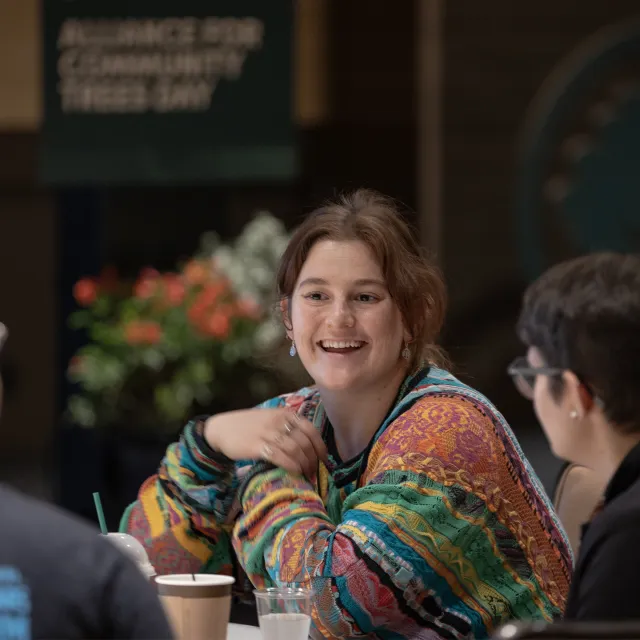
Moments From 2025
View the 2025 ACT Day photo album. Download and share as you reflect on learnings and memories from Henderson.
2026 Sponsor
Platinum Sponsor

Sign up
Stay Informed
Get the latest on conference details, exhibitor and sponsorship opportunities, and chances to connect with leaders in community forestry.