Partners in Community Forestry Webinar Series

This webinar series provides relevant community forestry content for participants of the Arbor Day Foundation’s recognition programs and programmatic networks.​

Elevating impact through our networks ​

The webinar series is an exclusive benefit to members participating in our recognition programs — Tree City USA, Tree Line USA, and Tree Campus — as well as those engaged through the Alliance for Community Trees or our Tribal Networks.

By joining our programs and networks we celebrate your achievements while equipping you with the tools, insights, and access to exclusive resources needed to grow even stronger results.

Learn more

Explore past webinars 

October 8, 2026

Using Tech to Track + Treat Invasive Pests and Diseases

(opens in a new tab)

Invasive and emerging pests rarely announce themselves. Emerald ash borers can hide inside a tree for three or four years before any visible decline appears, and a pathogen like Swiss needle cast can quietly reduce a Douglas-fir's growth for years before anyone notices the crown thinning out. By the time the damage is obvious, the response is reactive, expensive, and playing catch-up. This free webinar brings together tree care professionals and municipal foresters who are getting ahead of that curve, using mapping and inventory data to track pest and disease pressure early, decide between treatment and removal, and build the case for funding before a problem becomes a crisis. Presenters will share how they've used software to track three very different threats. Despite their differences, all three stories show the same throughline: spatial, historical data changes what's possible. The session includes a facilitated panel discussion led by TJ Wood, PlanIT Geo's Field Services Director, exploring the parallels and differences across these use cases, followed by live audience Q&A. Attendees will walk away with practical approaches for tracking invasive pests and diseases earlier, deciding between treatment and removal, and communicating risk and funding needs to decision-makers.

September 10, 2026

Rooted in Culture: Expanding Community Forestry Through Tribal Partnerships

(opens in a new tab)

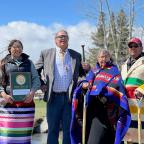
This webinar invites participants to expand their perspective on community forestry by exploring it through a Tribal food sovereignty and cultural preservation lens. Participants learn how trees function as cultural and community anchors and dive into actionable insights from the Arbor Day Foundation’s recent Tribal Forestry Needs Assessment Report. The session also highlights how philanthropic partnerships are driving community-led solutions and sets the stage for continued, action-oriented dialogue.

June 11, 2026

Research to Practice: The Stormwater Benefits of Trees

(opens in a new tab)

It is well understood that urban trees provide an array of ecosystem services, including stormwater mitigation. What is less understood is how this service varies based on the physical traits of trees. Application of this knowledge in urban tree selection can be useful in moving towards optimal runoff reduction by urban tree canopy. In this presentation, we will provide an overview of the physical tree traits that correlate with high rainfall interception and runoff reduction by urban trees. We will also introduce a novel, practical guide - developed in collaboration between the City of Snoqualmie, Washington and Michigan State University - for urban foresters to identify these traits and select corresponding tree species. The presentation will conclude with a case study of the stormwater utility-funded, combined stormwater/urban forestry program in Snoqualmie. This program serves as an example of how a municipality’s recognition of the stormwater benefits of trees has generated a sustained funding source for urban forest management.

March 12, 2026

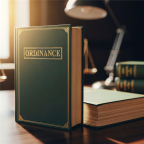
Tree Protection Ordinances: Where Do We Go From Here?

(opens in a new tab)

Recent legal challenges and legislative attempts at preempting local ordinances have demonstrated that tree protection ordinances are a sensitive issue. Using recent examples, this talk explores legal and legislative critiques of tree protection ordinances and illustrates best practices in the development, revision, and administration of local ordinances.