New on Unearthing Optimism: Growing resilient communities starts with trees. LISTEN NOW

Paper Birch: Shining Beauty
Learn why the paper birch, with its striking white bark and golden fall color, is one of North America's most beloved and versatile landscape trees.
October 7, 2020
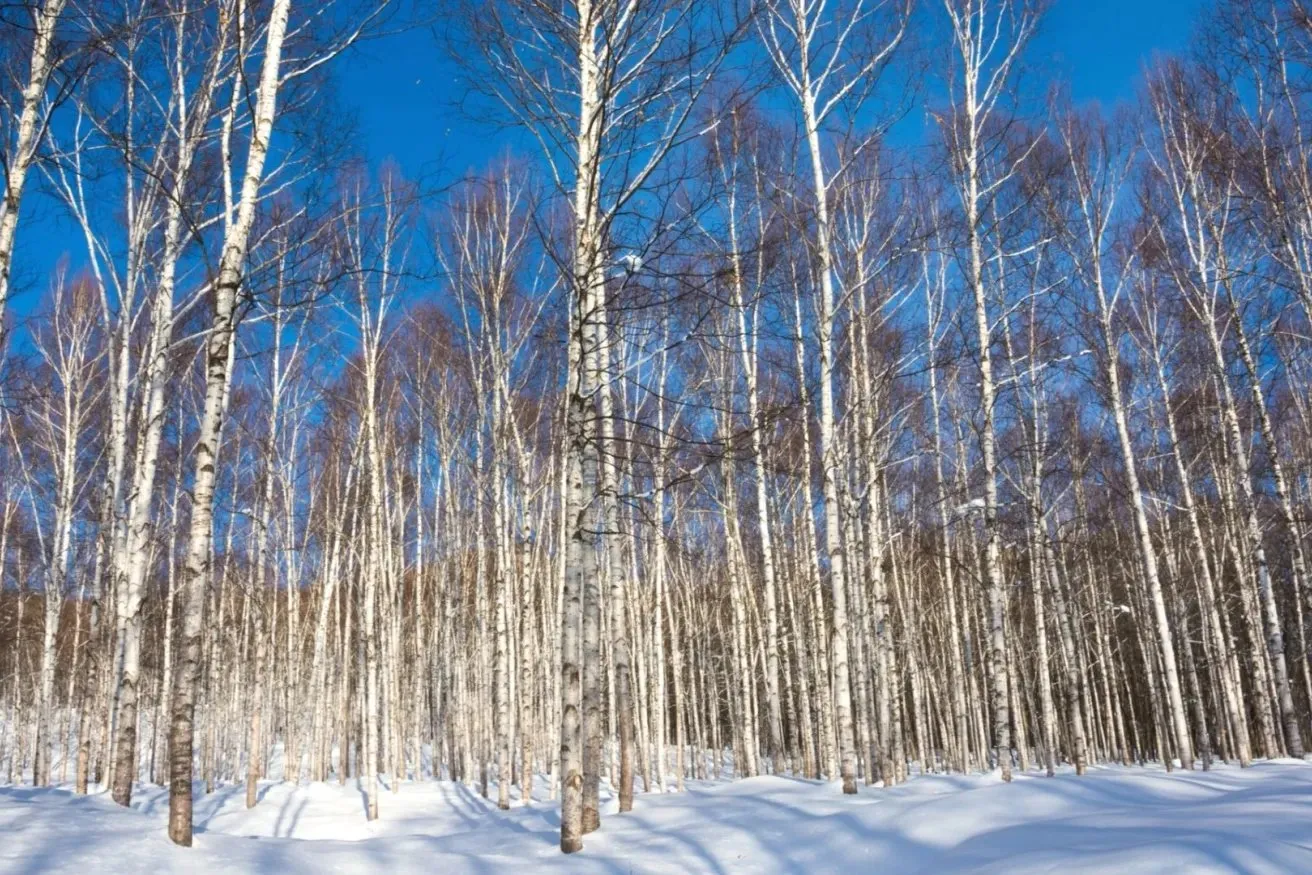
Beauty and romance may be the first images many people associate with the gleaming white paper birch. But this symbol of the north country, and the state tree of New Hampshire, has earned its place in history as a continuously useful tree that has served North Americans since the earliest days of human activity.
Betula papyrifera
…it is now one of the best loved trees of the New England landscape, and when we remember a scene there, we see birches in it — gleaming white trunks, houses, and churches painted a cold, clean white, and pure country snow stretching white over dale and hill. — Donald Culross Peattie
Beauty and romance may be the first images many people associate with the gleaming white paper birch. But this symbol of the north country, and the state tree of New Hampshire, has earned its place in history as a continuously useful tree that has served North Americans since the earliest days of human activity.
Along with its close associate, quaking aspen, paper birch is one of the most widely distributed tree species on our continent. It is primarily a tree of the great boreal forest that stretches from New England to Alaska. Specifically, it is an ecological product of short growing seasons, low temperatures, and cold soils which may fluctuate from excessively moist in the spring to excessively dry in late summer.
A key to the occurrence of paper birch in a forest is sunlight. It is what foresters call shade intolerant and a pioneer species. Its abundant and light weight, winged seeds are carried long distances by the wind, often blowing for miles across an icy crust of snow. This helps enable it to emerge singly or in small groups wherever an opening occurs within its general range. When fire, wind, or logging removes a large area of spruce, balsam fir, maples, beeches, or other “climax” species, paper birch quickly appears and soon may form extensive stands of shining white trunks.
Eventually, its own shade does it in. Shade tolerant neighbors sprout or send seeds into the stand. The new understory will gradually overtop the relatively fast-growing but short-lived paper birches and a mature forest of other species will dominate until another disturbance starts the cycle all over again.
What’s in a Name?
Paper birch received its name from the nature of its bark. Before it became frowned up on as an act of vandalism, people would peel layers of the thin, paper-like bark and write on it as a novel way to send messages. This species also goes by other descriptive names such as white birch and canoe birch.
The two parts of its scientific name, Betula papyrifera, are equally descriptive but come from parts of the world far removed from the hills and lakesides of the northland. The genus name, Betula, is from the Sanskrit, an ancient Indo-Aryan language associated with Hinduism. It means “to shine” referring, of course, to the bright, white bark. Papyros, the root word in the species name, papyrifera, is Greek for the Egyptian name of the reed from which paper was made. It is also the source of our English word for this all-important product.