The AP’s Peter Prengaman talks news and hope in Unearthing Optimism. LISTEN NOW

One Farm's Ripple Effect
Planting trees along a Pennsylvania stream helped restore water quality and inspire conservation across a farming community.
August 10, 2026
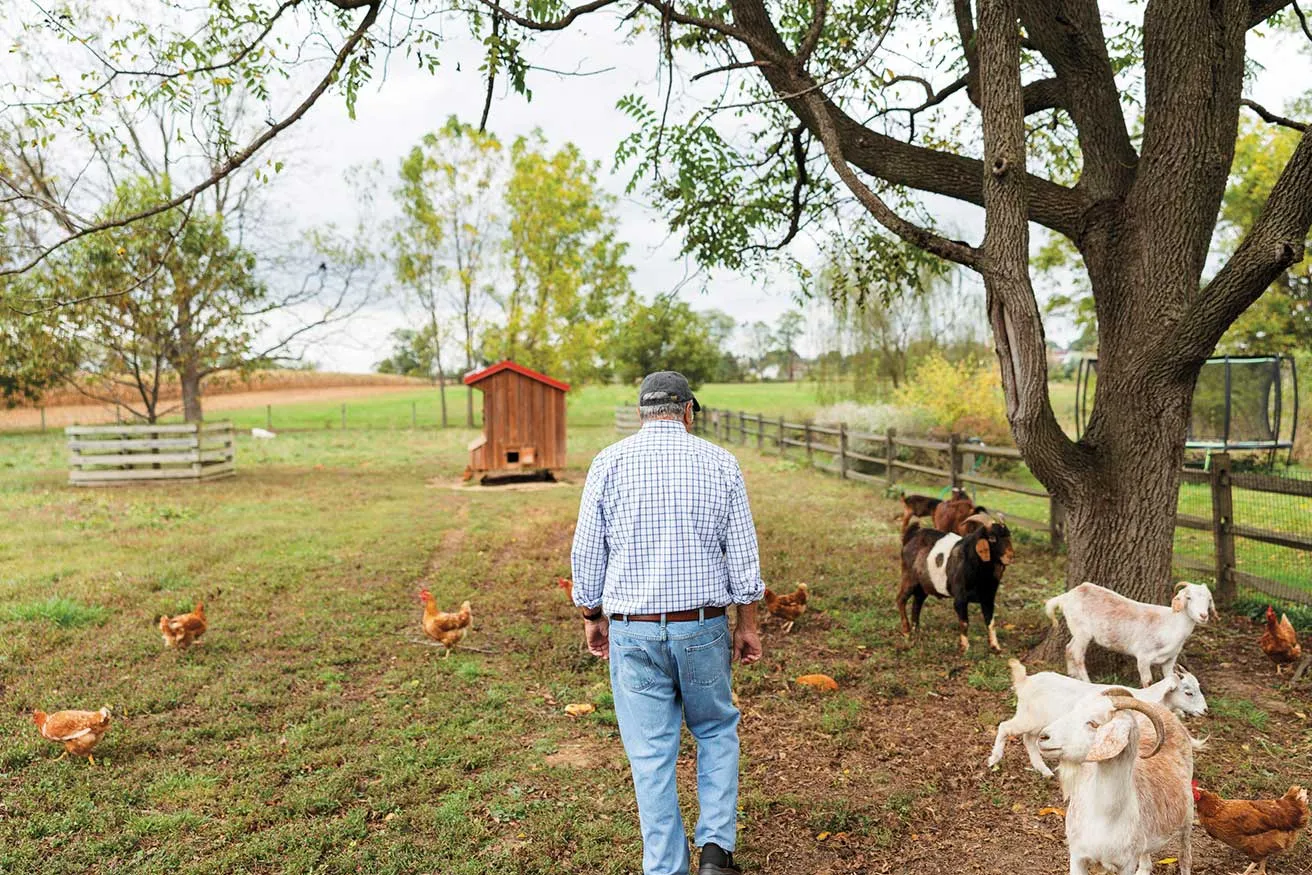
Along a quiet stretch of countryside in Pennsylvania, a small stream winds through a family farm that has stood for generations.
The land has been in David Denlinger’s family since the mid-1800s, a place shaped by time, memory, and care.
But when Denlinger and his family returned about a decade ago, they found the stream in a very different condition. Cattle and horses moved freely through the water, churning up mud and eroding the banks.
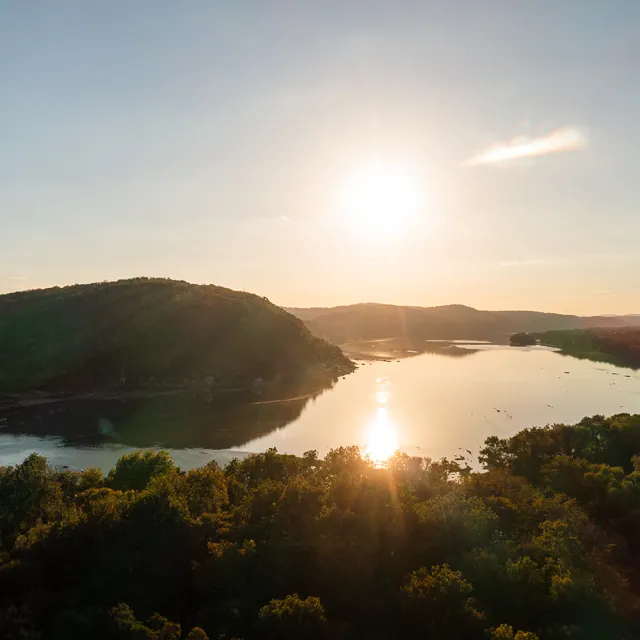
“The stream was really in a terrible state,” Denlinger said.
So, they started with a simple step: fencing livestock out of the stream. Then came the trees.
Working with the Chesapeake Bay Foundation, Denlinger planted more than 1,000 trees across seven acres along the streambank, creating what’s known as a riparian buffer — a natural barrier designed to protect and restore waterways.
A small stream, multiplied
Denlinger is quick to note that his stream is just one small branch in a much larger system, one that eventually feeds the Chesapeake Bay.
“I realize that one little stream doesn’t do that much,” he said. “But when multiplied by many people doing it, we could get a much healthier environment.”
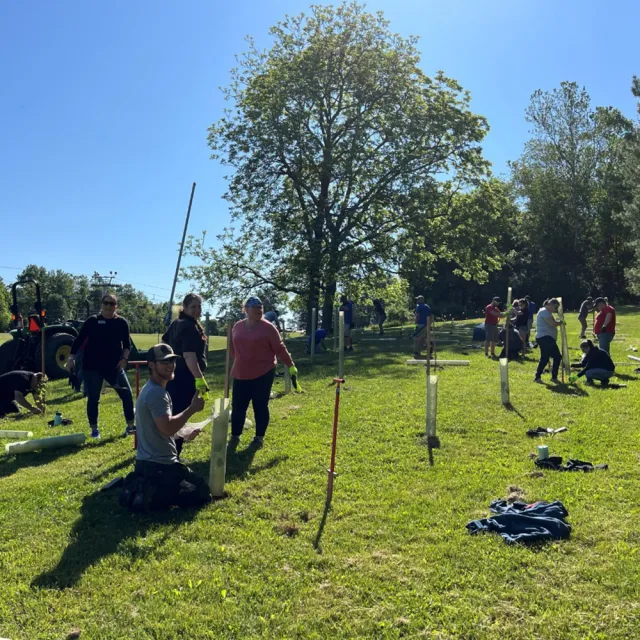
That multiplication is already happening. Neighboring farms have begun planting their own buffers, inspired in part by what they’ve seen here. What started as a single effort is becoming a shared, growing commitment to stewardship across property lines.
“It’s really great to have a community effort in this little stream,” Denlinger said.
For farmers and landowners, that kind of buy-in is essential. Much of the region’s streams run through private land, making individual decisions critical to broader environmental progress. And those decisions don’t just benefit the land — they can improve livestock health, reduce erosion, and strengthen the long-term resilience of farms.
Watching the land heal
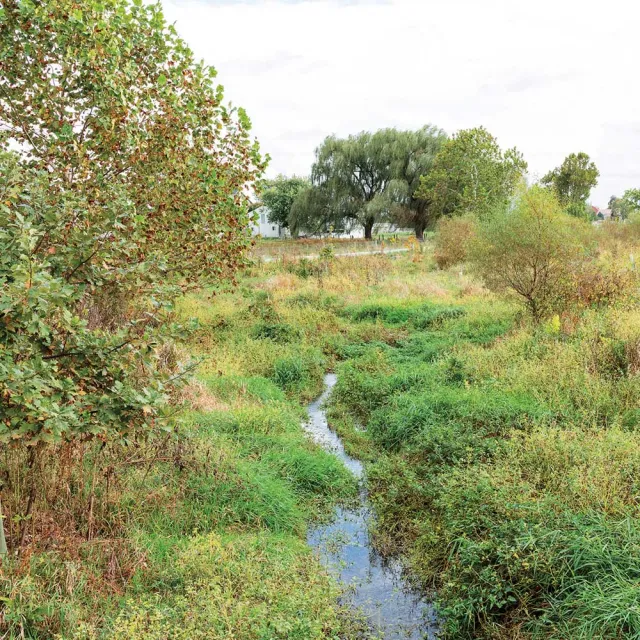
More than a decade later, the change is visible. The stream runs clearer now, its temperature has cooled, and what was once an exposed, muddy channel has become a healthier, more stable ecosystem.
“You could imagine before, the heat beating down on the stream,” Denlinger said. “Now, it’s a completely different environment.”
The benefits extend beyond the water. The buffer has created a habitat where there once was pasture, bringing new life to the land. Deer and fox now move through the trees, and insects — nature’s quiet indicators of water quality — are beginning to return.
For Denlinger, a former entomology professor, that matters.
“Insects don’t do well in a muddy stream,” he said. “When you start to see those species come back, it’s a sign that things are getting better.”
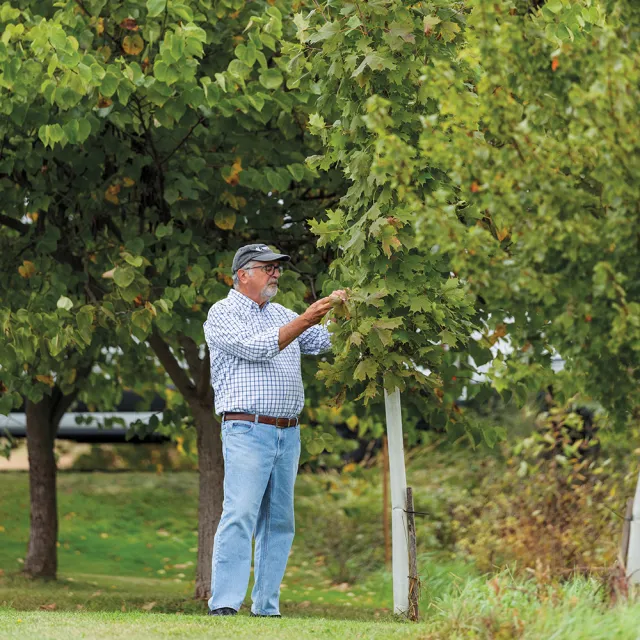
Even unexpected rewards have taken root. Among the trees are persimmons, a fruit he now harvests and enjoys.
Rooted in the past, growing for the future
On Denlinger’s farm, the connection to trees runs deep.
He remembers an old oak from his childhood — a tree that seemed to hold generations of stories. Today, that sense of continuity lives on in new ways. In his office sits a desk crafted from a walnut tree that once grew on this very land, built by his great-grandfather.
Nearby, elderberry plants still grow along the stream, the same ones his great-grandmother once wrote about harvesting in her diary. Planting trees along the stream is, in many ways, a continuation of that legacy. Looking ahead, Denlinger hopes to see the buffer grow taller, fuller, and the stream grow healthier with it.
But more than anything, he hopes to see the impact spread. Because when one landowner takes action, it can inspire another. And another.