New on Unearthing Optimism: Growing resilient communities starts with trees. LISTEN NOW

Northern Red Oak: A Tree of Ease
Discover the northern red oak, a fast-growing, low-maintenance shade tree celebrated for its brilliant scarlet fall color and easygoing adaptability.
May 30, 2017
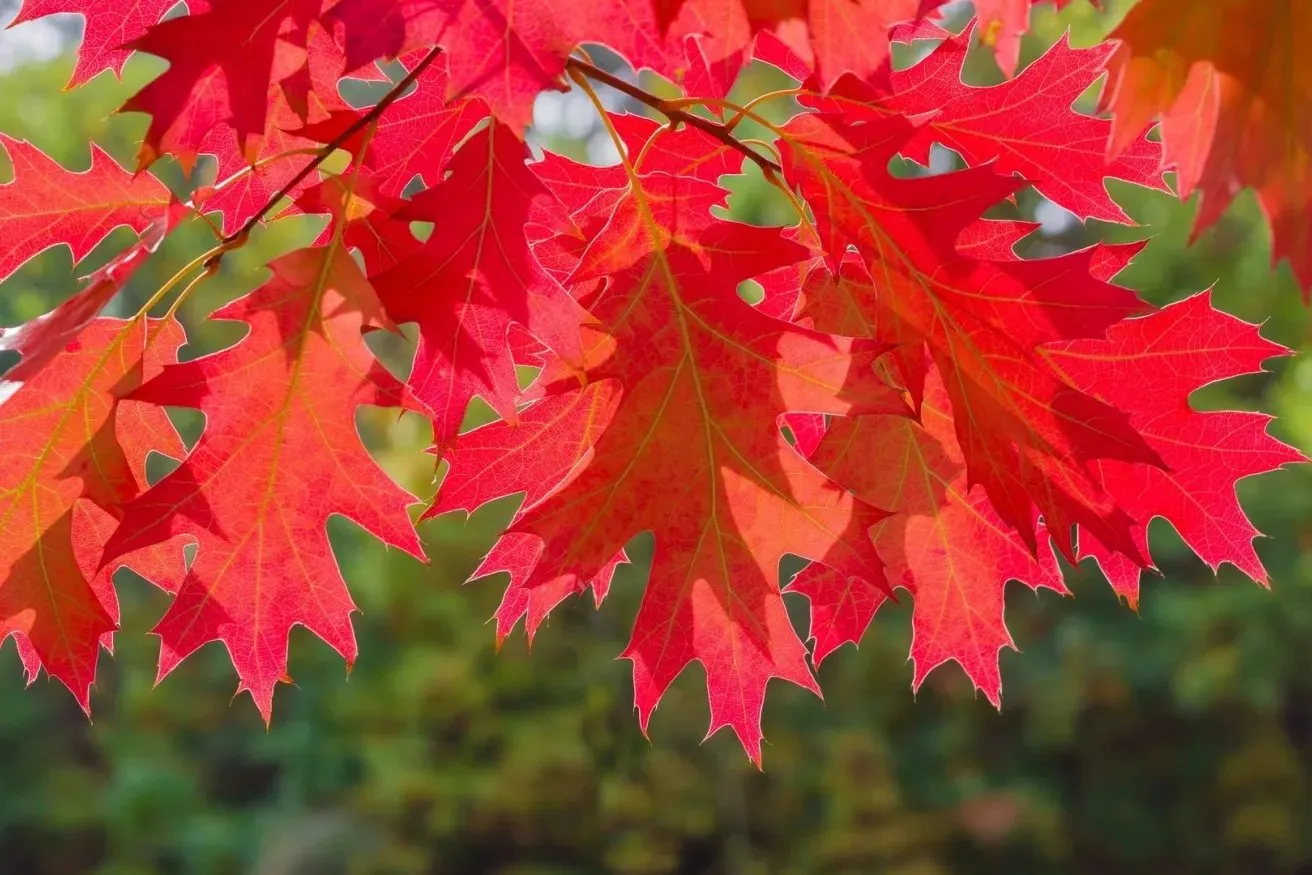
The northern red oak has been called “one of the handsomest, cleanest, and stateliest trees in North America” by naturalist Joseph S. Illick.
Quercus rubra
During the colonial times people realized that red oaks are of high value and have superior wood qualities. This Midwest native quickly became a favorite for landscapers because of the tree’s adaptability and usefulness, including its hardiness in urban settings. In addition to its strength, the tree is attractive, displaying a beautiful show of reds and browns in the fall.
One of the many distinctive features of the northern red oak is that it is easier than most oaks to transplant. It is believed that the first red oak to be transplanted was in Bishop Compton’s garden in England. It is equally at home on a shady city street or as part of a natural or managed forest. By 1924, there were more than 450 acres of red oak plantations in Baden, Germany.
The tree didn’t have to travel abroad to catch attention at home. President Eisenhower planted a northern red oak at the White House that still stands today.
In the Landscape
One of the tree’s most praised attributes is its ability to thrive in varying conditions, so it’s no wonder the northern red oak makes a great shade tree with its fast growth and dense canopy (hardiness zones 3-8). The acorns are enjoyed by birds, squirrels, deer, raccoons, and even bears. In the winter, deer are known to browse the buds and twigs of the tree.