The AP’s Peter Prengaman talks news and hope in Unearthing Optimism. LISTEN NOW

How Trees Protect the Chesapeake Bay
Planting trees along Pennsylvania streams is helping restore farms, waterways, and the Chesapeake Bay watershed.
July 24, 2026
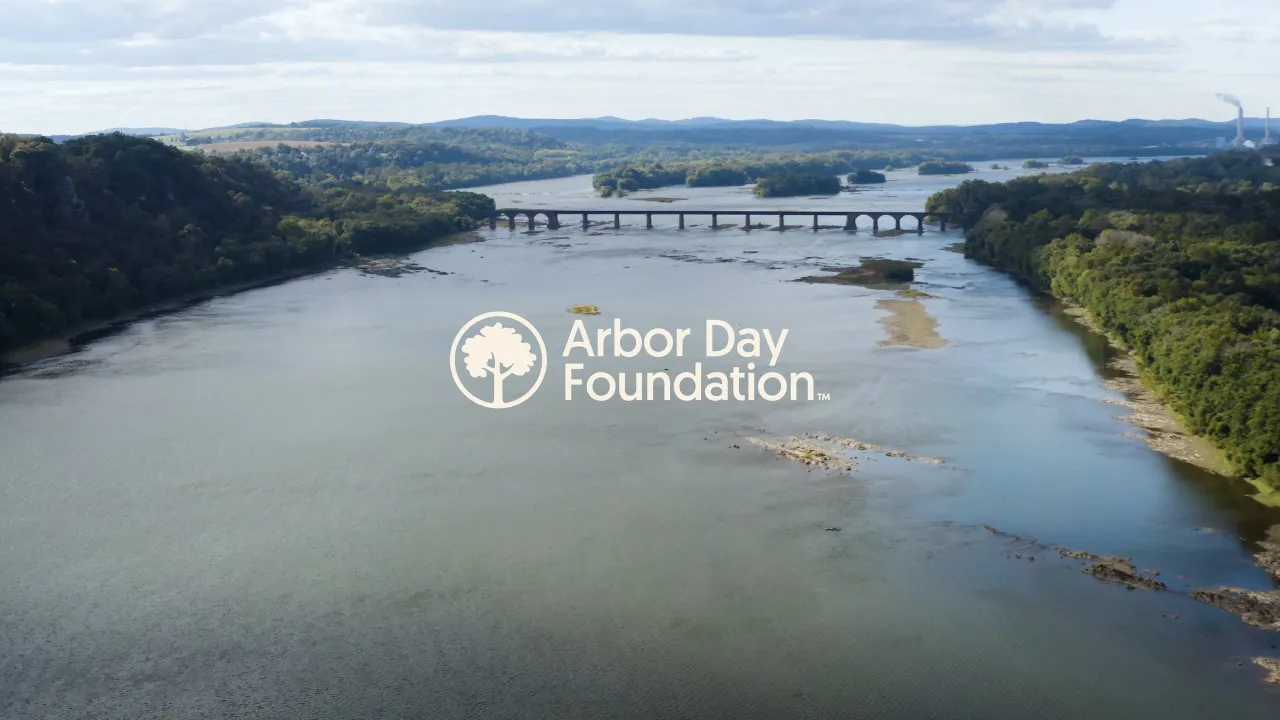
When trees take root along Pennsylvania’s streams, they help protect farms, restore waterways, and safeguard the Chesapeake Bay for millions of people and wildlife downstream.
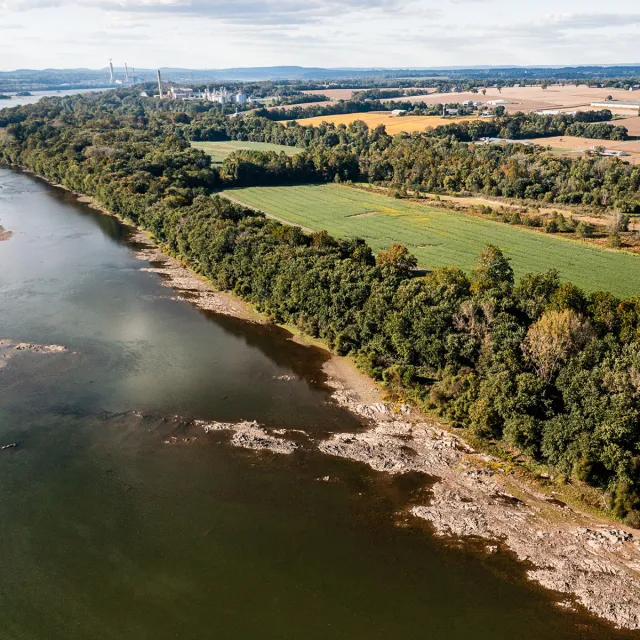
Stand along the banks of the Susquehanna River in central Pennsylvania and it’s easy to feel the scale of the landscape around you. What’s less obvious is just how much this place matters to one of the most important ecosystems in the country.
More than half of the freshwater flowing into the Chesapeake Bay begins in Pennsylvania. Every stream, tributary, and river carries water downstream, along with whatever travels with it. That means what happens here can shape water quality, wildlife habitat, and livelihoods hundreds of miles away.
“The Chesapeake Bay is the largest estuary in the United States, third largest estuary in the world,” said Brenda Sieglitz, director of major giving for Pennsylvania at the Chesapeake Bay Foundation. “It’s where freshwater and saltwater meet, and it creates this incredible lifeline and ecosystem for millions of fish and animals and wildlife all around us.”
The Bay supports more than 3,600 species of plants and animals. It’s a critical stopover for migratory birds and home to thriving fishing industries known for blue crabs, oysters, and other seafood.
And the health of that ecosystem begins far upstream.
WHEN WATERWAYS STRUGGLE
Across Pennsylvania, thousands of miles of waterways have been classified as impaired due to erosion, sediment runoff, and nutrient pollution. These challenges affect both the environment and the people who rely on the land.
Eroding streambanks can mean lost farmland, degraded soil, and murky water moving through working landscapes. Eventually, that pollution flows into the Chesapeake Bay.
“We all live downstream,” said Kristen Heberlig, Pennsylvania watershed resiliency program manager at the Chesapeake Bay Foundation. “It’s important to recognize investing in our own streams in Pennsylvania and caring for what we have, starting at the individual farm.”
For more than a decade, the Arbor Day Foundation and the Chesapeake Bay Foundation have worked together to address that challenge.
“Our partnership with Arbor Day Foundation has been 13 years and over a million-dollar investment,” said Sieglitz. “That support is helping improve the lives of landowners and their properties by reducing erosion on their streams, adding native trees to their landscapes, and improving the waterways all around us — including the 26,000 miles of impaired streams here in Pennsylvania.”
Restoring water quality requires solutions that work for both people and the land.
TREES ALONG THE WATER’S EDGE
One of the most effective solutions is also one of the simplest: trees. Through its partnerships with the Chesapeake Bay Foundation, the Arbor Day Foundation works with farmers and landowners to plant riparian buffers, or rows of trees and vegetation along streams.
“Planting a tree is one of the best things you can do to have a positive influence on water quality,” said Dr. Lauren Marshall, director of landscape restoration at the Arbor Day Foundation.
Since 2013, the partnership has helped restore Pennsylvania’s impaired waterways through these buffer plantings. With more than $1 million in support, small farms have been able to adopt conservation practices that plant 30- to 50-foot buffers along streambanks.
These living buffers act as natural filters.
“Trees are like sponges,” Marshall said. “Every time you plant one, whether it’s in your yard or in a riparian buffer like we’re talking about here, it makes a difference to water quality. And that matters for drinking water and for every creature on Earth.”
Riparian buffers stabilize streambanks, filter runoff, and reduce the sediment and nutrients that wash into waterways. Over time, they help restore the health of both farms and streams while reducing erosion and improving soil stability.
“Riparian buffers are really critical to making sure that we can have both productive farms and productive waterways,” Marshall said.
For landowners who planted buffers years ago, the results are already visible: clearer water, less erosion, and healthier land. Proof that small acts, multiplied through partnerships and landowner buy-in, add up to big environmental impact.
A RIPPLE EFFECT FOR THE BAY
Healthy streams in Pennsylvania create ripple effects throughout the entire watershed.
“Clean water is what’s at stake if we do not complete the work here in the Chesapeake Bay watershed and across Pennsylvania,” Sieglitz said. “That primarily comes down to protecting our rivers and streams and reducing erosion, and that means equipping landowners with the trees, supplies, and maintenance they need.”
Cleaner water flowing into the Chesapeake Bay supports fisheries, wildlife habitat, and coastal economies. It also helps restore one of the most studied estuaries in the world — an ecosystem whose lessons are being applied far beyond the region. From the Mississippi River Delta to communities near Seattle, researchers and policymakers are studying Chesapeake Bay restoration efforts to guide their own conservation strategies.
Every restored stream becomes part of a blueprint for protecting waterways everywhere — proof that local action can lead to large-scale environmental change.
GROWING A LARGER MOVEMENT
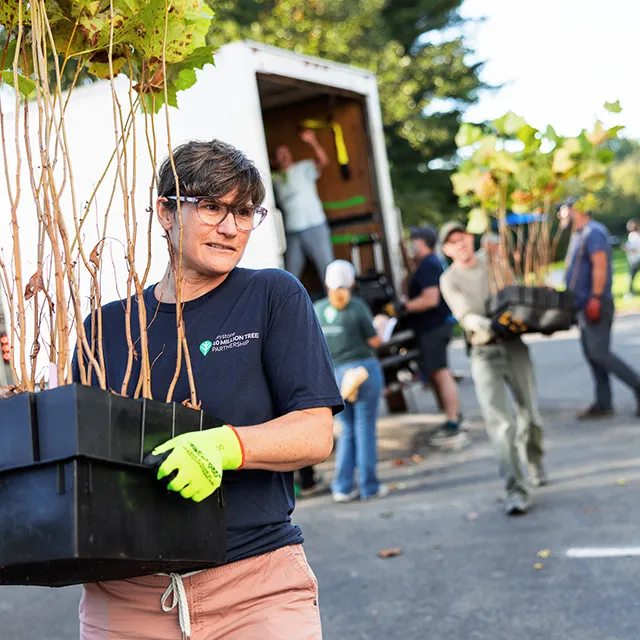
Partnerships make it possible to scale this work across the state, connecting conservation organizations, farmers, and communities around a shared goal: planting trees that protect both land and water.
“Trees are never going to be the solution to any one problem,” Marshall said. “But they are part of the solution to so many problems we face in the world.”
That’s especially true when trees take root along streams.
Across Pennsylvania, riparian buffers planted years ago are already growing tall, quietly improving water quality and strengthening ecosystems. Each tree helps stabilize a streambank, and each restored buffer protects the water flowing downstream. Together, they show how local stewardship can create lasting environmental change.
Because when trees grow along a stream, the benefits don’t stop at the water’s edge — they travel downstream for generations.