Get 10 free trees with your membership contribution. GET STARTED

Black walnut: An American Treasure
Black walnut has earned its place as an American treasure, prized for its rich wood, flavorful nuts, and long lifespan. This article highlights what makes the tree so valuable — and what to know before planting one in your own landscape.
June 7, 2016
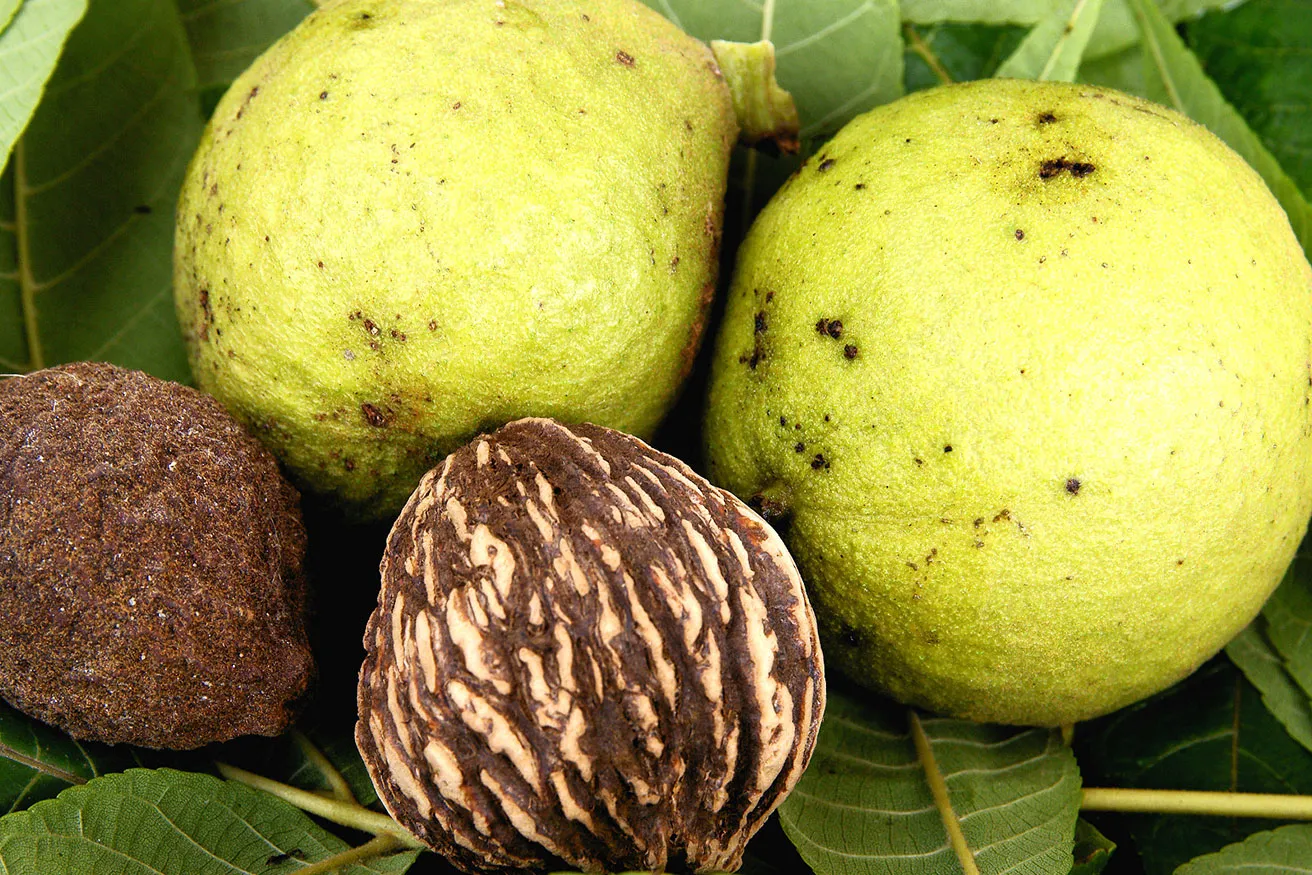
Native to the eastern United States, the Black walnut is one of the most sought after nut trees in the world.
Juglans nigra
With a gleaming dark wood, edible nuts, longevity—living up to 200 years— and fragrant leaves, this tree is one of the country’s most prized possessions and economic products.
Black walnut wood is popular for its rich color, strength and durability. In addition to the tree’s handsome wood qualities, the Black walnut produces edible nuts for wildlife and people. The rich kernel maintains its flavor and texture during cooking. Walnut shells are popular as a polishing abrasive and additive in numerous industrial products. Not to mention, its canopy provides great shade cover.
The black walnut is grandiose, with a deep taproot system spreading 50-75 feet. If planting in a residential area, be sure to leave plenty of space for it to grow.
Here are a few things to note before planting.
Environmental Conditions
- Does well in clay, loamy, moist, rich, sandy, well drained and wet soils (hardiness zones 4-9).
- Grows up to two feet a year, reaching 50-75 feet at maturity.
- Prefers full sun with at least six hours of direct sunlight every day.
- Note: Black walnut trees load their roots, buds and nut hulls with the juglone toxin which seeps into the soil; avoid planting juglone intolerant species near Black walnuts. Here is a list of compatible species.
Physical Attributes
- Produces a green, fleshy husk and black hard shell around the kernel. Harvests nuts in 8-10 years, with best nut production beginning when trees are 30 years old.
- Self-pollinates, but plant two crops for best results.
- Bonus: Black walnuts have nearly twice the protein of English walnuts.
- Has fragrant, pinnately compound leaves.
Tag us in a photo of your black walnut tree!