What Americans Think About Trees: 2026 Canopy Report Webinar
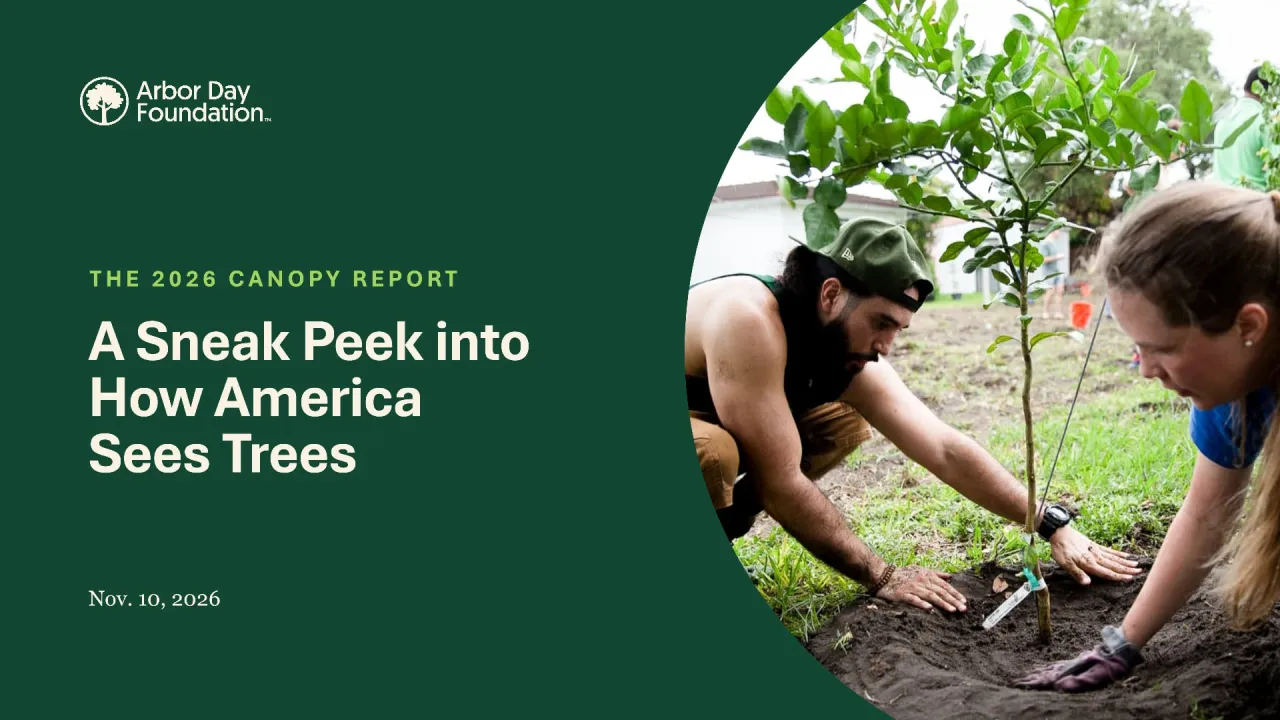
Arbor Day Foundation experts unpack five of the most important findings from the 2026 Canopy Report. The conversation pairs national polling data with examples of tree-planting projects that are helping communities become healthier, more resilient, and better connected.
Date
Type
Presented by
Watch the webinar
TURNING SHARED VALUES INTO COLLECTIVE ACTION
What role do trees play in Americans’ lives, and what stands between people’s appreciation for trees and their willingness to plant them?
The 2026 Canopy Report reveals that Americans overwhelmingly recognize the value of trees, but the findings also reveal a gap between enthusiasm and action. While 80% of respondents say they would plant a tree if someone gave them one, four out of five Americans report that they did not plant a tree during the past year. A lack of knowledge, confidence, suitable planting space, and ongoing care are among the barriers keeping more people from taking action.
Key themes from the 2026 Canopy Report
-
Building confidence to plant - Americans want more trees, but many do not feel prepared to plant or care for one. Fifty-eight percent say they lack the necessary knowledge, while only 17% feel comfortable planting a tree independently and teaching someone else how to do it. The findings point to a need for practical education, accessible resources, and hands-on planting experiences.
-
An urgent need for reforestation - Americans recognize the beauty and ecological value of forests, including their role in supporting wildlife and providing clean air and water. More than 80% agree that forests need more trees and that planting today is important for future generations.
-
A changing climate is affecting daily life - Two-thirds of Americans say they experienced a natural disaster during the past year, and nearly 70% report changing plans because of extreme weather. Excessive heat is becoming especially widespread, with 40% saying they experienced it during the previous 12 months. For the first time in the report’s three-year history, shade ranked as the attribute Americans value most about trees.
-
Expanding equitable access to trees - Ninety-three percent of Americans say trees make neighborhoods more livable, and the same percentage believe trees and green spaces should be accessible to everyone. Yet 52% say they must drive to reach their nearest park or natural green space. The findings underscore the importance of directing tree-planting resources toward neighborhoods where canopy and access remain limited.
-
Trees support healthier, happier lives - Nine out of 10 Americans view trees as a public health tool, while 93% recognize their value for mental health. About three-quarters believe their physical and mental health could improve through greater access to trees and green spaces.
From national data to local impact
This webinar also connects data from the report to Foundation-supported projects including:
-
Building planting knowledge in Jackson, Mississippi: More than 400 people participated in hands-on workshops about planting and caring for fruit trees, then took free trees home to continue the impact in their own neighborhoods.
-
Creating a living classroom in Westbrook, Maine: Students are helping grow an orchard with 30 fruit trees and 200 native shrubs while learning about food systems, sustainability, and tree care. The harvest will support the school, local families, and food pantries.
-
Restoring longleaf pine forests in the Southeast: Planting efforts are reconnecting fragmented habitat for nearly 600 plant and animal species while supporting forests that are resilient to fire, drought, and hurricanes.
-
Bringing shade to Phoenix neighborhoods: Forty-eight trees were planted across two parks in an area with only 6% canopy coverage, creating cooler, healthier outdoor spaces for children and families.
-
Supporting wildfire recovery in Paradise, California: A tree distribution reached nearly 500 families and community members affected by the 2018 Camp Fire, helping residents rebuild landscapes and restore a sense of home.
-
Closing the canopy gap in Washington, D.C.: A community project planted 149 trees in Wards 7 and 8, where tree canopy is about half the level found in more affluent wards.
-
Connecting trees and health in Tampa, Florida: A community garden and food pharmacy gained 15 trees and 150 shrubs, creating new opportunities for fresh food, shade, outdoor activity, and connection.
Full transcript below
EDITORIAL NOTE: Grammar and punctuation were lightly edited for clarity while preserving the speakers’ meaning.
Lisa Kelly
Welcome. My name is Lisa Kelly. I'm the director of development here at the Arbor Day Foundation. We are so excited to be sharing with you a sneak peek into how America sees trees.
You are the first audience to be hearing the results of the 2026 Canopy Report. This report has not yet been published. You are hearing the first information about this report. We worked with The Harris Poll to conduct a public opinion poll of 2,000 adults across the United States.
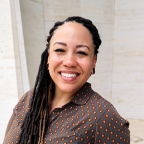
We surveyed individuals from across a variety of geographies, backgrounds, and experiences to really understand their perspectives on trees and the role that trees play in our lives. And we have two great speakers here today to share with you the results of that polling and how that polling touches down in the work of Arbor Day Foundation. Lachelle Bradley Williams is our senior manager of community trees. She works to build connections with tree-planting partners around the world and across the United States and champions their efforts to strengthen communities through trees.
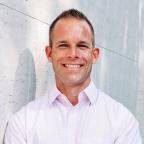
And then we also have Jeff Salem, our director of communications and public relations, who is a tremendous storyteller who works to build awareness of the Arbor Day Foundation and its impact across the world. with that, we'll go ahead and turn it over to Jeff and Lachelle to share this exciting, not yet published, results of the Canopy Report.
Jeff Salem
Thank you so much, Lisa, and it's good to be speaking to everybody on this webinar today about the Canopy Report. And to Lisa's point, this is really a sneak peek, so this is an exciting moment for the foundation and for our team over here at the organization. The Canopy Report has become a really wonderful report that we've commissioned three years running now, and we just got this data hot off the presses in the last few weeks, and we're still compiling and collating all of the data we're seeing.
And so this really is an exciting moment where we're feeling like we can share some of the early returns of this report before it is published and made public next Wednesday. And I know you will all be on this call receiving follow-up communication, so you can be the first to download the report in full. Before we dive in and talk through some of the takeaways that our team is already seeing that we're excited about and how it connects to our work, a little bit about the Canopy Report for those uninitiated.
This is the third time we've been doing it, third year running, and to Lisa's point, we asked a whole lot of Americans a whole lot of tree-related questions. much so that it is a statistically viable and relevant report, meaning that we could ask thousands more the same questions, and we're going to come up with the same percentage points when it comes to behaviors, responses, and all that.
And so, it allows us to put a stamp of approval on this data and say, "This is what America is thinking and feeling when it comes to these tree-related questions that we're asking." And I do want to point out too that and we worked with our friends at The Harris Poll, which is a really reputable organization that does perception surveys, polling, as their mission. And so this is not a scenario where we're going out and asking Arbor Day Foundation members and supporters their beliefs and feelings and thoughts around trees.
Obviously, we would hope that Arbor Day Foundation supporters love trees, but we really wanted to poll the general public, and that's where this report becomes statistically relevant and viable. We use this reporting and data all across the foundation. On my team, I'm the director of communications and public relations. This really started as an opportunity for us to storytell and create some media coverage, some awareness, and publicity around the value of trees in all of our lives, and also that connection to the work that we have alongside our supporters, like you all at the Arbor Day Foundation.
And so we really have been using this to create connections and relationships in the media. We are all over the media landscape trying to storytell around this and using this as verifiable data and resources, saying, "It's not just the Arbor Day Foundation telling people that trees are important. This is what America thinks and feels." And it's been a really affirmational document for us to be using in the PR space.
But also, it's been a really wonderful report and tool to share with our partners on the ground, in our forest lands, in our communities. much of the work that we do alongside our supporters can't happen without the partners on the ground actually putting the trees in the ground and being able to showcase some of this reporting back to them has been really wonderful to see them gravitate and use in their own communications channels. And then we also use it in our own programmatic work.
You'll see this data and this messaging in signage at our community plantings as well, and that is, again, more affirmation that this information we're about to share is really educational. It's useful for our planting network that really is all over the country, all over the world, and they're using this data that we're going to walk through today. after we go out and ask a whole lot of America a whole lot of tree-related questions, the real fun is getting that data back in-house and trying to organize that into a little bit of a thoughtful report.
And what we start to see when we ask all of these questions is we see some themes and some similarities between some of America's thoughts and responses. And we try and organize those into some themes that really ladder up to, when you look at the reports in whole next week, they really act as chapters of a book, if you will.
And those are the large takeaways that we wanted to just share with you all as we're putting them together, still as this report is being compiled. with that, the first thing that we're seeing this year in this report is this idea that Americans want more trees, but we're actually seeing some self-awareness that there's a lack around the confidence to plant trees themselves.
It's great when we see 80% of respondents saying things like, "I would plant a tree tomorrow if someone gave me one." Again, eight out of 10 Americans are acknowledging that they understand if everyone knew how to plant a tree the right way, we would solve a lot of environmental problems. That is a really good thing that at the Arbor Day Foundation, we're excited to see that type of data come through.
But where you see a little bit of a paradox is that attitude and understanding of the need, but yet four out of five Americans say, "We haven't planted a tree ourselves in the last year." And so there's a little bit of a planting paradox that we're seeing in this year's data that we're still uncovering, trying to think through how we can better lean into that from an educational standpoint Again, when you look at this, that really comes down to the reason people are not planting is they're saying they lack the know-how. 58% don't have the knowledge.
Only 17% of all respondents in this survey said they are comfortable planting trees by themselves and teaching others. That's really what we all want everyone in our network to aspire to become. And when you ask into, "What are you feeling some discomfort around?
What would prevent you from doing it yourself?" We're seeing, from one down to nine, Americans don't know where they would plant it. They are wrestling with the cost of trees and the planting supplies that are typically associated. There's some worry around what to do after you plant it and that long-term maintenance, making sure that the nurture side of our mission, that maintenance and care. And so this is a learning section for us that we're really starting to think through and how we can better bolster our education and support of our supporters that are doing the planting across America in their front yards and backyards.
Another interesting nugget in this space was we're seeing that younger generations, so in this case, that means Millennials and Gen Z, they're interested in learning about tree planting education across a wide swath of learning methods. That's written guides, it could be one-on-one expert instruction, and so we're seeing the younger demographics, there's really this fractured sense of how they're learning in this educational space that it will change how we reach out to younger groups as we continue to help the next generation become tree planters.
Lachelle Bradley Williams
Hi, everyone. My name again is Lachelle Bradley Williams. Here at the Arbor Day Foundation, I work with a team that's directly connected to planting partners that we work with across America, across the globe. We get to hear about their local community work, their tree needs and initiatives, and how we can work together to support tree planting in their areas.
So I'm really excited to be here with you today to share some of those project examples. So I'm going to dive right in to this first example that you're seeing on the screen here. We're talking about building confidence in tree planting. this is a project I wanted to share. It goes beyond simply putting trees in the ground at in Jackson, Mississippi here.
Took place last year that one of our local planting groups in the area hosted a series of hands-on workshops where people came out to learn about fruit trees, how to plant them, and how to care for them. And then participants got to take a free tree home, so that learning turns into something tangible that they can continue to grow in their backyard with their community and together. across this project, more than 400 people participated, which was amazing, and it helped to extend the impact well beyond any of the workshops or the day of this planting. They now get to watch it grow with their families and in their community.
Another example that I'd love to share is this project that helped turn the school grounds into a living classroom. In Westbrook, Maine, the middle school students are helping to grow an orchard where they can learn firsthand about food systems, sustainability, and essentially how to take care of trees. the planting of this project added 30 fruit trees and 200 native shrubs to the area. It created opportunities for students to be a part of planting, growing, and eventually harvesting fresh food. That's going to be able to support the school, their very own families, and even local food pantries.
So I thought this was a lovely example to share about how children can grow confidence and how tree planting can become a lasting educational experience for young people like these that you see on the screen.
Jeff Salem
And just really quick, I love this example. When we see data points around people lacking the knowledge and know-how to plant trees and 91% of Americans, and those are adults, say the best way for them to learn how to plant a tree is to get their hands in the soil and do it themselves. And so when we're engaged in events like this where the next generation are already picking up shovels, getting comfortable, working in the ground, it's an exciting thing to see our mission come to life in that way.
The next theme that we are really excited about, honestly, when poring over this data is this sense that Americans agree reforestation work needs a little bit of urgency around it. There's this idea that we love our forests, regardless of how often we are spending time in a state forest nearby or a national park. It may not be an occurrence that happens too often. Maybe once a summer, we make it to a national park or a state forest.
And yet we still understand and have this emotional connection to what they bring to our lives, our identity as Americans. And you can see it's the beauty and aesthetics, it's the wildlife, it's those intrinsic, inherent benefits of clean air and water. We understand what these majestic landscapes are doing for our lives, even if we're not spending a ton of time in them. That's a good thing.
What is really important and what we are valuing in this report is this idea that Americans also understand that there's a little bit of time is of the essence to keep our forest lands healthy, save those forests that are really under duress from things like wildfires. Over 80% on all of these responses is really a powerful statement that Americans are making. We need to plant trees now for the next generation. Our forests need more trees.
Right now is the time we need to be planting trees. And so those are some really unified statements all around the need for trees at scale that we're still digging into.
Lachelle Bradley Williams
I'll pop in here and share a quick project about some trees and forest land in the American Southeast region, specifically highlighting what you're looking at here are longleaf pine forests. longleaf pine trees.
These forests once covered 90 million acres, and today, less than 6% of that historic range remains. we do lots of work with planting partners in the area that work and connect with private and family forest landowners to plant more of these forests, more longleaf pine trees in these priority areas. this project specifically is helping to connect those fragmented parts of the forest and restore habitat for nearly 600 plants and animal species that depend on this singular ecosystem. because longleaf pine trees are so resilient to fire and drought and hurricanes, the planting of these are doing so much more than restoring what was lost.
They're also helping to protect healthier, more resilient forests for generations to come.
Jeff Salem
That's great, Lachelle. The third theme that we just wanted to share with you in advance of this report being published next week is this idea that our warming world, our changing climate, is really changing how Americans are living their lives, even on a daily basis. More and more people are feeling the effects of extreme weather at their door, and that may be wildfires, tornadoes, floods, hurricanes.
Two-thirds of Americans are raising their hand saying, "Yeah, I have experienced a natural disaster in the last year." Another interesting question that we ask every year is this idea of experiencing climate dread, which is that feeling of unease or distress around weather-related challenges. It's up 6% just from last year alone, and it's still maintaining right at that two-thirds of Americans are saying, "Yeah, I actually know this feeling of climate dread, and I've had it." We also saw this year that, more so than previous years, extreme weather is changing how we go about our day.
And a lot of these, when you look through them, they're all interesting on their own, but when you look collectively towards the top, they seem to draw a dotted line towards our hotter summers that we've been experiencing in a lot of our regions of the country the last couple of years. It's interesting, knowing that we have a super El Niño forming in the Pacific that is turning our weather upside down in many regions. It's going to be really wet where it's usually dry and things like that. The number one response to this is people are saying, "Yeah, I actually limit how long I spend outside.
I change the time of day I go outside. I cancel plans outdoors. I move them inside." Those all feel like heat-related extreme weather challenges. And again, that just overarching stat in the circle there, that 70% almost of Americans are saying they've had to change plans due to extreme weather, not just because it's raining.
Excessive heat, especially when we looked year over year, is up 12% when we asked Americans, "What of these weather disasters did you experience in the last 12 months?" Extreme heat is just becoming more and more ubiquitous in our lives, and that is a challenge when you line it up against some of the other weather patterns.
Again, 40% of us are saying, "Yeah, I've experienced not just hot temperatures, but excessive heat." And again, another just connected data point to that same feeling is, for the first time in this report's three years, we always ask, "What are the attributes that you value most about trees?" And for the first year, shade is number one. We think that maybe that's a connection some Americans are making to the hotter summers that we're all experiencing. we just thought that was interesting.
Lachelle Bradley Williams
All right. Let's dive into a couple project examples to talk about how we have showed up with partners in various spaces in response to some of these extreme heat scenarios and experiences that people are having on the ground in communities. I'll start with this single-day project that took place in Phoenix, Arizona.
Phoenix is the hottest large city in the United States, where extreme heat makes tree canopy and shade essentially critical, exactly as Jeff was pointing out. in a really highly nature-deprived area with only 6% canopy coverage in this specific area that you're seeing on the screen, we came together with 28 other locals to plant 48 trees across two neighborhood parks in the vicinity in the area. One of which is right next to a school, so think about the shade component again.
These trees will provide much needed respite from the heat, shade where kids play and families gather, and help to cool the surrounding areas and create healthier outdoor spaces. It's a powerful example of what can happen in a single day, and how strategically planning where to plant trees can help communities become more resilient to the increasing temperatures that we have been seeing year over year. One more in Phoenix, except for this one spans across a single year, not just a single day. So, this commitment is in South Phoenix specifically.
It started March earlier this spring, and it's going to extend through to March of 2027, coming up around the corner quick. we are committed to a work to restore this area that you're looking at, Rio Salado Habitat Restoration area, where historic under-investment, canopy loss, fire, extreme heat have all left this community particularly vulnerable. And that heat is real. Phoenix considers extreme heat a public health emergency, with hundreds of heat-related deaths still occurring annually in these spaces.
Over the course of the next year, this project expects to plant 90 native drought-tolerant trees, including species selected specifically to provide shade, withstand desert conditions, and support pollinators and wildlife, as you're seeing on some of these signs here and in some of these photos.
Already in the project, 49 trees have been planted, so about half, little over half, alongside four educational workshops that are giving volunteers the skills to plant trees and take over some long-term care to ensure that the trees thrive once they're in the soil. it's a great example to show an investment over one year and how that can also add trees to areas. It can help to restore a landscape, build local knowledge with community, create healthier, more resilient years ahead in an area like this.
Natural disaster recovery definitely extends beyond extreme heat, as you've seen in some of the slides that Jeff shared leading up to these story examples, and fire is one of those. We've seen an increasing and alarming rate of occurrence of fire over the past few years, as I'm sure you all have seen in the news as well. one example I wanted to share is the 2018 Camp Fire that took place in Paradise, California.
It had destroyed over 14,000 homes and led to the loss and removal of about one million trees across these spaces. now, even eight years later, the need to restore the landscape is still really deeply felt in this community by the residents. this project showcases what you're looking at as a tree distribution to almost 500 families and community members across the fire-impacted areas. It's going to help to bring trees back to these properties, where in some cases, everything that they had had been lost. What makes this project so powerful is that fire recovery is much more about replacing the tree canopy.
It's about helping people put roots down again, rebuilding resilient landscapes, and seeing something grow where so much had been lost. projects like these are some of the most powerful and healing experiences of natural disaster recovery work.
Jeff Salem
Thanks, Lachelle. The next theme we are beginning to explore some ideas around is this ... feeling and sense that there is an opportunity for equity hiding in plain sight when we look at some of Americans' responses. We're all sort of understanding that life is better with trees, but we want more. 93%, which if you can get 93% of Americans to agree on anything, that is truly an accomplishment and speaks for itself of the value of this work.
But 93% of Americans are saying trees help make neighborhoods more livable. three-quarters see trees as important or essential in our lives, but still, about that same percentage are saying, "I wish my neighborhood had more trees and green spaces." there's still work to be done across the board. 93% of Americans understand that trees and green spaces should be accessible to everyone, which we think is a really wonderful data point and response from our country, that we believe and agree on this.
And yet there's still a disparity that we feel very strongly needs to be closed when you see 52%, which is more than half of Americans, are saying, "Yes, I need to actually get in my car to drive to the nearest park or natural green area." And we'll get into the next chapter in a little bit, but people are seeking out these green spaces for a variety of reasons, but it is to be healthy. It's to be physically healthy, mentally well, and to feel like we have half of our country needing to drive to that restorative area, is something that we really are mindful around and committed to working out of.
One of the ways that we stay committed to this work is a project that took place in Washington, DC. This project specifically is one that was focused on making sure that those benefits of trees are more equitably shared across two specific wards of Washington, DC. Washington, DC, Ward 7 and 8, where the tree canopy is only about 30%, compared to the nearly 60% of canopy coverage in more affluent wards. through this project, 149 trees were planted with the people that you see on the screen here, including, of those 149 trees, 125, so a large majority of them, went into a really popular nearby park that you're looking at.
That is going to help to bring more shade, cleaner air, even storm water protection, and greener gathering places for young individuals, families, and otherwise, to a historically underserved neighborhood. 85 community participants and volunteers helped to bring this specific work to life, creating a project that isn't just about planting more trees, but it was truly about making sure that everybody here, and in these spaces, has access to the benefits that these trees provide, regardless of their ZIP code or where they live.
The last theme we wanted to pull out for this group today is this idea that we're seeing trees are at the root of a healthy, happy life, and we intentionally are flipping those two words around and putting healthy first. When we dig into the data a little bit, there is this overwhelming sense that our public wellbeing is rooted in trees. Nine out of 10 Americans are saying trees are a public health tool. We feel like that is a really powerful sentiment that we're all kind of feeling together.
This idea that trees and nature are making us feel better, they're making us well. Again, some of these statements that we believe trees are important to the health of our communities. They bring us together and make our communities, our neighborhoods, more vibrant.
And again, even that idea that overwhelmingly, 93% are saying trees are a basic mental health tool, is a new way of understanding the value of nature in our lives, that we think is going to be a talking point and a really big motivator for our organization and our supporters to do good work. three-quarters of Americans on either side, whether it's mental health or physical health, agree that it could be improved with more access, more time with trees and green spaces, which we just love to see.
We ask this year over year cascading question, regardless of what we say trees do for us, you can see year over year, we are reporting higher levels in all of these attributes, whether it's boosting our creativity and inspiration, revitalizing us, energizing us, clearing our mind, bringing us inner peace. That idea that we are understanding to a deeper level each year the impact trees in our daily lives has on our physical and mental wellbeing. And so that idea that trees are a public health tool, we think is going to be really interesting for media. It's going to be really powerful for the areas in which we're doing work.
And I just want to leave you with, this is probably my favorite statistic from the entire report, that 7 out of 10 Americans are considering ourselves tree huggers. I think at the Arbor Day Foundation, 100% of us would call ourselves tree huggers, so we're doing pretty well. But that's a 14% increase year over year of how many of us as Americans would also say, "Yeah, I am a tree hugger," and we love that.
Lachelle Bradley Williams
Thanks for that, Jeff. Here I want to continue to talk about tree huggers and these photos that you're seeing in Tampa, Florida. this project is one that demonstrates how trees and green spaces can become part of a broader approach to community health and wellbeing, and this neighborhood, considered to be a food desert in this space.
This particular project added 15 trees and 150 shrubs to a community garden and a food pharmacy, where previously there were no trees at all. beyond providing fresh food and shade, this space also creates more opportunities for people to spend time outdoors, connect with nature, connect with one another, and support both that physical and mental aspects of wellness and wellbeing. With health education, gardening, outdoor activity all happening in one place, this is really special. This is a great example of how trees can help to create environments where people and communities can be healthier together.
I also thought it was really important to share an example such as this one, where trees are health. This is happening in a highly industrialized neighborhood of New York, where residents have lived in significant air quality environments and have expressed concerns for decades. this community specifically ranks in the 96th percentile for air toxicity and the 99th percentile within the New York State. These are really big stats. This is an area that needs cleaner air, and so one of the solutions too was to connect with our partners on the ground to talk about what can we develop in this space to help.
Through this project, 30 trees were planted with folks that you can see on the screen here around an affordable housing community near these industrial facilities and near a high school. this was helping to build a healthier buffer of green space where people live, learn, and gather together often. These trees are going to now help to filter air pollutants that are very prevalent in the space.
They're going to help to provide shade, they're going to reduce heat, and also just expand general access to nature and green spaces. this one I wanted to share because it shows how targeted tree planting can be one part of creating healthier, more equitable neighborhoods and places facing some of the greatest environmental challenges that impact health.
Jeff Salem
Thanks, Lachelle. those are really our five immediate takeaways as we've been compiling this report for the third time in three years. We like trees, we know the benefits and why they're important, but we maybe need a little bit more confidence as Americans to plant trees successfully ourselves. Thankfully, we understand the need for reforestation. We also are noticing that our changing world is maybe impacting our daily lives in new ways.
We understand that there is a gap in our tree canopy across the country, and we need to help fill those areas so we can all benefit from what trees offer. And also this final idea that trees equal a healthy life, and there is a direct outcome when we feel like we are spending our life in and around a healthy tree canopy. You guys got our sneak peek and our first reaction, but the really wonderful thing about the Canopy Report is this is just a fraction of the data and responses that we received from this survey.
Every time I open the Canopy Report, I see something new that is different or interesting, and it's really time for us to turn that over to you all when this is published next week. And so I just invite each and every one of you to open this report, look through it, come back to it. You are going to see new and different things that maybe we didn't have as immediate takeaways, and that's really the wonderful thing about this report is there is so much to see and everybody with their individual experiences will connect with and understand different things with the data that we've collected.
Lachelle Bradley Williams
Thanks, Jeff. again, really appreciate being here with you today. We shared nine projects, examples that were tied to these different parts of the Canopy Report, all very highly impactful. And we are so proud to get to do this work season after season. We get to help to develop and lead hundreds of projects, to plant millions of trees in forests, and hundreds of thousands of trees in communities across the globe, in communities big and small, with people of all walks of life.
Our mission is to inspire people to plant, nurture, and celebrate trees, to connect with nature, with the soil that grows food, with trees that clean our air and clean our water and provide shade, and maybe most importantly, bring us together, connects us with each other. thank you for your time here today and helping us to share in this mission together.
Q & A
Lisa Kelly
Thank you so much, Lachelle and Jeff. We do have some terrific questions that have come in for you. The first of those is, how can local communities become more involved in selecting the types of trees planted in their neighborhoods?
Lachelle Bradley Williams
Jeff, I'll take responding to this one a bit first and see if you want to add anything. Yeah, for local communities to be involved in selecting tree species, I would say there's a lot of different community nonprofits or foresters, parks and recreation departments that take this very seriously. Arborists are deeply dedicated to choosing the right tree species to go in the very exactly correct location and to be planted at the right time. some cities may have certain species that are on a no plant list versus other species where they really want to diversify and plant more of. it's really being involved with those contacts.
A lot of times, those park and recreation departments or community nonprofits will even send out a survey because they do want to hear the community's voice. They want to know what is wanted in their neighborhood to be planted and where to make those connections so that there can sort of be a compromise of what we know we need to plant and what the community really wants planted.
Lisa Kelly
Thank you, Lachelle. Another question that came in during the webinar, how do you ensure that the trees being planted today will be resilient to future climate conditions and continue to benefit communities where they are planted into the future?
Jeff Salem
Sure. Yeah, I can talk a little bit around that. We have actually seen, with our partners at the US Forest Service, the official hardiness zones are migrating northward as our soil temperatures are getting... They're changing.
They're getting warmer in most regions, and that is altering the species that we want to be planting. But we like to approach it with this idea of we're planting for the weather of today and the climate of tomorrow. You do want to have an eye on what the future is from a climate standpoint. But again, we rely so much on our regional and community partners to be that knowledge center. when we are planting across the country, across the globe, we are tapping their information, their resources, their knowledge and historical experience to ensure we are confident that the species and work we are doing will last for the next generation.
And it really is an interesting conversation as our temperatures are changing. It is top of mind and is a conversation piece.
Lisa Kelly
Thank you, Jeff. Another one from the webinar participants, how do you measure the environmental benefits of the trees planted, such as improved air quality, reduced temperatures, and wildlife habitat?
Lachelle Bradley Williams
That's a good question. Jeff, I can start this one out and you can add on to it if you have something that comes to mind. Yeah. We have gotten very specific about data and measurements and working with different layers, measurements, and collection of things on a local level from planting partners, as well as on a global level, from mapping statistics to measurements that are made at a grand scale, sometimes internationally, also very much domestically throughout the States, to give us more of that data of what is the water retention, what's the stormwater benefits, what are the temperatures and pieces like that.
But Jeff, I'll let you tag in if you have anything specific to the Canopy Report.
Jeff Salem
Yeah. I don't have anything specific to the Canopy Report, but I would say this is such an interesting question and one that gets a lot of discussion at the foundation, and honestly, a lot of people are asking that because what we do is we plant trees, and that is necessary and needed, but you can't see the benefits. You can't see the air that has been cleaned. You can't see the- ... water that has been prevented from running into the neighborhood streams and waterways.
And reporting back the value of our work has been such an important thing across the foundation over the last several years to ensure that people understand what these trees are doing, and that that is so important, and it's almost as important as the work itself to ensure that people do see what those benefits are.
And we have, to Lachelle's point, not only are we using science and data to better understand what these trees are doing at the local level in these forests where we're planting, but we're making sure that we're reporting that back to our supporters so they understand what their partnerships mean to us and what we can't do without them. And when you can realize it in new ways beyond just planting a number of trees, it feels real when you're able to tell the story that way.
And even to the point of we started pushing ourselves recently to add metrics like the number of people that are impacted by the trees we're planting. it's not just the here is how the ecosystem and the local environment is improved, but how many humans is this work impacting?
And we're always trying to look at in new ways and just putting on different layers and lenses to better connect our work with the people that are experiencing it.
Lisa Kelly
Fantastic. Another question that came through: with changing weather patterns, drought, and extreme heat, how is Arbor Day Foundation adapting its tree species selection to ensure long-term survival?
Lachelle Bradley Williams
Yeah. That's a really good question. I think this one also dovetails off of the species selection already brought up.
Truly, the local knowledge expert, the planting partners in these locations, they are doing the work to be very specific and make smart choices about, yes, the weather now and what the climate is expected to be in the future. we definitely heavily rely on those pieces, along with the science and data that Jeff and I are referencing, with resources together to make the smartest decision in each individual neighborhood, park, forest, what is the right species and why, to make sure that those trees and plants are adaptable to those locations.
They could be resilient of specific storms, heat, drought, and things of that sort to make sure that they have a high survivability in the place that they are planted in.
Jeff Salem
Yeah, and I'll just kind of piggyback on that. I've been lucky enough to see a lot of our work on the ground in my tenure at the Arbor Day Foundation and in notably warm climates, in Florida and California. A lot of our local planting partners are local nonprofits. They're cities.
The level of rigor and acumen that these partners have is... I continue to be just blown away with the knowledge that they have of their communities and the needs that... It may change from city block to city block, and they have such a handle on it.
And it just speaks to the first-class planting network that the Arbor Day Foundation has built up in its 50-plus years as a mission-driven organization, and it really is impressive, and it is so important that our network has that incredible command of their local footprint in this country, and for this very reason, when we're talking about what are those new species that need to be planted because of our warming temperatures, and what else needs to be done to ensure they grow in the right way so they're here for the next generation of tree planters.
Lisa Kelly
Yeah. That block-to-block specificity is so fascinating, Jeff. I received a tree in our parkway a couple of years ago, and I was surprised because the distributions are based on need, and we live two blocks from a forest, so I was surprised that we were deemed to be in an area of need given the proximity to the forest. But because we live so close to an airport, we're in an area of extreme heat because of the airport.
Sure. it is really fascinating. Another question from the chat: What is one major change you hope to see in tree restoration efforts over the next 10 years?
That is a really great question. Lachelle, do you have the answer?
I have one.
Lachelle Bradley Williams
Well, as tree huggers, we have lots of, I think, probably answers to this question, but one that comes to mind is just greater connectivity. I think there's so much that can happen with healthy collaborations of communities and connection.
Jeff drew on so many different stats that emphasize on the common thoughts of Americans and the emphasis and agreement on what trees can do. if we use that and utilize that, I think just more and more trees will be planted in forests and in communities to help us restore things, help us be more resilient to the warming globe, and the things that you've heard us talk about today. yeah, to wrap that up again, I think very much this agreement that trees are important to really focus on those connections and see where that takes us and how much stronger that can make us.
Jeff Salem
I think I'll kind of go in the PR and publicity and storytelling lane. When it comes to the changes I would like to see with restoration over the next 10 years, I think there is a lot of... And at the foundation, we're no different.
When you put on layers of data and information around what certain global forests can do for the future of this planet, some are more critical and important than others, and I hope that as a community of people who care about trees and forests, we do a good job of identifying, highlighting, and making that case together that these forest lands, and the easy one to point out is the Amazon, but it's not just the Amazon. There are priority forests, some in particular that are in peril and need attention and need support and care to come back from the brink.
And it will impact people living halfway around the world from these forest lands, and to be able to tell that story well, I think is really important because that When you can feel connected, whether you're in Nebraska like I am right now, or California, or New York, or Missouri, or Texas, if you can feel connected to a forest that needs our work and support that may be halfway around the world, you maybe haven't ever visited it, but you understand its connection to yourself, that's really powerful. And I think we're changing as a group, and I'm speaking everyone on this webinar as supporters of the Arbor Day Foundation.
I think us together, we get it, but we need more people to get that and see themselves in forests that may not be next door. So, I think that's important.
Lisa Kelly
We are just about out of time, but Lachelle, I've got one final question, and I know you'll have a good answer for it. A lesson learned from a planting project that did not go as planned.
Lachelle Bradley Williams
That's a good one. Hmm. Okay. Yeah, it is a good one.
It is a good one. Let's see. My mind is taking me to some different lessons that I think just happen with the natural evolution of our work. We're always growing, we always want to keep growing and be as supportive and helpful as we can.
So, I think there's one major one, has been just realizing the weight that trust has among community members. When we are hosting a project or a program and there is sort of a, let's say it's a community captain element, where there is somebody locally that you know is your neighbor and your friend, and they are the one that has learned about trees, and they're talking to you about why trees are important, and you get excited because you trust that person.
It's a very different experience than if a person in a safety vest that looks like they are working on construction outside on the road comes and knocks on your door and says, "Do you want a free tree?" You don't know what that means. You don't know what kind of lift that is. You don't know who this person is or what they're trying to get from you or give to you or sell to you. There's just a very different reaction when the community is involved.
So, I think there have been amazing planting partners that have demonstrated those lessons well, that trust is so important. Bringing energy to events is so important. Building the knowledge gap between, especially after storms take place and a tree might have fallen on a home. And so there might be a fear associated with trees.
And there's a learning moment there. There's a learning moment about how trees can be planted strategically in safer spaces or utilized as buffers, utilized in storm water management. there's a lot of different lessons. It just depends on what the different planting project looks like, but I will just continue to harp on trust. Trust is so impactful and so necessary in our work.
Lisa Kelly
Thank you, Jeff and Lachelle. Thank you to all of our participants. We're so grateful that you were able to join us today. Thank you for all you do to support the Arbor Day Foundation.
We couldn't accomplish our work without you. We truly appreciate your support today and throughout the year. In this season of gratitude, we are so appreciative of you. Thank you so much for your participation, and we really appreciate your support.
Thank you, everyone.
END