
Tree Classification
| Term | Explanation | Example |
|---|---|---|
| Family | Single or group of genera that closely or uniformly resemble each other in general appearance and technical character | Aceraceae |
| Genus | A group of tree species that have fundamental traits in common but that differ in other, lesser characteristics | Maple (Common Name) Acer (Scientific Name) |
| Species | A natural group of trees in the same genus made up of similar individuals | Red Maple Acer rubrum |
| Variety | A subdivision of a species having a distinct, though often inconspicuous, difference and breeding true to that difference | Acer rubrum var. drummondi |
| Cultivar | A variety, selected for one or more outstanding characteristics, that is being cultivated and usually reproduced by asexual means to preserve genetic makeup | Acer rubrum 'Autumn Flame' |
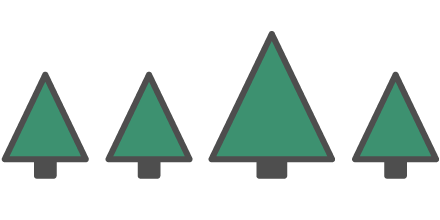
| Superior Selection | Individual trees that display one or more notable, desirable traits (also called superior trees) |
|
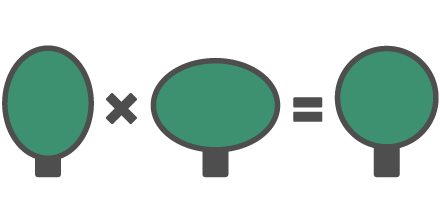
| Hybrid | A tree that results from mating genetically unlike individuals (can occur in nature or artificially) |
|
| Clone |
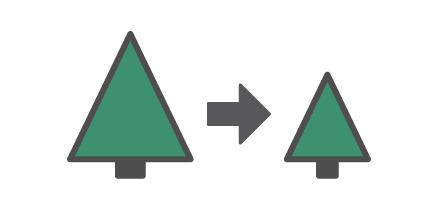
Grafting and budding are also reproductive techniques used to develop clones, but complete genetic uniformity is not possible unless root stock is part of the parent material. The genetic makeup of cultivars are preserved through asexual propagation methods. Some cultivars are developed from native trees, others from exotics. |
|