
Arbor Day

Tree-Planting F.A.Q.'s

Home | Links | Calendar | Activities

Celebrate Oregon Arbor Week - 1st Week in April

Congratulations on deciding to plant a tree! For years to come, your tree will produce hundreds of pounds of oxygen, store and filter thousands of gallons of rainwater, offset temperature extremes caused by pavement, and make your neighborhood a more beautiful place. Even if you plant it on your own property, your tree is a gift to every single person in your community, and they should thank you for it. O.K., maybe you’re not quite Mother Theresa, but planting a tree is a great way to give something back. Below are the answers to some frequently-asked questions that will make your tree planting a success.

What’s the first step?

Before you plant, you should ask yourself the question: Why am I planting a tree? Is shade or privacy you main objective? Sound reduction? Fall color? You should also consider the future maintenance needs of the tree. Can you commit to watering, pruning, and raking leaves or will you hire a professional?

Next, determine the character of your planting site so that you can choose a tree that will thrive its conditions. Different varieties have different growth habits that make them appropriate for certain places but not others. Think about:

Available space—the tree must be far enough away from overhead powerlines and adjacent trees so that it will not have to be pruned severely when it reaches full size (topping is very unhealthy for trees and actually increases hazard potential). Could roots crack a nearby sidewalk or foundation? Could they interfere with buried utilities near the planting site?

Soil conditions—is the soil well-drained or poorly drained? Soil that is waterlogged for long periods can suffocate tree roots. Compaction by foot or vehicle traffic makes it difficult for tree roots to penetrate the soil.

Climate and exposure—how cold is it in winter, how hot in summer? Will the planting site receive full sun or have shade during part of the day?

Check out the links at the bottom of the page for more information about tree selection.

Where can I buy a tree?

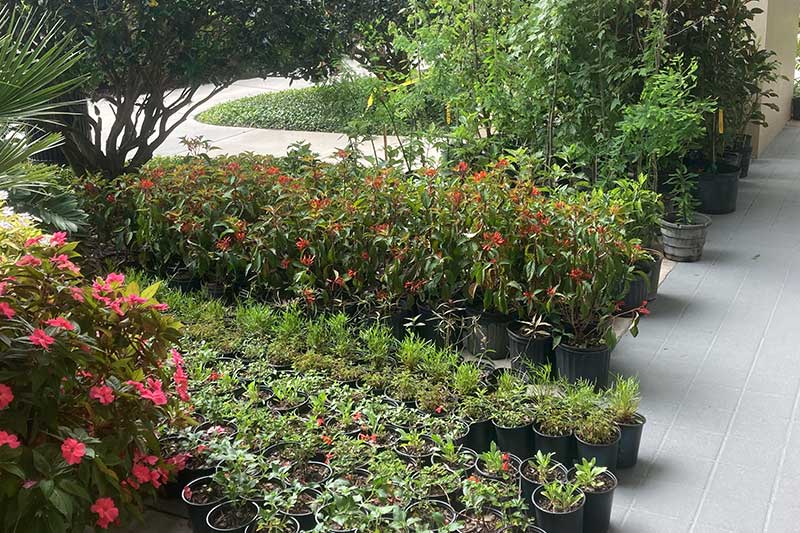
The best place to begin looking for trees is at your local nursery or garden center. Non-profit gardening clubs and conservation groups also occasionally have plant sales. Avoid free tree give-aways. Such trees are typically root-bound, diseased, or otherwise damaged. The expense of planting a high-quality tree will pay off, as you experience the enjoyment of watching it thrive for years to come.

What’s the difference between B+B, bareroot, and container-grown? Which should I choose?

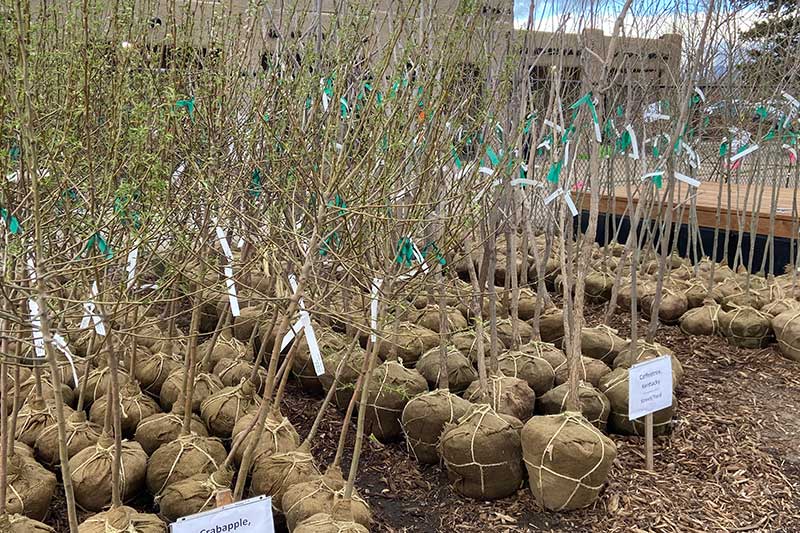
Balled and burlapped (B+B) trees have a sack covering roots and soil. This method of transporting the tree is usually necessary for larger trees. Because of their size, B+B trees are less vulnerable to vandalism, but they are more difficult to transplant. Usually, they are also more expensive. Once the tree is in the planting hole, cut away any wire and remove as much of the burlap covering as possible.

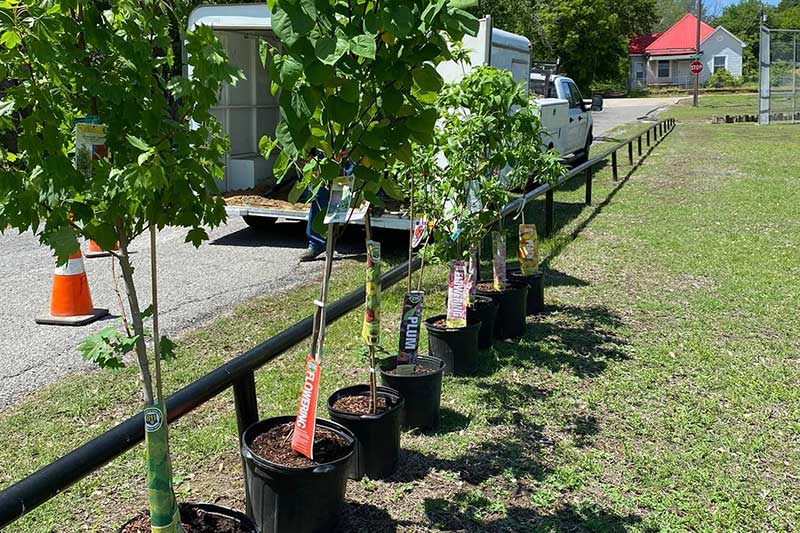
Container-grown trees are smaller and cheaper than B+B’s. Their small size makes them more resilient and they can grow rapidly soon after transplanting. However, containerized trees tend to become root bound, making it necessary to cut through the matted roots on the root ball’s exterior to stimulate outward rather than circular growth.

Bare-root trees are sold with no soil around their roots. They are easy to handle and tend to be cheaper, but they are also more fragile; it’s important to keep the roots covered and moist.

How do I know I’m buying a high-quality tree?

Inspect your tree before purchasing. Remember the acronym RIF: Roots; Injuries; Form. Look for a tree that exhibits good health in all of these areas.

Roots:

  1. If bare-root, make sure there are enough healthy roots. Roots can be crushed or torn during the B+B process, so be sure to inspect for these.
  2. Roots should not grow in a circular pattern. Circling roots can develop when a tree is grown in a container that is too small, but they can develop in any planting situation and will eventually strangle the tree.
  3. The part of the trunk that disappears into the soil (root flare) should be visible. Soil covering the root flare can cause the bark to rot, and it may also encourage circling roots. On B+B trees, make sure the root flare is not hidden inside the root ball.

Injuries:

  1. The bark should be free of gouges and cuts. Don’t forget to look underneath the protective cover if the tree has one.
  2. If the tree has been pruned, the trunk should show circular healing tissue around the whole perimeter of the cut. If the cut was made too close to the trunk, the new tissue will only form two semicirlces around the wound. Stubs sticking out from the trunk will not heal correctly either.

Form:

  1. Branches should be spread out along the trunk of the tree and not bunched together.
  2. Braches should have plenty of space around them, without being squeezed against the trunk or each other.

Where can I get seedlings for tree-giveaways?

Unfortunately, seedling give-aways usually result in wasted trees because few recipients store them properly or have places to plant them. More often than not, the seedlings are from varieties that are inappropriate for city settings, such as Douglass fir or coastal redwood. While the idea of planting lots of trees might seem appealing, its better to plant one large tree with a high probability of survival than several seedlings that may do poorly or succumb to an unsuitable environment.