
Our tree guide offers extensive information on tree height and spread, soil and sunlight needs, leaf characteristics, historical background, wildlife habitat, and much more.


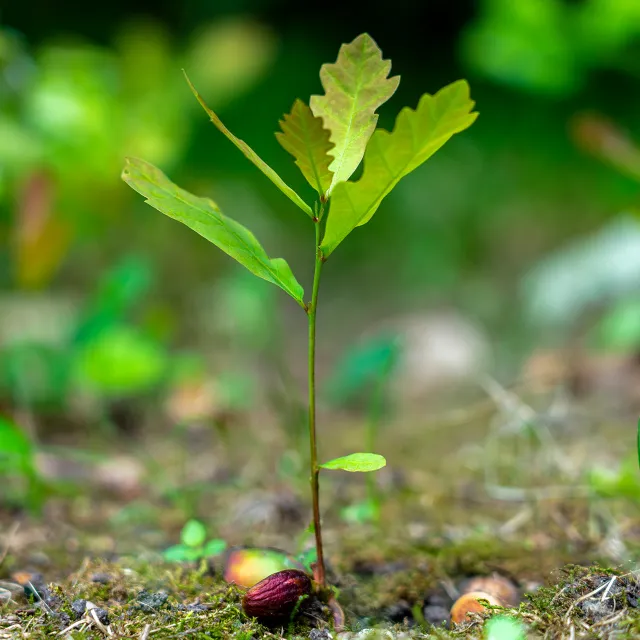
A Seed Takes Root
Inside the seed, the embryo tree is nestled in a food supply called the endosperm, complete with tiny leaves, a stem, and a point that will become the root. As the embryo grows, it splits the seed's shell. Responding to gravity, the root grows downward toward the ground. Once the tiny root tip penetrates the soil, the tree becomes anchored and starts absorbing water and mineral nutrients. The leaves then emerge, creating chlorophyll to produce food from soil water and carbon dioxide in the air. As the seed continues to grow, the terminal bud at the base of the leaves, which contains actively dividing cells, drives all upward growth.

The Life of the Forest
The forest is a delicate ecosystem where trees, plants, and animals coexist in harmony. Understanding the growth processes of trees is essential for preserving this balance and ensuring that trees continue to provide beauty and resources for future generations. The growth of a tree trunk occurs in a thin, living layer called the cambium, which generates new wood on one side and new bark on the other. Over time, this process allows the trunk to expand, supporting the tree's structure and protecting it from environmental factors. Tree rings, formed by this growth, reveal the tree's history, such as experiences with fire, drought, or excessive rain.