Nanking Cherry
Prunus tomentosa
- Attractive Year-Round Color
- Dense Shrub Great for Borders, Hedges or Wildlife Habitat
- Fruit for Pies and Preserves
- Pale Pink or White Flowers
- Well Suited for Cold Winters and Hot Summers
- Zones 3 to 7
- Can't Ship To: AK, AZ, CA, HI, OR, WA

Zones 3 - 7
The Nanking Cherry can be expected to grow in the zones shown in color in the arborday.org zone map.VIEW MAP

ornamental tree
The Nanking Cherry falls into the following type(s): Ornamental Trees, Shrubs

6' - 10' High
The Nanking Cherry grows to be 6' - 10' feet in height.

15' Spread
The Nanking Cherry has a spread of about 15' at full maturity.

Medium Growth
This tree grows at a medium growth rate. [More about this.]

Full Sun
This cherry does well in full sun.

Various Soils
The Nanking cherry adapts to a variety of soil conditions and pH.

Rounded Shape
This cherry has rounded shape.

More Info
Attributes:
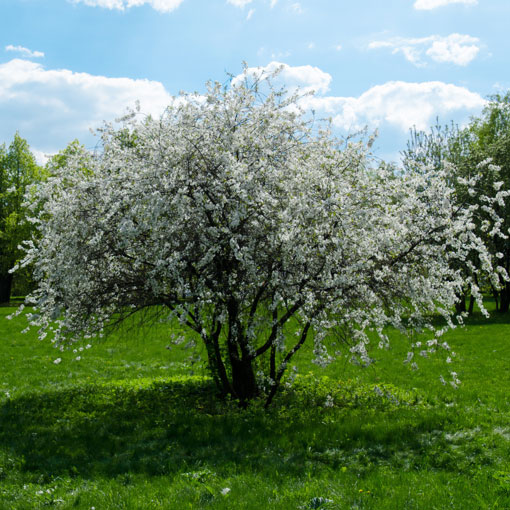
The Nanking cherry is a lovely sight in early spring. The pink buds unfold into fragrant pale pink or white flowers. The profuse blossoms appear before the soft green leaves. The edible brilliant red fruits will ripen in early to late summer. The shiny, exfoliating, reddish brown bark is a distinctive attraction in winter. This is a vigorous adaptable shrub particularly suited to the cold winters and hot summers of the central and northern plains of the United States and Canada. The Nanking cherry can be used for shrub borders, hedge, windbreak filler, wildlife habitat, as a specimen or in masses.
Wildlife Value:
The shrub provides habitat and the fruit attract birds and other wildlife.
History/Lore/Use:
The Nanking cherry is native to central Asia. It was introduced to the North America in 1882. Other common names are Manchu cherry, downy cherry, mountain cherry, Mongolian cherry and Chinese bush cherry, hedge cherry.
The word tomentosa indicates the hairy nature of the underside of the leaf of this tree. The tart, tangy fruit can be eaten fresh or used in pies, jams, and jellies. This shrub is dwarfing stock for cherries. Its branches can be cut in mid-winter and forced to bloom indoors in early spring.
Moisture:
The Nanking cherry prefers well drained soil, but will tolerate drought and grows under semi-arid conditions.
Leaves:
The leaves are alternate, simple, obovate to elliptic with unequally toothed margins and dull dark green summer color, no fall color.
Flower Color:
Pinkish buds change to pale pink to white, 3/4" fragrant flowers.
Bloom Time:
Early spring..
Fruit Description:
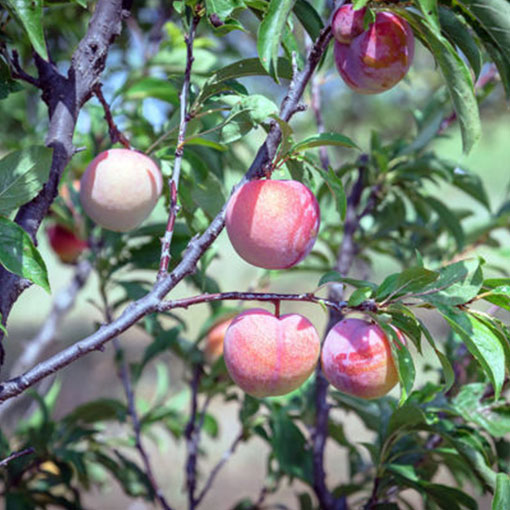
The edible fruits are scarlet, 1/3" across, nearly round ripening in June to August.
Fragrant white spring flowers, shiny, reddish-brown bark and scarlet fruit make this dense shrub a favorite for mass plantings or a border. This is a vigorous adaptable shrub particularly suited to the cold winters and hot summers of the central and northern plains of the United States and Canada. Grows 6'-10' high with a 15' spread. Plant two or more Nanking cherry shrubs for cross pollination. For a hedge, plant 4'-5' apart.(zones 3-7)
| Spring Shipping | Fall Shipping | ||||
|---|---|---|---|---|---|
| Color | Zone |
Approximate Ship Dates |
Order Deadline |
Approximate Ship Dates |
Order Deadline |
| 2 | 04/15–05/30 | 05/14 | 11/01–11/26 | 11/12 | |
| 3 | 04/15–05/30 | 05/14 | 11/01–11/26 | 11/12 | |
| 4 | 04/15–05/30 | 05/14 | 11/01–11/26 | 11/12 | |
| 5 | 04/15–05/30 | 05/14 | 11/01–11/26 | 11/12 | |
| 6 | 03/19–05/12 | 05/07 | 11/01–12/03 | 11/19 | |
| 7 | 03/11–05/07 | 04/30 | 11/05–12/10 | 11/26 | |
| 8 | 02/26–04/30 | 04/23 | 11/05–12/10 | 11/26 | |
| 9 | 02/26–04/30 | 04/23 | 11/05–12/10 | 11/26 | |
| 10 | 02/26–04/30 | 04/23 | 11/05–12/10 | 11/26 | |
When you order trees from The Arbor Day Foundation, your order is guaranteed to arrive in a good, healthy condition or we'll replace them at no charge. Your trees will be shipped at a suitable time for planting.
Each tree is guaranteed to grow, or we'll replace it at one half the original price, plus shipping and handling.
The benefits of bare-root trees
Our trees are delivered with natural bare roots which have been dipped in hydrating gel prior to shipment to keep the roots moist and healthy. As their abundant, fibrous roots aren't confined by a container, bare-root trees get off to a more vigorous start compared to containerized roots which typically need more time to adjust to transplanting. Bare-root trees typically surpass the size of larger containerized trees in only a few years.


Natural root (also called bare root) trees are shipped without soil around their roots. They are shipped when dormant in the spring and fall seasons. We dip the roots in a hydrating gel to keep them moist during shipping.
Potted (also called containerized) trees come in 4" containers.