Kanzan Cherry
Prunus 'Kwanzan' (Kanzan)
- Gorgeous Double Pink Flowers
- Yellow, Orange, and Copper Fall Color
- Fruitless Cultivar
- Early Spring Blooms
- Shortened Life Span of 15 to 25 years
- Zones 5 to 9
- Can't Ship To: AK, AZ, CA, HI, OR, WA, CO
* Not a member? Join during checkout and get member pricing immediately.

Zones 5 - 9
The Kanzan Cherry can be expected to grow in the zones shown in color in the arborday.org zone map.VIEW MAP

flowering tree
The Kanzan Cherry falls into the following type(s): Flowering Trees, Ornamental Trees

30' - 40' High
The Kanzan Cherry grows to be 30' - 40' feet in height.

30' - 40' Spread
The Kanzan Cherry has a spread of about 30' - 40' at full maturity.

Medium Growth
This tree grows at a medium growth rate. [More about this.]

Full Sun
This cherry does well in full sun.

Various Soils
The Kanzan Cherry grows in acidic, alkaline, drought tolerant, loamy, sandy, well drained, wet, clay soils.

vase Shape
This cherry has vase shape.

More Info
Attributes:
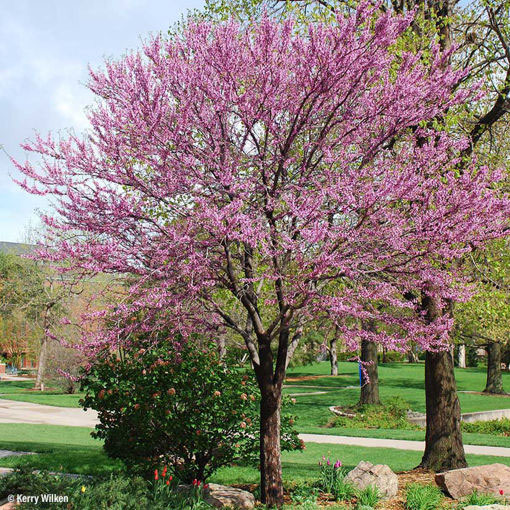
Beautiful double pink blossoms, good fall color, lack of fruit, and an upright, vase-shaped form make the Kanzan cherry the most popular cultivar of all the double flowering cherries. It is a splendid specimen tree and can be planted in containers, along walks and streets, and in buffer strips. It can also be used for bonsai.
History/Lore/Use:
Named after a mountain in Japan, the Kwanzan cherry (Kanzan) tree is native to China, Japan, and Korea. The original name is 'Sekiyama,' but it is rarely used. Introduced to America in 1903, it was made famous by the glorious floral displays at the annual Cherry Blossom Festival in Washington, D.C. Primarily growing in East Potomac Park, the Kwanzan cherry trees come into bloom two weeks later than the Yoshino cherry trees.
Moisture:
This tree requires moist, well drained soil and is somewhat drought tolerant.
Leaves:
The leaves are alternate, simple, ovate to lanceolate in shape, 2"-5" long, 1 1/4"-2 1/2" wide with serrated margins. New leaves emerge reddish copper, turning lustrous dark green in summer and yellow to orange-bronze in fall.
Flower Color:
Double (about 30 petals), clear pink and fading, up to 2 1/2" diameter flowers in pendulous clusters of 3-5.
Bloom Time:
Spring.
The Kanzan cherry (Kanzan) has double pink flowers and a vase-shaped form with a rounded crown that spreads with age, making the tree wider than it is tall at maturity. The new leaves are bronze colored, turning to dark green, then yellow, orange, or copper in fall. This is a fruitless cultivar. The Kanzan Cherry prefers a site with full sun, loose, well drained soil with plenty of moisture. It is somewhat tolerant of alkaline soil and drought but is sensitive to pollution and stresses in general. For these reasons and because of its susceptibility to pests and disease, the life span is limited from 15 to 25 years. The great beauty of this tree makes it well worth planting for this short period of time.
| Spring Shipping | Fall Shipping | ||||
|---|---|---|---|---|---|
| Color | Zone |
Approximate Ship Dates |
Order Deadline |
Approximate Ship Dates |
Order Deadline |
| 2 | 04/15–05/30 | 05/14 | 11/01–11/26 | 11/12 | |
| 3 | 04/15–05/30 | 05/14 | 11/01–11/26 | 11/12 | |
| 4 | 04/15–05/30 | 05/14 | 11/01–11/26 | 11/12 | |
| 5 | 04/15–05/30 | 05/14 | 11/01–11/26 | 11/12 | |
| 6 | 03/19–05/12 | 05/07 | 11/01–12/03 | 11/19 | |
| 7 | 03/11–05/07 | 04/30 | 11/05–12/10 | 11/26 | |
| 8 | 02/26–04/30 | 04/23 | 11/05–12/10 | 11/26 | |
| 9 | 02/26–04/30 | 04/23 | 11/05–12/10 | 11/26 | |
| 10 | 02/26–04/30 | 04/23 | 11/05–12/10 | 11/26 | |
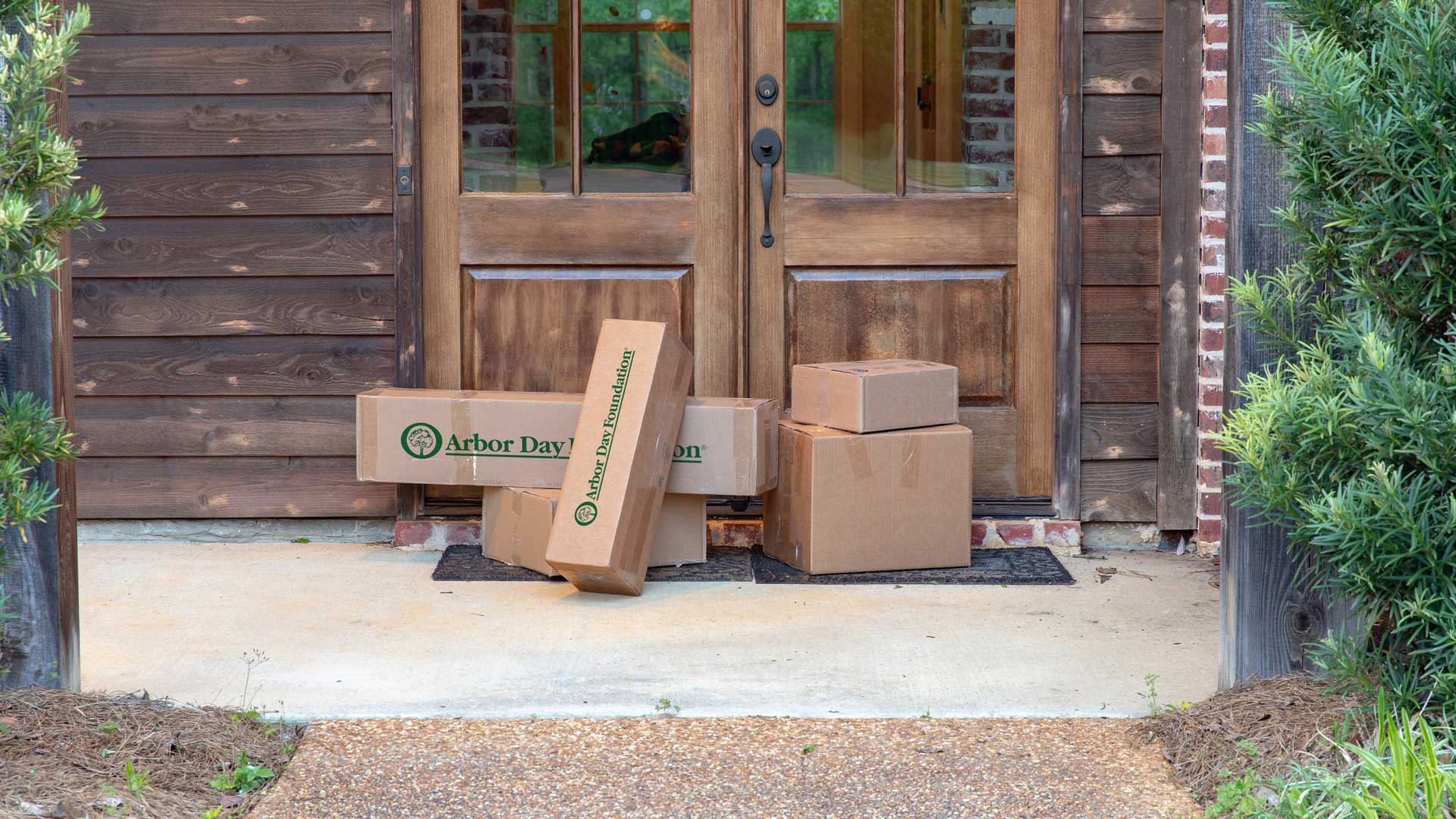
When you order trees from The Arbor Day Foundation, your order is guaranteed to arrive in a good, healthy condition or we'll replace them at no charge. Your trees will be shipped at a suitable time for planting.
Each tree is guaranteed to grow, or we'll replace it at one half the original price, plus shipping and handling.
The benefits of bare-root trees
Our trees are delivered with natural bare roots which have been dipped in hydrating gel prior to shipment to keep the roots moist and healthy. As their abundant, fibrous roots aren't confined by a container, bare-root trees get off to a more vigorous start compared to containerized roots which typically need more time to adjust to transplanting. Bare-root trees typically surpass the size of larger containerized trees in only a few years.


Natural root (also called bare root) trees are shipped without soil around their roots. They are shipped when dormant in the spring and fall seasons. We dip the roots in a hydrating gel to keep them moist during shipping.
Potted (also called containerized) trees come in 4" containers.