
Locating Wild Hazelnuts in Your Area
The Hybrid Hazelnut Consortium is looking to expand our collection of Corylus Americana, American hazelnuts. Help us increase the genetic diversity of our breeding pool by locating wild American Hazelnuts in your area.
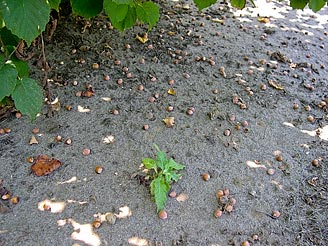
What to Do Once You Have Identified an American Hazelnut
If you think you have identified an American hazelnut, let us know by contacting the Consortium.
After reviewing your information, we will contact you and let you know if we would like a sample of your wild hazelnut and the proper procedures to follow.
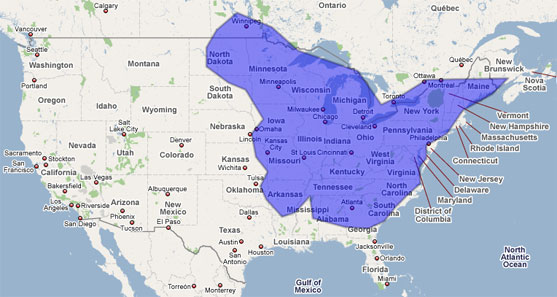
How to Find American Hazelnuts
Native American Hazelnuts are found though out the Midwest, East, and Southeast of the United States and Canada. Please refer to the map, and discover if you might have American hazelnuts growing in your state.
What American Hazelnuts Look Like
Key Identifying Features of the American Hazelnut
- Heart Shape Leaves
- Leaf paler on back than front
- Involucre (leafy bract)
- (involucre.bmp)
- 8 to 15 Feet tall shrub
- Hazelnut Nut
- Catkins
American hazelnut or American filbert is native to most of the Eastern part of the United States (see above). Here are a few pictures of what a typical hazelnut looks like.
-
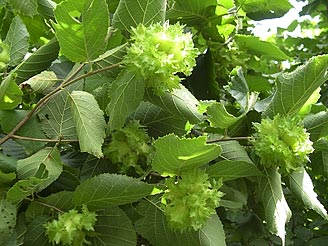
Leaves alternate, heart shape. Oval, 8-12 cm long and 4.5-8 cm wide, doubly serrate, tip pointed (acute or acuminate); back of leaf paler, round involucres. -
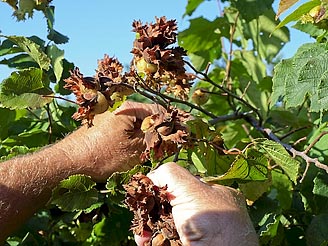
Deciduous shrub, 8-15 ft (2.5-4.5 m) tall, suckers from roots and therefore wide spreading, width of 5-10 ft (1.5-3 m) or more, rounded. -
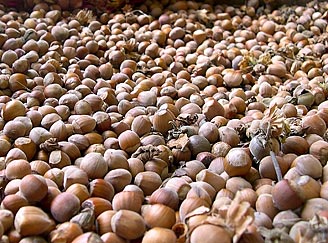
Nut: Brown color globe like with a smooth exterior. -
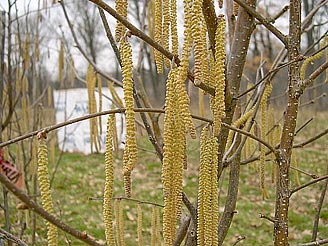
Male catkins, appear before leaves 5 to 8 cm hang from shrub. -
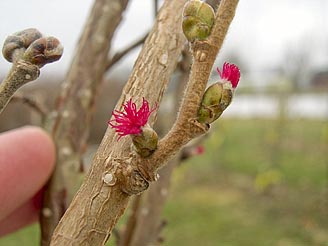
Female flowers arise from axillary buds before leaves appear, 6-12 flower/bud, red stigma.