Shop

Eastern Redcedar

Juniperus virginiana

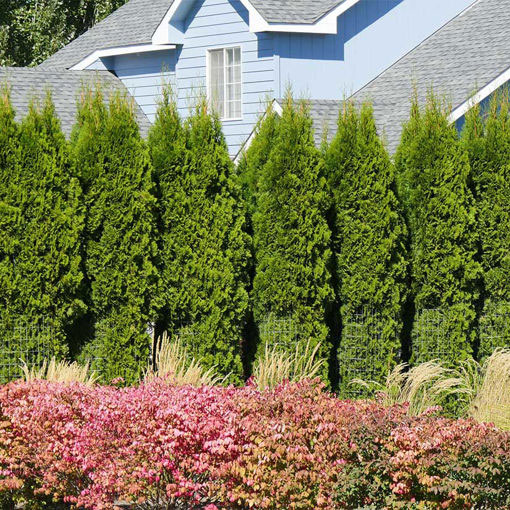
  • Excellent for windbreaks and screens
  • Birds are attracted to berries
  • Grows to 40' to 50' with 8' to 20' spread
  • Zones 2 to 9
  • Can't Ship To: AK, AZ, CA, HI
Guaranteed Healthy Delivery
Item # 2590 | Shipping Height: 1/2' - 1'
*Mem. Price:$3.49
Reg. Price:$5.50
Quantity:

* Not a member? Join during checkout and get member pricing immediately.

Click icons for more information Show All Hide All

Zones 2 - 9
Zones 2 - 9

Hardiness Zones: Zones 2 - 9
The Eastern Redcedar can be expected to grow in the zones shown in color in the arborday.org zone map.VIEW MAP

evergreen
evergreen

Type of tree:
The Eastern Redcedar falls into the following type(s): Evergreens

40' - 50' High
40' - 50' High

Mature Height:
The Eastern Redcedar grows to be 40' - 50' feet in height.

8' - 20' Spread
8' - 20' Spread

Mature Spread:
The Eastern Redcedar has a spread of about 8' - 20' at full maturity.

Medium Growth
Medium Growth

Growth Rate:
This tree grows at a medium growth rate. [More about this.]

Full Sun
Full Sun

Sun:
This redcedar does well in full sun.

Various Soils
Various Soils

Soil:
The Eastern Redcedar grows in acidic, alkaline, drought tolerant, loamy, moist, rich, sandy, silty loam, well drained, wide range, clay soils.

Columnar Shape
Columnar Shape

Shape:
This redcedar has columnar, oval, pyramidal shape.

More Info
More Info

Attributes:
The Eastern Redcedar tree is a common sight on road cuts and in fence rows and abandoned fields throughout most of the plains states and eastern United States, especially where limestone soils are present. It is a tree of reddish wood giving off the scent of cedar chests and its crushed berries provide a whiff of the gin they once flavored. Thanks to its tolerance of heat, salt, a wide range of soils and other adverse conditions, Eastern Redcedar is also put to good use on the farm in windbreaks and in city landscapes for hedges, screens, clumps or even as specimen trees.

Wildlife Value:
Eastern Redcedar twigs and foliage are eaten by browsers. Seeds are eaten most extensively by cedar waxwings, a grayish-brown bird.. Evergreen foliage provides nesting and roosting cover for sparrows, robins, mockingbirds, juncos, and warblers.

History/Lore/Use:
The Eastern Redcedar is an ancient tree, dating to aboriginal America, where fossil evidence indicates it covered large portions of the continent. The early explorers took note of the tree. Arthur Barlowe and Phillip Amadus were quoted as saying the trees were "the tallest and reddest cedars in the world" when they arrived at Roanoke Island in 1564. Colonial craftsmen lost no time in using the wood from the Eastern Redcedar for furniture and fences as it had superior weathering capability and was easy to work with. The wood was a staple of the pencil industry for over a century until supplies became exhausted and the industry switched to more plentiful western cedars. Birds are very fond of the berries, the Cedar Waxwing taking its name from the tree whose fruit is its favorite food.

Moisture:
Can withstand occasional flooding, yet has good drought tolerance.

Leaves:
The leaves are evergreen. On new growth and young trees, foliage is needle-like; older foliage is scale-like, with each scale about 1/16th of an inch long and compacted to form rounded or 4-sided branchlets.

Flower Color:
Greenish-yellow; nondescript.

Bloom Time:
April-May.

Fruit Description:
Female cones are ovoid, 1/4" across, ripening in one year, abundant in shiny colors of brown to almost blue. Male staminate cones are yellow-brown and borne on separate plants.

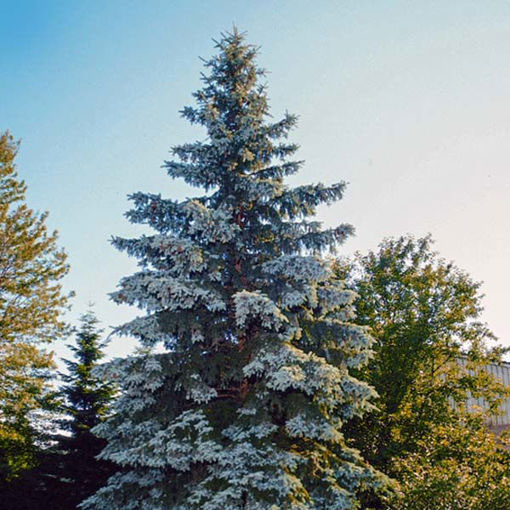
Dense pyramid shape excellent for windbreaks and screens. Birds love its berries. Medium green foliage. Likes full sun. Tolerant of most soils. Matures at 40' - 50'. (zones 2-9)

Arborday.org Hardiness Zone Map
Spring Shipping Fall Shipping
Color Zone Approximate
Ship Dates
Order
Deadline
Approximate
Ship Dates
Order
Deadline
  2 04/15–05/30 05/14 11/01–11/26 11/12
  3 04/15–05/30 05/14 11/01–11/26 11/12
  4 04/15–05/30 05/14 11/01–11/26 11/12
  5 04/15–05/30 05/14 11/01–11/26 11/12
  6 03/19–05/12 05/07 11/01–12/03 11/19
  7 03/11–05/07 04/30 11/05–12/10 11/26
  8 02/26–04/30 04/23 11/05–12/10 11/26
  9 02/26–04/30 04/23 11/05–12/10 11/26
  10 02/26–04/30 04/23 11/05–12/10 11/26
We're sorry, but this tree can't be shipped to AK, AZ, CA, HI , territories, or countries outside the U.S. This is due to the agricultural laws within these locations.

When you order trees from The Arbor Day Foundation, your order is guaranteed to arrive in a good, healthy condition or we'll replace them at no charge. Your trees will be shipped at a suitable time for planting.

Each tree is guaranteed to grow, or we'll replace it at one half the original price, plus shipping and handling.

The benefits of bare-root trees

Our trees are delivered with natural bare roots which have been dipped in hydrating gel prior to shipment to keep the roots moist and healthy. As their abundant, fibrous roots aren't confined by a container, bare-root trees get off to a more vigorous start compared to containerized roots which typically need more time to adjust to transplanting. Bare-root trees typically surpass the size of larger containerized trees in only a few years.

  Standard Dwarf
  Mature
Height
Space
Needed
Mature
Height
Space
Needed
Apple 20' - 25' 35' x 35'

10' **

10' x 10' ++
Peach 20' 20' x 20' 8' - 10' 10' x 10'
Sweet Cherry 30' 20' x 25' 12' - 15' 10' x 10'
Sour Cherry 20' 20' x 20' 8' 10' x 10'
Pear 20' 20' x 20' 12' - 15' 12' x 12'
Apricot 20' 20' x 20'    
Plum 20' 20' x 20' 8' - 10' 10' x 10'
      ** semi-dwarf 12' - 15'
++ semi-dwarf 12' x 12'

Natural Root and Containerized Trees

Natural root (also called bare root) trees are shipped without soil around their roots. They are shipped when dormant in the spring and fall seasons. We dip the roots in a hydrating gel to keep them moist during shipping.

There are a number of advantages to natural root trees:

  • They are very affordable.
  • Their roots re-establish themselves well once they are planted in their permanent location.
  • They are easy to plant at the correct depth.

The Urban Horticulture Institute at Cornell University has an interesting article about the benefits of planting natural root trees. Look for the PDF entitled Creating the Urban Forest: The Bare Root Method

Potted (also called containerized) trees come in 4" containers.


If you have questions, please call (888) 448-7337 or E-mail Member Services.