Shop

Colorado Blue Spruce

Picea pungens

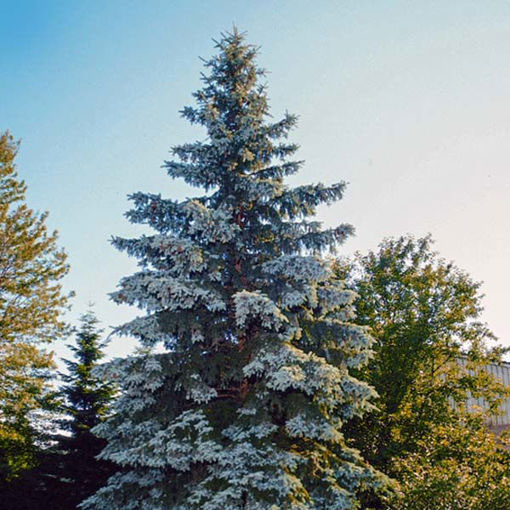
  • Magnificent Silver Blue-Green Needles
  • Great form and superb adaptability makes it one of our most popular evergreens
  • Deer Resistant: Seldom Severely Damaged
  • Grows 50' to 75' high with 20' spread
  • Zones 2 to 7
  • Can't Ship to: AK, AZ, HI
Guaranteed Healthy Delivery
Item # 1047 | Tree Size: Standard | Shipping Height: 1/2' - 1'
*Mem. Price:$1.99
Reg. Price:$3.00
Quantity:

Item # 4367 | Tree Size: Standard | Shipping Height: 1/2' - 1'
Sorry, we cannot ship potted trees to California.
*Mem. Price:$4.98
Reg. Price:$8.50
Not in stock.

* Not a member? Join during checkout and get member pricing immediately.

Click icons for more information Show All Hide All

Zones 2 - 7
Zones 2 - 7

Hardiness Zones: Zones 2 - 7
The Colorado Blue Spruce can be expected to grow in the zones shown in color in the arborday.org zone map.VIEW MAP

evergreen
evergreen

Type of tree:
The Colorado Blue Spruce falls into the following type(s): Evergreens

50' - 75' High
50' - 75' High

Mature Height:
The Colorado Blue Spruce grows to be 50' - 75' feet in height.

10' - 20' Spread
10' - 20' Spread

Mature Spread:
The Colorado Blue Spruce has a spread of about 10' - 20' at full maturity.

Slow to Medium Growth

Growth Rate:
This tree grows at a slow to medium growth rate. [More about this.]

Full Sun
Full Sun

Sun:
This spruce does well in full sun.

Various Soils
Various Soils

Soil:
The Colorado Blue Spruce grows in acidic, drought tolerant, loamy, moist, rich, sandy, well drained, wet, wide range, clay soils.

Columnar Shape
Columnar Shape

Shape:
This spruce has columnar, pyramidal shape.

More Info
More Info

Attributes:
The Colorado Blue Spruce tree is one of our most popular ornamental conifers. It has many attributes that make it suitable for yards: magnificent color, conical shape when young, adaptability to soil conditions, and a root system that makes it more wind firm than any other western Spruce. It is an excellent border tree that provides year 'round screening as well as a protective summertime nesting opportunity for many songbirds.

Wildlife Value:
The Colorado Blue Spruce provides food and shelter for siskins, nuthatches, and crossbills. Browsers such as deer will often eat the foliage.

History/Lore/Use:
The Colorado Blue Spruce tree is such a delight that nature seems to have kept it a well-guarded secret for a very long time. It was not until 1862 that this spectacular species was discovered growing in the enchanted meadows and stream sides of the high Rocky Mountains. Once found, the fame of the Blue Spruce spread quickly and today it is one of our most widely planted landscape trees. When writing in "Handbook on Conifers" in 1969, Henry Tuescher, curator emeritus of the Montreal Botanical Garden, called the Colorado Blue Spruce tree one of the five finest conifers. Tuescher gave no reasons for this honor except for the tree's exceptional beauty.

Moisture:
Requires normal moisture with moderate tolerance to flooding and drought.

Leaves:
The needles are stiff, prickly and about 1 to 1-1/2 inches in length. They surround the branch at nearly right angles and are usually silvery to blue-green, but occasionally the blue is absent.

Flower Color:
Green; orange; purple; nondescript.

Bloom Time:
April-May.

Fruit Description:
Light brown, 3 to 4 inch cones which hang downward on the branches and are concentrated in the upper crown.

Its beautiful year-round color, remarkable consistency in form, and its superb adaptability to a variety of growing conditions make the Colorado Blue Spruce one of the most popular evergreens. This large tree features silvery, blue-green color with a conical, narrow shape. It can be used as a natural screen, a grand specimen, or as a shade tree if you desire to use an evergreen. Your tree will grow well in its early years, reaching a mature height of 50'-75' with a spread of 10'-20' under landscape conditions, up to 135' with a 35' spread in the wild. (Zones 2-7)

Arborday.org Hardiness Zone Map
Spring Shipping Fall Shipping
Color Zone Approximate
Ship Dates
Order
Deadline
Approximate
Ship Dates
Order
Deadline
  2 04/15–05/30 05/14 11/01–11/26 11/12
  3 04/15–05/30 05/14 11/01–11/26 11/12
  4 04/15–05/30 05/14 11/01–11/26 11/12
  5 04/15–05/30 05/14 11/01–11/26 11/12
  6 03/19–05/12 05/07 11/01–12/03 11/19
  7 03/11–05/07 04/30 11/05–12/10 11/26
  8 02/26–04/30 04/23 11/05–12/10 11/26
  9 02/26–04/30 04/23 11/05–12/10 11/26
  10 02/26–04/30 04/23 11/05–12/10 11/26
We're sorry, but this tree can't be shipped to AK, AZ, HI , territories, or countries outside the U.S. This is due to the agricultural laws within these locations.

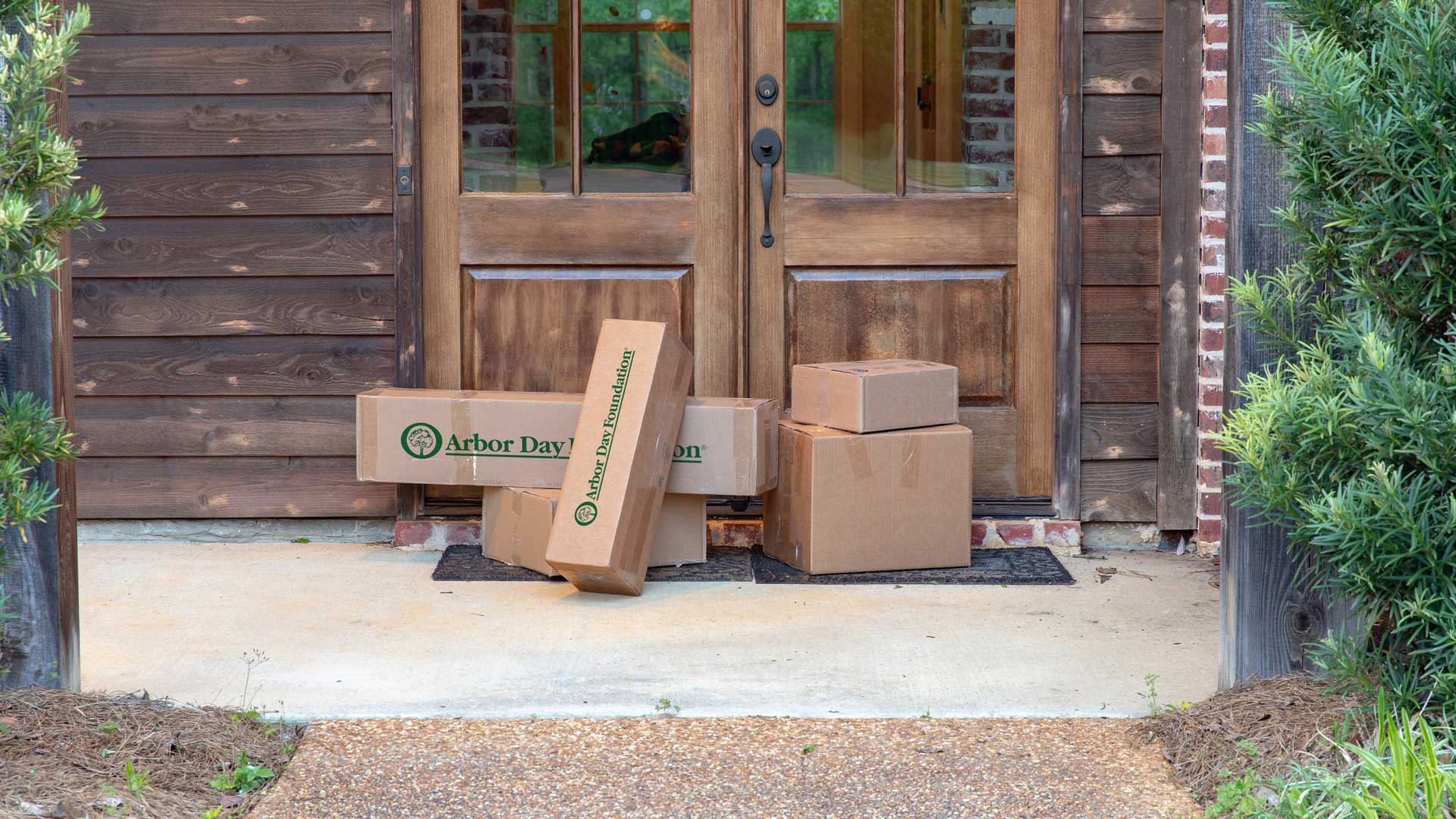
When you order trees from The Arbor Day Foundation, your order is guaranteed to arrive in a good, healthy condition or we'll replace them at no charge. Your trees will be shipped at a suitable time for planting.

Each tree is guaranteed to grow, or we'll replace it at one half the original price, plus shipping and handling.

The benefits of bare-root trees

Our trees are delivered with natural bare roots which have been dipped in hydrating gel prior to shipment to keep the roots moist and healthy. As their abundant, fibrous roots aren't confined by a container, bare-root trees get off to a more vigorous start compared to containerized roots which typically need more time to adjust to transplanting. Bare-root trees typically surpass the size of larger containerized trees in only a few years.

  Standard Dwarf
  Mature
Height
Space
Needed
Mature
Height
Space
Needed
Apple 20' - 25' 35' x 35'

10' **

10' x 10' ++
Peach 20' 20' x 20' 8' - 10' 10' x 10'
Sweet Cherry 30' 20' x 25' 12' - 15' 10' x 10'
Sour Cherry 20' 20' x 20' 8' 10' x 10'
Pear 20' 20' x 20' 12' - 15' 12' x 12'
Apricot 20' 20' x 20'    
Plum 20' 20' x 20' 8' - 10' 10' x 10'
      ** semi-dwarf 12' - 15'
++ semi-dwarf 12' x 12'

Natural Root and Containerized Trees

Natural root (also called bare root) trees are shipped without soil around their roots. They are shipped when dormant in the spring and fall seasons. We dip the roots in a hydrating gel to keep them moist during shipping.

There are a number of advantages to natural root trees:

  • They are very affordable.
  • Their roots re-establish themselves well once they are planted in their permanent location.
  • They are easy to plant at the correct depth.

The Urban Horticulture Institute at Cornell University has an interesting article about the benefits of planting natural root trees. Look for the PDF entitled Creating the Urban Forest: The Bare Root Method

Potted (also called containerized) trees come in 4" containers.


If you have questions, please call (888) 448-7337 or E-mail Member Services.