Sawtooth Oak
Quercus acutissima
- One of the Fastest Growing Trees in Youth
- Attractive Shade Tree
- Clear Yellow or Golden Brown Fall Leaves
- Acorns Make Great Wildlife Food
- Grows 40' to 60' with Equal Spread
- Zones 5 to 9
- Can't Ship To: AK, AZ, CA, FL, HI, LA, OR

Zones 5 - 9
The Sawtooth Oak can be expected to grow in the zones shown in color in the arborday.org zone map.VIEW MAP

shade tree
The Sawtooth Oak falls into the following type(s): Shade Trees

40' - 60' High
The Sawtooth Oak grows to be 40' - 60' feet in height.

40' - 60' Spread
The Sawtooth Oak has a spread of about 40' - 60' at full maturity.

Medium to Fast Growth
This tree grows at a medium to fast growth rate. [More about this.]

Full Sun
This oak does well in full sun.

Various Soils
The Sawtooth Oak grows in acidic, drought tolerant, loamy, moist, sandy, well drained, clay soils.

Pyramidal Shape
This oak has pyramidal, rounded, spreading or horizontal shape.

More Info
Attributes:
The Sawtooth is an attractive and durable shade tree that is adaptable to a wide range of soil/climate conditions. It is a valuable landscape tree due to its fairly fast growth.
Wildlife Value:
Sawtooth oaks produce acorns at a very young age, providing food for many kinds of wildlife, especially wild turkeys.
History/Lore/Use:
The native habitat of the Sawtooth Oak tree is Japan, Korea, China and the Himalayan Mountain range. The tree was introduced to America in 1862. It probably derives its name from the distinctive sawtooth-edged leaves it produces.
Moisture:
This tree has normal moisture requirements, and has some drought tolerance.
Leaves:
This tree has leaves that alternate, simple, dark green turning to bright yellow in autumn.
Flower Color:
Brown-golden, can be attractive.
Bloom Time:
Late March to early April..
Fruit Description:
The fruit is oval, 1 inch long, attractive to wildlife.
As one of the fastest growing trees in its youth, the Sawtooth Oak is an attractive shade tree with dark lustrous summer foliage and clear yellow to golden brown fall leaves. Adaptable to any soil condition except alkaline. One inch acorns are quite popular with wildlife. Grows 40'-60' with a 40' to 60' spread. (Zones 5-9)
| Spring Shipping | Fall Shipping | ||||
|---|---|---|---|---|---|
| Color | Zone |
Approximate Ship Dates |
Order Deadline |
Approximate Ship Dates |
Order Deadline |
| 2 | 04/15–05/30 | 05/14 | 11/01–11/26 | 11/12 | |
| 3 | 04/15–05/30 | 05/14 | 11/01–11/26 | 11/12 | |
| 4 | 04/15–05/30 | 05/14 | 11/01–11/26 | 11/12 | |
| 5 | 04/15–05/30 | 05/14 | 11/01–11/26 | 11/12 | |
| 6 | 03/19–05/12 | 05/07 | 11/01–12/03 | 11/19 | |
| 7 | 03/11–05/07 | 04/30 | 11/05–12/10 | 11/26 | |
| 8 | 02/26–04/30 | 04/23 | 11/05–12/10 | 11/26 | |
| 9 | 02/26–04/30 | 04/23 | 11/05–12/10 | 11/26 | |
| 10 | 02/26–04/30 | 04/23 | 11/05–12/10 | 11/26 | |
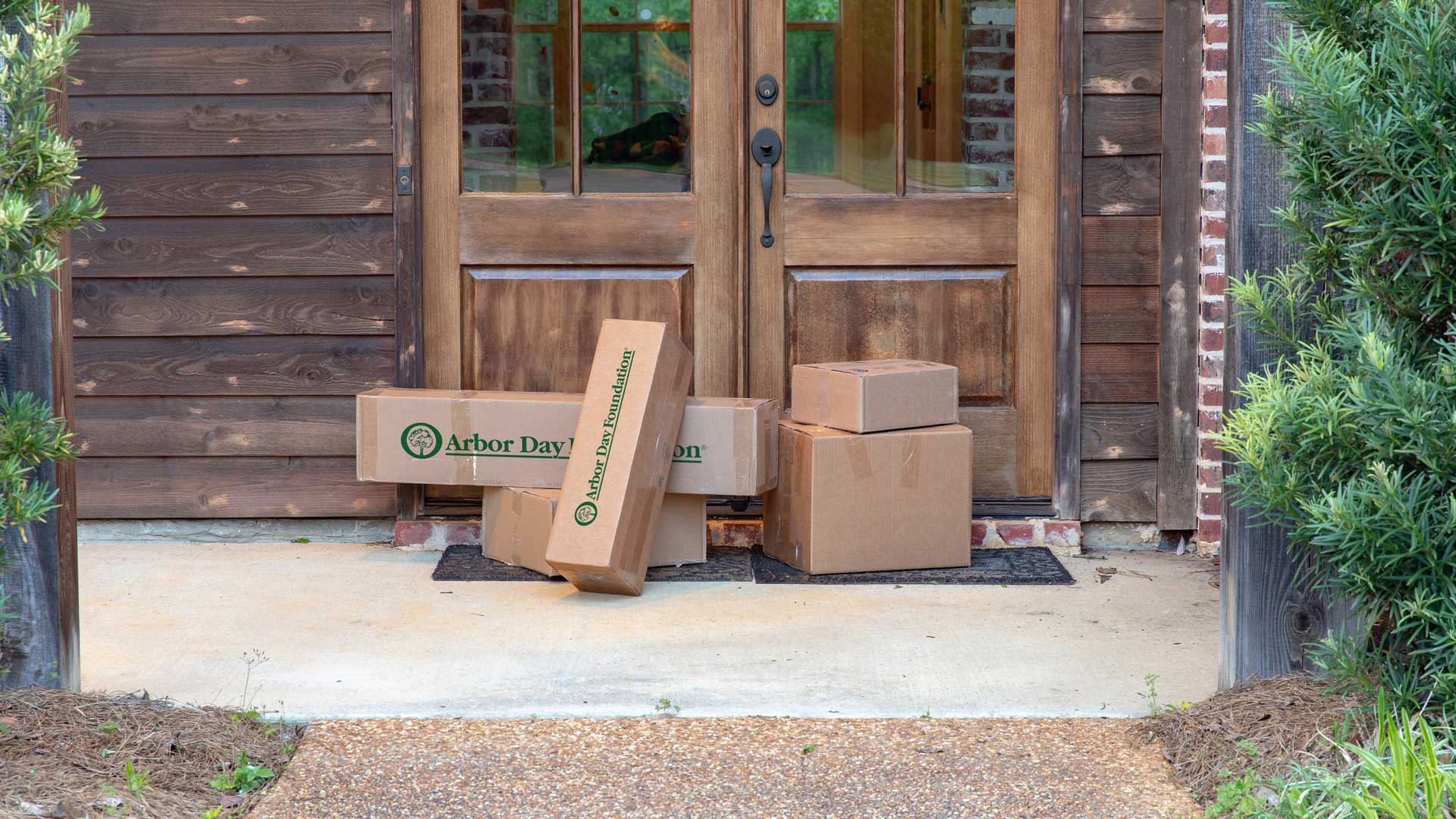
When you order trees from The Arbor Day Foundation, your order is guaranteed to arrive in a good, healthy condition or we'll replace them at no charge. Your trees will be shipped at a suitable time for planting.
Each tree is guaranteed to grow, or we'll replace it at one half the original price, plus shipping and handling.
The benefits of bare-root trees
Our trees are delivered with natural bare roots which have been dipped in hydrating gel prior to shipment to keep the roots moist and healthy. As their abundant, fibrous roots aren't confined by a container, bare-root trees get off to a more vigorous start compared to containerized roots which typically need more time to adjust to transplanting. Bare-root trees typically surpass the size of larger containerized trees in only a few years.


Natural root (also called bare root) trees are shipped without soil around their roots. They are shipped when dormant in the spring and fall seasons. We dip the roots in a hydrating gel to keep them moist during shipping.
Potted (also called containerized) trees come in 4" containers.