Shop

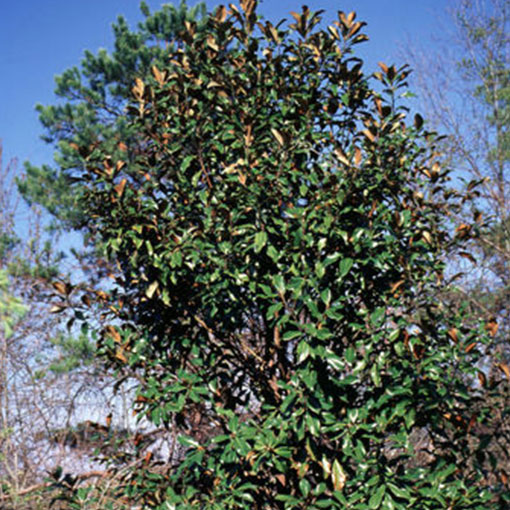
Southern Magnolia

Magnolia grandiflora

  • Creamy White Fragrant Flowers
  • Late Blooming Flowers
  • Broad Leafed Evergreen
  • Iconic Southern Tree
  • Grows to 60' to 80', 40' spread
  • Zones 6 to 10
  • Can't Ship To: AK, AZ, HI
Guaranteed Healthy Delivery
Item # 1079 | Shipping Height: 1/2' - 1'
*Mem. Price:$3.98
Reg. Price:$6.00
Quantity:

* Not a member? Join during checkout and get member pricing immediately.

Click icons for more information Show All Hide All

Zones 6 - 10
Zones 6 - 10

Hardiness Zones: Zones 6 - 10
The Southern Magnolia can be expected to grow in the zones shown in color in the arborday.org zone map.VIEW MAP

flowering tree
flowering tree

Type of tree:
The Southern Magnolia falls into the following type(s): Flowering Trees, Ornamental Trees

60' - 80' High
60' - 80' High

Mature Height:
The Southern Magnolia grows to be 60' - 80' feet in height.

40' Spread
40' Spread

Mature Spread:
The Southern Magnolia has a spread of about 40' at full maturity.

Slow to Medium Growth

Growth Rate:
This tree grows at a slow to medium growth rate. [More about this.]

Multiple Exposures
Multiple Exposures

Sun:
This magnolia does well in full sun, partial shade.

Various Soils
Various Soils

Soil:
The Southern Magnolia grows in acidic, loamy, moist, sandy, well drained, wide range, clay soils.

Oval Shape
Oval Shape

Shape:
This magnolia has oval, pyramidal shape.

More Info
More Info

Attributes:
The Southern Magnolia is a bottomland tree in its natural habitat throughout the coastal plains of the deep south. Its green leaves brighten the landscape throughout the year and its large white flowers are striking, not only for their beauty but for their rich fragrance. It is the state tree of Mississippi.

Wildlife Value:
The Southern Magnolia fruits are eaten by squirrels, rabbits, & birds, including wild turkey.

History/Lore/Use:
Magnolias are entwined with the history of the south. Perhaps the one reaching back the farthest into time is a Southern Magnolia that still grows in what today is Washington State Park in Washington, Arkansas. According to "Famous and Historic Trees," by Charles E. Randall and Henry Clepper, this tree was planted near an important road junction in 1839 by Gen. Grandison D. Royston. It was near a blacksmith shop where Jim Bowie fashioned his famous knife. Some call it the Jones Magnolia because two unrelated boys were born to Jones families the same year the tree was planted. Both became Colonels in the Confederate army and one, Daniel W. Jones, eventually became Governor of Arkansas. The other, James K. Jones, became a U.S. senator. Both laid claim to being the namesake of the tree and James finally resolved the good-natured debate by purchasing the land the tree stood on and making his home there for over 30 years. Another historic specimen grows on the White House grounds. It was transplanted by President Andrew Jackson from his home in Nashville, Tennessee in memory of his beloved wife, Rachel.

Moisture:
Can withstand some flooding and has moderate drought tolerance.

Leaves:
The leaves are evergreen, 5 to 10 inches long and leathery. They are a lustrous dark green on top with a soft, rusty underside.

Flower Color:
Creamy white flowers, solitary and extremely large, sometimes up to 12 inches in diameter.

Bloom Time:
May through June, with some blossoms throughout the summer months..

Fruit Description:
The fruit is elongated, 3 to 8 inches long. Attracts birds and has some litter effect.

Large, creamy white and very fragrant flowers grace this broad leafed evergreen in late spring and early summer. Leaves are shiny green, reddish underneath. Protect from winter winds and sun in northern areas. Grows to 60' to 80', 40' spread. (zones 6-10)

Arborday.org Hardiness Zone Map
Spring Shipping Fall Shipping
Color Zone Approximate
Ship Dates
Order
Deadline
Approximate
Ship Dates
Order
Deadline
  2 04/15–05/30 05/14 11/01–11/26 11/12
  3 04/15–05/30 05/14 11/01–11/26 11/12
  4 04/15–05/30 05/14 11/01–11/26 11/12
  5 04/15–05/30 05/14 11/01–11/26 11/12
  6 03/19–05/12 05/07 11/01–12/03 11/19
  7 03/11–05/07 04/30 11/05–12/10 11/26
  8 02/26–04/30 04/23 11/05–12/10 11/26
  9 02/26–04/30 04/23 11/05–12/10 11/26
  10 02/26–04/30 04/23 11/05–12/10 11/26
We're sorry, but this tree can't be shipped to AK, AZ, HI , territories, or countries outside the U.S. This is due to the agricultural laws within these locations.

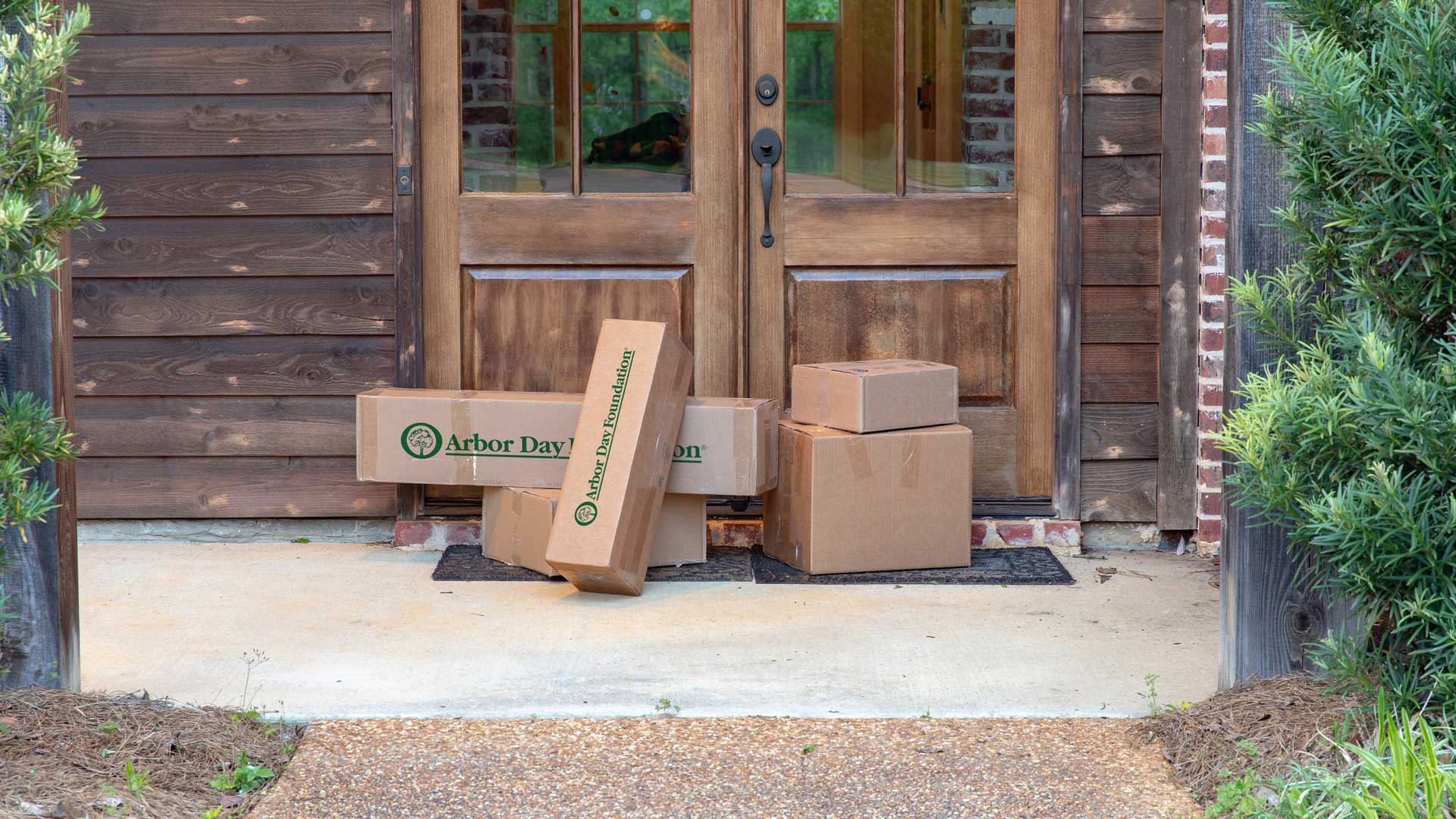
When you order trees from The Arbor Day Foundation, your order is guaranteed to arrive in a good, healthy condition or we'll replace them at no charge. Your trees will be shipped at a suitable time for planting.

Each tree is guaranteed to grow, or we'll replace it at one half the original price, plus shipping and handling.

The benefits of bare-root trees

Our trees are delivered with natural bare roots which have been dipped in hydrating gel prior to shipment to keep the roots moist and healthy. As their abundant, fibrous roots aren't confined by a container, bare-root trees get off to a more vigorous start compared to containerized roots which typically need more time to adjust to transplanting. Bare-root trees typically surpass the size of larger containerized trees in only a few years.

  Standard Dwarf
  Mature
Height
Space
Needed
Mature
Height
Space
Needed
Apple 20' - 25' 35' x 35'

10' **

10' x 10' ++
Peach 20' 20' x 20' 8' - 10' 10' x 10'
Sweet Cherry 30' 20' x 25' 12' - 15' 10' x 10'
Sour Cherry 20' 20' x 20' 8' 10' x 10'
Pear 20' 20' x 20' 12' - 15' 12' x 12'
Apricot 20' 20' x 20'    
Plum 20' 20' x 20' 8' - 10' 10' x 10'
      ** semi-dwarf 12' - 15'
++ semi-dwarf 12' x 12'

Natural Root and Containerized Trees

Natural root (also called bare root) trees are shipped without soil around their roots. They are shipped when dormant in the spring and fall seasons. We dip the roots in a hydrating gel to keep them moist during shipping.

There are a number of advantages to natural root trees:

  • They are very affordable.
  • Their roots re-establish themselves well once they are planted in their permanent location.
  • They are easy to plant at the correct depth.

The Urban Horticulture Institute at Cornell University has an interesting article about the benefits of planting natural root trees. Look for the PDF entitled Creating the Urban Forest: The Bare Root Method

Potted (also called containerized) trees come in 4" containers.


If you have questions, please call (888) 448-7337 or E-mail Member Services.