Shop
Giant Sequoia—Sequoiadendron giganteum

Giant Sequoia

Sequoiadendron giganteum

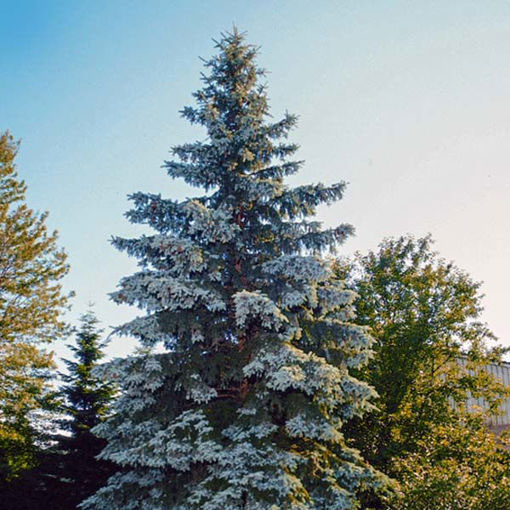
  • Majestic Columnar evergreen
  • Bluish green needles and reddish brown cones
  • Beautiful colors stand out in landscape
  • Grows in many different soils
  • Grows to 60' to 200' tall with 25' to 35' spread
  • Zones 6 to 8
  • Can't Ship To: AK, AZ, HI
Guaranteed Healthy Delivery
Item # 3665 | Tree Size: Standard | Shipping Height: 8"-10"
*Mem. Price:$4.98
Reg. Price:$8.00
Quantity:

Item # 4087 | Tree Size: Standard | Shipping Height: 8"-15"
Sorry, we cannot ship potted trees to California.
*Mem. Price:$7.98
Reg. Price:$12.00
Not in stock.

* Not a member? Join during checkout and get member pricing immediately.

Click icons for more information Show All Hide All

Zones 6 - 8
Zones 6 - 8

Hardiness Zones: Zones 6 - 8
The Giant Sequoia can be expected to grow in the zones shown in color in the arborday.org zone map.VIEW MAP

evergreen
evergreen

Type of tree:
The Giant Sequoia falls into the following type(s): Evergreens

60' - 200' High
60' - 200' High

Mature Height:
The Giant Sequoia grows to be 60' - 200' feet in height.

25' - 35' Spread
25' - 35' Spread

Mature Spread:
The Giant Sequoia has a spread of about 25' - 35' at full maturity.

Medium Growth
Medium Growth

Growth Rate:
This tree grows at a medium growth rate. [More about this.]

Full Sun
Full Sun

Sun:
This sequoia does well in full sun.

Various Soils
Various Soils

Soil:
The Giant Sequoia grows in acidic, drought tolerant, loamy, moist, sandy, well drained, clay soils.

Columnar Shape
Columnar Shape

Shape:
This sequoia has columnar, pyramidal shape.

More Info
More Info

Attributes:
Giant Sequoias are well-named, being arguably the largest trees in the world. They make excellent specimen trees and buffer strips. When planted 20 feet apart, they also serve as excellent windbreaks. They are a very long-lived tree, some cultivated examples being several hundred years old.

Wildlife Value:
Wildlife primarily use Giant Sequoias for shelter. Mature cones are collected and stored by Douglas squirrels (chickarees), and the sequoia seedlings are eaten by chipmunks, sparrows and finches.

History/Lore/Use:
From their earliest discovery, America's Redwoods have fired the imagination and the human sense of wonder as few other living things have done. The first sighting of them by Western voyagers was recorded in 1769 by a clergyman named Father Crespi, a member of a Spanish expedition, who wondered at the sight of these awesome "trees of a red color." The name Sequoia came from the Cherokee Chief Sequoyah, who was also famed for framing the alphabet of his Native American tongue. Not long after this discovery, redwoods were being harvested for their lumber, with the California Redwood providing the most useful wood. Its resistance to decay made it an ideal choice for caskets, cigar boxes, boats, and pipes. The gold rush of the 1850s also took a toll on the Redwoods and protective measures were not put into place until the 1930s. Unlike the Redwood, Sequoia wood is brittle and does not make good lumber.

Moisture:
Normal moisture requirements, with no flooding and only slight drought tolerance.

Leaves:
This tree has bluish green needles, spirally arranged on the terminal leader, approximately 1/4 inch long.

Flower Color:
Nondescript light brown.

Bloom Time:
April-May.

Fruit Description:
The fruit is oval to round; 1-1/2 to 3 inches long, dry and hard, nondescript.

This majestic columnar evergreen has bluish green needles that vary in length with 1 and 1/2" to 3" reddish-brown cones. Its rich reddish-brown trunk stands out in any landscape. Grows in many different soils, and requires full sun. Matures at 60' under cultivation in East, 90'-200' in the wild. 25'-35' spread. (Zones 6-8)

Arborday.org Hardiness Zone Map
Spring Shipping Fall Shipping
Color Zone Approximate
Ship Dates
Order
Deadline
Approximate
Ship Dates
Order
Deadline
  2 04/15–05/30 05/14 11/01–11/26 11/12
  3 04/15–05/30 05/14 11/01–11/26 11/12
  4 04/15–05/30 05/14 11/01–11/26 11/12
  5 04/15–05/30 05/14 11/01–11/26 11/12
  6 03/19–05/12 05/07 11/01–12/03 11/19
  7 03/11–05/07 04/30 11/05–12/10 11/26
  8 02/26–04/30 04/23 11/05–12/10 11/26
  9 02/26–04/30 04/23 11/05–12/10 11/26
  10 02/26–04/30 04/23 11/05–12/10 11/26
We're sorry, but this tree can't be shipped to AK, AZ, HI , territories, or countries outside the U.S. This is due to the agricultural laws within these locations.

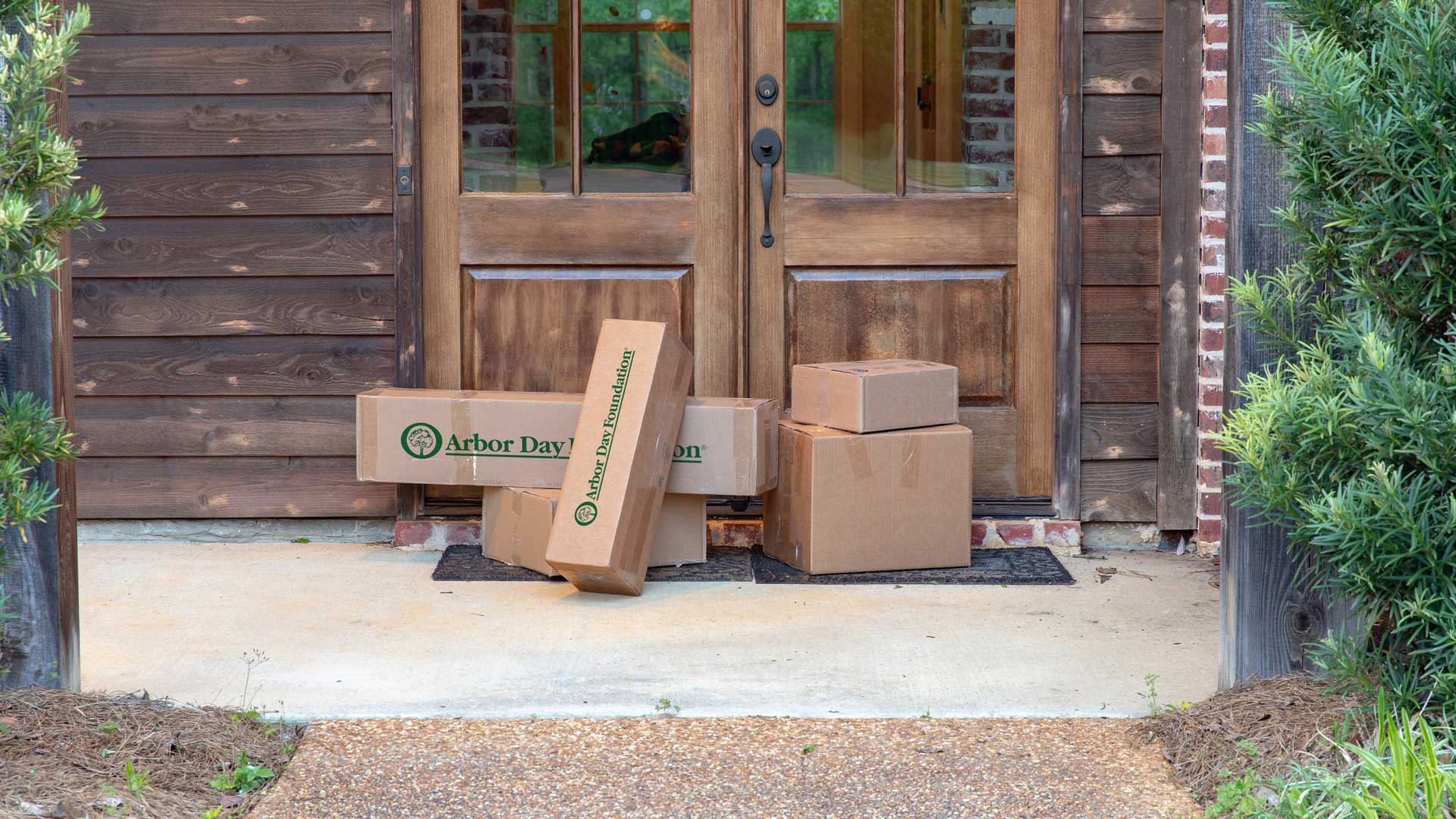
When you order trees from The Arbor Day Foundation, your order is guaranteed to arrive in a good, healthy condition or we'll replace them at no charge. Your trees will be shipped at a suitable time for planting.

Each tree is guaranteed to grow, or we'll replace it at one half the original price, plus shipping and handling.

The benefits of bare-root trees

Our trees are delivered with natural bare roots which have been dipped in hydrating gel prior to shipment to keep the roots moist and healthy. As their abundant, fibrous roots aren't confined by a container, bare-root trees get off to a more vigorous start compared to containerized roots which typically need more time to adjust to transplanting. Bare-root trees typically surpass the size of larger containerized trees in only a few years.

  Standard Dwarf
  Mature
Height
Space
Needed
Mature
Height
Space
Needed
Apple 20' - 25' 35' x 35'

10' **

10' x 10' ++
Peach 20' 20' x 20' 8' - 10' 10' x 10'
Sweet Cherry 30' 20' x 25' 12' - 15' 10' x 10'
Sour Cherry 20' 20' x 20' 8' 10' x 10'
Pear 20' 20' x 20' 12' - 15' 12' x 12'
Apricot 20' 20' x 20'    
Plum 20' 20' x 20' 8' - 10' 10' x 10'
      ** semi-dwarf 12' - 15'
++ semi-dwarf 12' x 12'

Natural Root and Containerized Trees

Natural root (also called bare root) trees are shipped without soil around their roots. They are shipped when dormant in the spring and fall seasons. We dip the roots in a hydrating gel to keep them moist during shipping.

There are a number of advantages to natural root trees:

  • They are very affordable.
  • Their roots re-establish themselves well once they are planted in their permanent location.
  • They are easy to plant at the correct depth.

The Urban Horticulture Institute at Cornell University has an interesting article about the benefits of planting natural root trees. Look for the PDF entitled Creating the Urban Forest: The Bare Root Method

Potted (also called containerized) trees come in 4" containers.


If you have questions, please call (888) 448-7337 or E-mail Member Services.