Loblolly Pine
Pinus taeda
- One of the fastest growing southern pines
- Used as a quick-screen in many landscapes
- Grows in a wide variety of soils and is drought tolerant
- Grows to 60' to 90' tall with 25' to 35' spread
- Zones 6 to 9
- Can't Ship To: AK, AZ, CA, HI, ID, MT, OR, UT

Zones 6 - 9
The Loblolly Pine can be expected to grow in the zones shown in color in the arborday.org zone map.VIEW MAP

evergreen
The Loblolly Pine falls into the following type(s): Evergreens

60' - 90' High
The Loblolly Pine grows to be 60' - 90' feet in height.

25' - 35' Spread
The Loblolly Pine has a spread of about 25' - 35' at full maturity.

Fast Growth
This tree grows at a fast growth rate. [More about this.]

Full Sun
This pine does well in full sun.

Various Soils
The Loblolly Pine grows in acidic, drought tolerant, loamy, moist, sandy, well drained, clay soils.

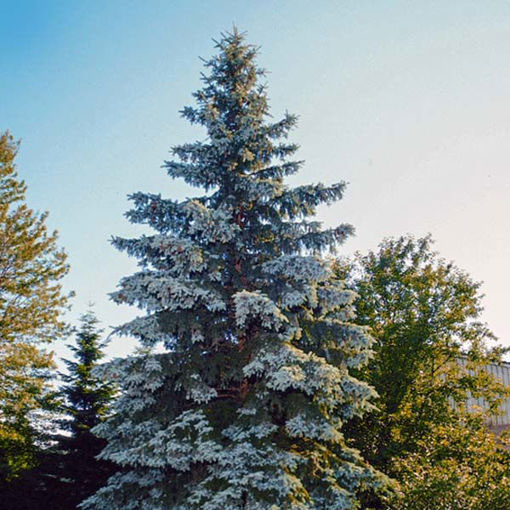
Oval Shape
This pine has oval shape.

More Info
Attributes:
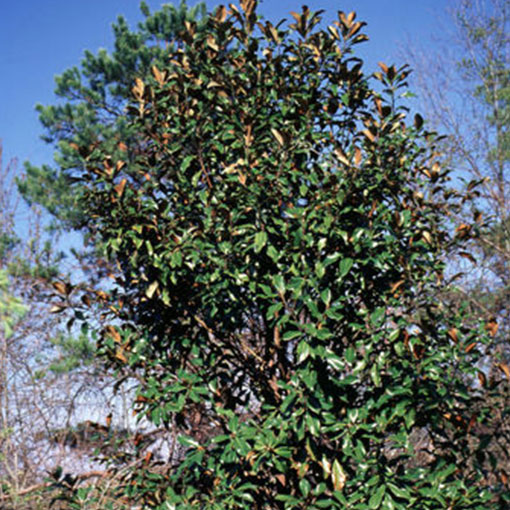
The Loblolly Pine tree is one of the fastest growing evergreen trees with a long life that makes an excellent wind screen. It loses its lower branches with age so it can also be used as a shade tree. The Loblolly Pine tree is very easy to transplant and adapts well to moist soil conditions such as those found near rivers and streams.
Wildlife Value:
Loblolly pines provide shelter and food for many southeastern animals, including birds such as Carolina chickadees, brown-headed nuthatches, rufous-sided towhees, northern bobwhites and wild turkeys. The seeds are also consumed by chipmunks, squirrels and other small rodents.
History/Lore/Use:
The Loblolly is native to the east coast of North America from New Jersey to Florida and Texas. As such, it has a long history with the pioneers and is known by several other names, among them Rosemary, Old Field, Bull, Indian and Longstraw. In the South, the name Loblolly means a depression, and as the tree was originally observed growing in river bottoms, that is where it acquired its principal name. It has a tendency to take over abandoned areas, thus the name Old-Field; it is extremely aromatic, which is where "Rosemary" came from; and it is blessed with extremely large trunks, suggesting the name "Bull." It was once an important lumber tree due to its abundance.
Moisture:
Normal moisture required; some flooding with moderate drought tolerance.
Leaves:
The leaves of this tree spiral; three needles, 6 to 9 inches long.
Flower Color:
Yellow; nondescript.
Bloom Time:
April-May.
Fruit Description:
The fruit is oval; 3 to 6 inches long; dry; brown; attracts mammals.
One of the fastest growing southern pines, this tree is used as a quick-screen in many landscapes. This North American native has dark green needles and narrow, red-brown, often-paired cones that are three to six inches long. Grows in a wide variety of soils and is drought tolerant. 60'-100' height with 25-35' spread. (Zones 6-9)
| Spring Shipping | Fall Shipping | ||||
|---|---|---|---|---|---|
| Color | Zone |
Approximate Ship Dates |
Order Deadline |
Approximate Ship Dates |
Order Deadline |
| 2 | 04/15–05/30 | 05/14 | 11/01–11/26 | 11/12 | |
| 3 | 04/15–05/30 | 05/14 | 11/01–11/26 | 11/12 | |
| 4 | 04/15–05/30 | 05/14 | 11/01–11/26 | 11/12 | |
| 5 | 04/15–05/30 | 05/14 | 11/01–11/26 | 11/12 | |
| 6 | 03/19–05/12 | 05/07 | 11/01–12/03 | 11/19 | |
| 7 | 03/11–05/07 | 04/30 | 11/05–12/10 | 11/26 | |
| 8 | 02/26–04/30 | 04/23 | 11/05–12/10 | 11/26 | |
| 9 | 02/26–04/30 | 04/23 | 11/05–12/10 | 11/26 | |
| 10 | 02/26–04/30 | 04/23 | 11/05–12/10 | 11/26 | |
When you order trees from The Arbor Day Foundation, your order is guaranteed to arrive in a good, healthy condition or we'll replace them at no charge. Your trees will be shipped at a suitable time for planting.
Each tree is guaranteed to grow, or we'll replace it at one half the original price, plus shipping and handling.
The benefits of bare-root trees
Our trees are delivered with natural bare roots which have been dipped in hydrating gel prior to shipment to keep the roots moist and healthy. As their abundant, fibrous roots aren't confined by a container, bare-root trees get off to a more vigorous start compared to containerized roots which typically need more time to adjust to transplanting. Bare-root trees typically surpass the size of larger containerized trees in only a few years.


Natural root (also called bare root) trees are shipped without soil around their roots. They are shipped when dormant in the spring and fall seasons. We dip the roots in a hydrating gel to keep them moist during shipping.
Potted (also called containerized) trees come in 4" containers.