Purpleleaf Sand Cherry
Prunus x cistena
- Fragrant White and Pink Flowers
- Attractive Reddish-Purple Leaves
- Purple-Black Wildlife Fruit
- Short Ornamental Tree Growing 7' to 10' High
- Zones 3 to 7
- Can't Ship To: AK, AZ, CA, HI, OR, WA

Zones 3 - 7
The Purpleleaf Sand Cherry can be expected to grow in the zones shown in color in the arborday.org zone map.VIEW MAP

flowering tree
The Purpleleaf Sand Cherry falls into the following type(s): Flowering Trees, Ornamental Trees

7' - 10' High
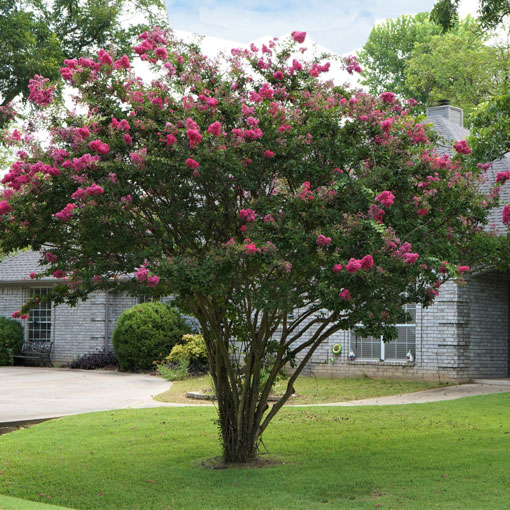
The Purpleleaf Sand Cherry grows to be 7' - 10' feet in height.

5' - 7' Spread
The Purpleleaf Sand Cherry has a spread of about 5' - 7' at full maturity.

Medium to Fast Growth
This tree grows at a medium to fast growth rate. [More about this.]

Multiple Exposures
This cherry does well in full sun, partial shade.

Various Soils
The Purpleleaf Sand Cherry grows in acidic, loamy, moist, sandy, well drained, wide range, clay soils.

Rounded Shape
This cherry has rounded shape.

More Info
Attributes:
This is a very hardy flowering landscape specimen with reddish-purple foliage all summer. It is an excellent contrast tree that can also be used as a deciduous hedge. It can be planted close to paved surfaces and near utility lines and is winter hardy.
Wildlife Value:
The Purpleleaf Sandcherry is an important source of food for many small birds and mammals including robins, cardinals, and coyotes. Birds nest in its branches.
History/Lore/Use:
A cross between Prunus pumila and Prunus cerasifera 'Atropurpurea' developed by Dr. N. E. Hanson of South Dakota State University in 1910. The parents of this hybrid are native to Western Asia and Caucasia (P. cerasifera) and the northeastern United States (P. pumila). Prunus is the Latin name for plum, and cistena comes from the Sioux word for baby. The fruit is used for making jams, jellies, and pie.
Moisture:
This tree requires moist, well drained soil and is not drought tolerant.
Leaves:
Simple, alternate,intense reddish-purple color all summer.
Flower Color:
Fragrant light pink to white flowers.
Bloom Time:
Late April to early May..
Fruit Description:
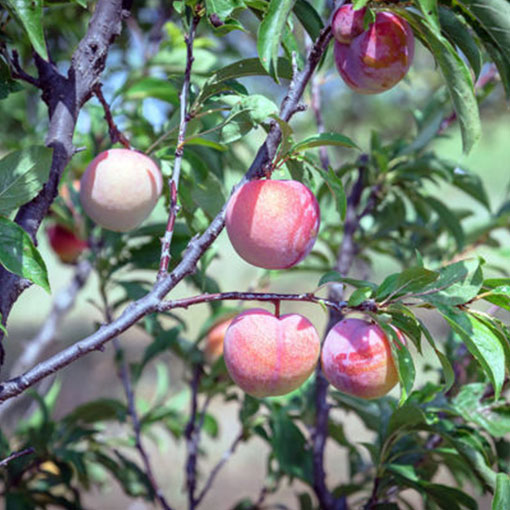
Small, sour, black-purple in color, and sparse in quantity.
Valued for its reddish-purple foliage, fragrant white and pink spring flowers. Tolerates many soils, requires full sun to light shade to maintain foliage color. The purple-black fruit is an important source of food for many small birds and mammals including robins, cardinals, and coyotes. Birds often nest in its branches. Grows 7' to 10' with smaller spread. (zones 3-7)
| Spring Shipping | Fall Shipping | ||||
|---|---|---|---|---|---|
| Color | Zone |
Approximate Ship Dates |
Order Deadline |
Approximate Ship Dates |
Order Deadline |
| 2 | 04/15–05/30 | 05/14 | 11/01–11/26 | 11/12 | |
| 3 | 04/15–05/30 | 05/14 | 11/01–11/26 | 11/12 | |
| 4 | 04/15–05/30 | 05/14 | 11/01–11/26 | 11/12 | |
| 5 | 04/15–05/30 | 05/14 | 11/01–11/26 | 11/12 | |
| 6 | 03/19–05/12 | 05/07 | 11/01–12/03 | 11/19 | |
| 7 | 03/11–05/07 | 04/30 | 11/05–12/10 | 11/26 | |
| 8 | 02/26–04/30 | 04/23 | 11/05–12/10 | 11/26 | |
| 9 | 02/26–04/30 | 04/23 | 11/05–12/10 | 11/26 | |
| 10 | 02/26–04/30 | 04/23 | 11/05–12/10 | 11/26 | |
When you order trees from The Arbor Day Foundation, your order is guaranteed to arrive in a good, healthy condition or we'll replace them at no charge. Your trees will be shipped at a suitable time for planting.
Each tree is guaranteed to grow, or we'll replace it at one half the original price, plus shipping and handling.
The benefits of bare-root trees
Our trees are delivered with natural bare roots which have been dipped in hydrating gel prior to shipment to keep the roots moist and healthy. As their abundant, fibrous roots aren't confined by a container, bare-root trees get off to a more vigorous start compared to containerized roots which typically need more time to adjust to transplanting. Bare-root trees typically surpass the size of larger containerized trees in only a few years.


Natural root (also called bare root) trees are shipped without soil around their roots. They are shipped when dormant in the spring and fall seasons. We dip the roots in a hydrating gel to keep them moist during shipping.
Potted (also called containerized) trees come in 4" containers.