Black Walnut
Juglans nigra
- Prized For its Nuts
- Produces Attractive Hardwood
- Fragrant Leaves
- Grows 50' to 75' tall with a 50'to 75' spread
- May Self-Pollinate, Plant Two Trees to Ensure Pollination
- Zones 4 to 9
- Can't Ship To AR, AK, AZ, CA, HI, IA, IL, IN, KS, MI, MN, MO, NC, NE, OK, PA, TN, TX, VA, WI

Zones 4 - 9
The Black Walnut can be expected to grow in the zones shown in color in the arborday.org zone map.VIEW MAP

nut tree
The Black Walnut falls into the following type(s): Nut Trees

50' - 75' High
The Black Walnut grows to be 50' - 75' feet in height.

50' - 75' Spread
The Black Walnut has a spread of about 50' - 75' at full maturity.

Medium Growth
This tree grows at a medium growth rate. [More about this.]

Full Sun
This walnut does well in full sun.

Various Soils
The Black Walnut grows in acidic, alkaline, loamy, moist, rich, sandy, well drained, wet, wide range, clay soils.

Rounded Shape
This walnut has rounded shape.

More Info
Attributes:
The practical and the aethetic combine in black walnut to make this species one of the most treasured trees in American history. The valuable dark brown wood is strong with a handsome grain that polishes easily and gleams
forever. The rich flavored nuts are enjoyed fresh and retain their flavor and texture during cooking. Black walnuts have nearly twice the protein of English
walnuts.
Wildlife Value:
The nuts are eaten by woodpeckers, foxes, and squirrels.
History/Lore/Use:
This native tree has been called our best friend in times of war and peace. Native Americans and early settlers used it for food, dyes, ink, medicine, fence posts, gun stocks, and furniture. Today black walnut wood is highly prized for paneling and furniture and the nuts for food.
Leaves:
Pinnately compound, alternate, 12"-24" leaves each consisting of 15-23, 2"-5" dark green leaflets. The leaflets are finely toothed.
Flower Color:
Greenish
Bloom Time:
Spring.
Fruit Description:
The fruit consists of three layers: the round 1 1/2"-2" green fleshy husk borne singly or in clusters of 2-3, a black, hard, thick
corrugated, 1-1 1/2" shell, a kernel with a rich, oily flavor. Walnut trees produce nuts in 12-15 years. They are harvested in early autumn.
Prized for its nuts and attractive hardwood. Fragrant leaves. Likes deep, rich, well-drained soil; grows more slowly in drier soils. Grows to 50' to 75', 60' spread. (May self-pollinate, plant two trees to ensure pollination) (zones 4-9)
| Spring Shipping | Fall Shipping | ||||
|---|---|---|---|---|---|
| Color | Zone |
Approximate Ship Dates |
Order Deadline |
Approximate Ship Dates |
Order Deadline |
| 2 | 04/15–05/30 | 05/14 | 11/01–11/26 | 11/12 | |
| 3 | 04/15–05/30 | 05/14 | 11/01–11/26 | 11/12 | |
| 4 | 04/15–05/30 | 05/14 | 11/01–11/26 | 11/12 | |
| 5 | 04/15–05/30 | 05/14 | 11/01–11/26 | 11/12 | |
| 6 | 03/19–05/12 | 05/07 | 11/01–12/03 | 11/19 | |
| 7 | 03/11–05/07 | 04/30 | 11/05–12/10 | 11/26 | |
| 8 | 02/26–04/30 | 04/23 | 11/05–12/10 | 11/26 | |
| 9 | 02/26–04/30 | 04/23 | 11/05–12/10 | 11/26 | |
| 10 | 02/26–04/30 | 04/23 | 11/05–12/10 | 11/26 | |
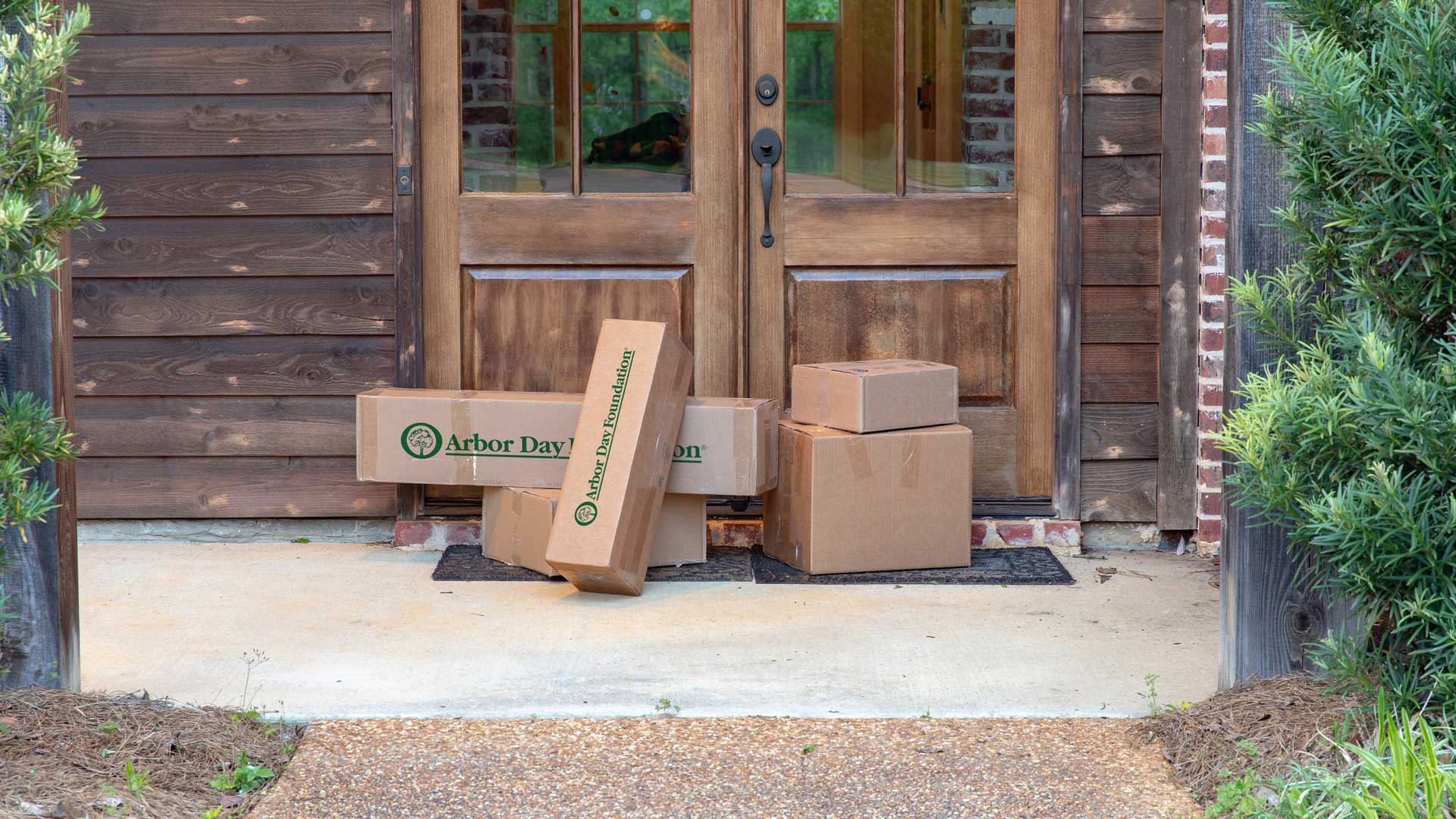
When you order trees from The Arbor Day Foundation, your order is guaranteed to arrive in a good, healthy condition or we'll replace them at no charge. Your trees will be shipped at a suitable time for planting.
Each tree is guaranteed to grow, or we'll replace it at one half the original price, plus shipping and handling.
The benefits of bare-root trees
Our trees are delivered with natural bare roots which have been dipped in hydrating gel prior to shipment to keep the roots moist and healthy. As their abundant, fibrous roots aren't confined by a container, bare-root trees get off to a more vigorous start compared to containerized roots which typically need more time to adjust to transplanting. Bare-root trees typically surpass the size of larger containerized trees in only a few years.


Natural root (also called bare root) trees are shipped without soil around their roots. They are shipped when dormant in the spring and fall seasons. We dip the roots in a hydrating gel to keep them moist during shipping.
Potted (also called containerized) trees come in 4" containers.