Early Richmond Cherry
Prunus cerasus
- Self-pollinating sour cherry (fruit for pies and preserves)
- Heavily-producing tree
- Produces fruit in 3 to 5 years
- Hardier in cold climates, resistant to drought, tolerant of humid or rainy conditions
- Zones 4 to 8
- Can't ship to: AK, AZ, CA, HI, OR, WA, CO
* Not a member? Join during checkout and get member pricing immediately.

Zones 4 - 8
The Early Richmond Cherry can be expected to grow in the zones shown in color in the arborday.org zone map.VIEW MAP

fruit tree
The Early Richmond Cherry falls into the following type(s): Fruit Trees

15' - 18' High
The Early Richmond Cherry grows to be 15' - 18' feet in height.

10' - 20' Spread
The Early Richmond Cherry has a spread of about 10' - 20' at full maturity.

Medium Growth
This tree grows at a medium growth rate. [More about this.]

Full Sun
This cherry does well in full sun.

Various Soils
This tree prefers well drained, sandy, loam soil.

Rounded Shape
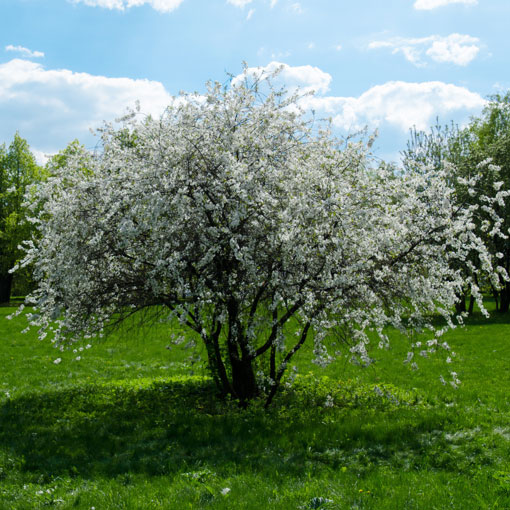
This cherry has rounded shape.

More Info
Attributes:
Early Richmond is a hardy, heavily producing tree with that ripens a week earlier than other pie cherries. The flavorful, tart, juicy cherries are used for pies and preserves.
Wildlife Value:
The fruit is eaten by many varieties of birds and mammals. The foliage is browsed.
Flocks of birds are the greatest threat to the trees. They will eat the cherries at the first sign of ripeness. Nylon or cheesecloth netting draped over the trees as the fruits begin to ripen is an effective deterrent. This technique can be very practical if the trees are kept to a reasonable height by pruning.
History/Lore/Use:
The origin is unknown, but it was planted in England in the early 1500s. It was brought to the United States with the English settlers. The term tart or pie cherry is preferred over sour since this connotes bad flavor.
Height Variations:
The standard grows to 18', and dwarf grows to 8' in height.
Spread Variations:
Standard spread grows to 30' and dwarf grows to a 12'-15' soread.
Moisture:
This tree requires moist, well drained soil and has some resistance to drought.. .
Leaves:
Simple, alternate, elliptic with acute tips, double teeth on margins, smooth and dark green on top, about 3" long. smaller than sweet cherries
Flower Color:
White
Bloom Time:
Late.
Fruit Description:
Bright red medium sized juicy fruit with a thin, light red skin. A generally smooth pit encloses a single seed.
Early Richmond is a hardy, heavily-producing tree with that ripens a week earlier than other pie cherries. This self-pollinating tree produces flavorful, tart, juicy cherries are used for pies and preserves. Will produce fruit in 3 to 5 years and is hardier in cold climates, resistant to drought, and more tolerant of humid rainy conditions than sweet like Bing and Black Tatarian. In spring the compact tree has white clusters of flowers. A standard cherry tree will produce fruit in 3–5 years (Self-pollinating) (zones 4–8) Fruit Tree Tips for Early Richmond Cherry Fruit Tree Spacing Guide Produces Fruit in 3 to 5 years Hardier in cold climates, resistant to drought, and more tolerant of humid rainy conditions than sweet like Bing and Black Tatarian
| Spring Shipping | Fall Shipping | ||||
|---|---|---|---|---|---|
| Color | Zone |
Approximate Ship Dates |
Order Deadline |
Approximate Ship Dates |
Order Deadline |
| 2 | 04/15–05/30 | 05/14 | 11/01–11/26 | 11/12 | |
| 3 | 04/15–05/30 | 05/14 | 11/01–11/26 | 11/12 | |
| 4 | 04/15–05/30 | 05/14 | 11/01–11/26 | 11/12 | |
| 5 | 04/15–05/30 | 05/14 | 11/01–11/26 | 11/12 | |
| 6 | 03/19–05/12 | 05/07 | 11/01–12/03 | 11/19 | |
| 7 | 03/11–05/07 | 04/30 | 11/05–12/10 | 11/26 | |
| 8 | 02/26–04/30 | 04/23 | 11/05–12/10 | 11/26 | |
| 9 | 02/26–04/30 | 04/23 | 11/05–12/10 | 11/26 | |
| 10 | 02/26–04/30 | 04/23 | 11/05–12/10 | 11/26 | |
When you order trees from The Arbor Day Foundation, your order is guaranteed to arrive in a good, healthy condition or we'll replace them at no charge. Your trees will be shipped at a suitable time for planting.
Each tree is guaranteed to grow, or we'll replace it at one half the original price, plus shipping and handling.
The benefits of bare-root trees
Our trees are delivered with natural bare roots which have been dipped in hydrating gel prior to shipment to keep the roots moist and healthy. As their abundant, fibrous roots aren't confined by a container, bare-root trees get off to a more vigorous start compared to containerized roots which typically need more time to adjust to transplanting. Bare-root trees typically surpass the size of larger containerized trees in only a few years.


Natural root (also called bare root) trees are shipped without soil around their roots. They are shipped when dormant in the spring and fall seasons. We dip the roots in a hydrating gel to keep them moist during shipping.
Potted (also called containerized) trees come in 4" containers.