Shop

Japanese Flowering Cherry

Prunus x yedoensis

  • Also known as Yoshino Cherry
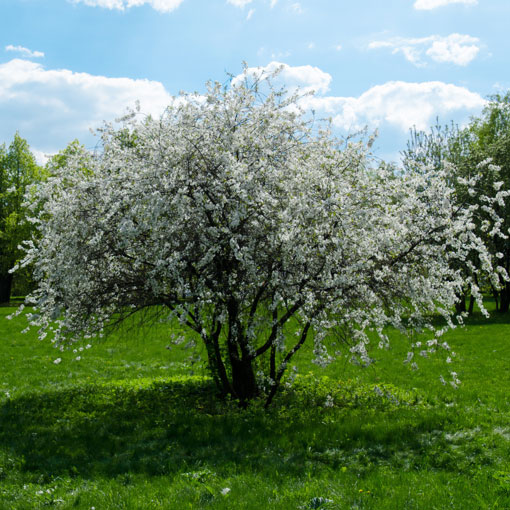
  • Fragrant, white-pink flowers
  • Oriental branching pattern
  • Famous for Macon Cherry Blossom Festival and National Cherry Tree Festival in D.C.
  • Deer Resistant: Seldom Severely Damaged
  • Grows 40' to 50' high
  • Zones 5 to 8
  • Can't Ship to: AK, AZ, CA, CO, HI, OR, WA
Guaranteed Healthy Delivery
Item # 1100 | Tree Size: Standard | Shipping Height: 2' - 3'
*Mem. Price:$8.98
Reg. Price:$13.50
Quantity:

Item # 4360 | Tree Size: Standard | Shipping Height: 3' - 4'
Sorry, we cannot ship potted trees to California.
*Mem. Price:$11.98
Reg. Price:$18.00
Not in stock.

* Not a member? Join during checkout and get member pricing immediately.

Click icons for more information Show All Hide All

Zones 5 - 8
Zones 5 - 8

Hardiness Zones: Zones 5 - 8
The Japanese Flowering (Yoshino) Cherry can be expected to grow in the zones shown in color in the arborday.org zone map.VIEW MAP

flowering tree
flowering tree

Type of tree:
The Japanese Flowering (Yoshino) Cherry falls into the following type(s): Flowering Trees, Ornamental Trees

40' - 50' High
40' - 50' High

Mature Height:
The Japanese Flowering (Yoshino) Cherry grows to be 40' - 50' feet in height.

25' - 40' Spread
25' - 40' Spread

Mature Spread:
The Japanese Flowering (Yoshino) Cherry has a spread of about 25' - 40' at full maturity.

Medium Growth
Medium Growth

Growth Rate:
This tree grows at a medium growth rate. [More about this.]

Multiple Exposures
Multiple Exposures

Sun:
This cherry does well in full sun, partial shade.

Various Soils
Various Soils

Soil:
The Japanese Flowering (Yoshino) Cherry grows in acidic, loamy, moist, sandy, well drained, clay soils.

Rounded Shape
Rounded Shape

Shape:
This cherry has rounded shape.

More Info
More Info

Attributes:
This tree, along with other cousins of the same species, is the very symbol of spring beauty. One of the most widely planted ornamental cherry trees, it is ideal for planting close to sidewalks or as a patio shade tree.

Wildlife Value:
The Japanese Flowering Cherry is an important source of food for many small birds and mammals including robins, cardinals, and waxwings.

History/Lore/Use:
A native of Japan, the Yoshino Cherry tree was introduced to America in 1902. In Japan there is a believable legend that each spring a fairy maiden hovers low in the warm sky, wakening the sleeping Cherry trees to life with her delicate breath. This tree, along with its cousin the "Kwanzan" Cherry tree, is responsible for the spectacular pink color show each spring in Washington, D.C.

Moisture:
This tree requires moist, well drained soil and is some what drought tolerant.

Leaves:
The leaves alternate pattern, simple shape, often reddish as they emerge. Turning dark green by summer. Size ranges from 2-1/2 inches to 5 inches long and up to 2-1/2 inches wide.

Flower Color:
Blossoms usually emerge before the leaves, providing a stunning show of pink, slightly fragrant flowers approximately 3/4 inch in diameter.

Bloom Time:
March - April.

Fruit Description:
The fruit is round in shape, 1/2 to 1 inch in diameter. It is attractive to birds and as a result leaves insignificant litter.

One of the original varities in the Tidal Basin in Washington DC. This is also the tree that made the Macon Cherry Blossom Festival famous. This large flowering tree is known for its fragrant and vibrant display of white-pink blossoms in the springtime. In summer this tree will be a highlight of your yard with its oriental branching pattern, glossy bark, and dark-green leaves. The Japanese Flowering Cherry likes full sun, well-drained soil and grows to 40' to 50'. (zones 5-8)

Arborday.org Hardiness Zone Map
Spring Shipping Fall Shipping
Color Zone Approximate
Ship Dates
Order
Deadline
Approximate
Ship Dates
Order
Deadline
  2 04/15–05/30 05/14 11/01–11/26 11/12
  3 04/15–05/30 05/14 11/01–11/26 11/12
  4 04/15–05/30 05/14 11/01–11/26 11/12
  5 04/15–05/30 05/14 11/01–11/26 11/12
  6 03/19–05/12 05/07 11/01–12/03 11/19
  7 03/11–05/07 04/30 11/05–12/10 11/26
  8 02/26–04/30 04/23 11/05–12/10 11/26
  9 02/26–04/30 04/23 11/05–12/10 11/26
  10 02/26–04/30 04/23 11/05–12/10 11/26
We're sorry, but this tree can't be shipped to AK, AZ, CA, CO, HI, OR, WA , territories, or countries outside the U.S. This is due to the agricultural laws within these locations.

When you order trees from The Arbor Day Foundation, your order is guaranteed to arrive in a good, healthy condition or we'll replace them at no charge. Your trees will be shipped at a suitable time for planting.

Each tree is guaranteed to grow, or we'll replace it at one half the original price, plus shipping and handling.

The benefits of bare-root trees

Our trees are delivered with natural bare roots which have been dipped in hydrating gel prior to shipment to keep the roots moist and healthy. As their abundant, fibrous roots aren't confined by a container, bare-root trees get off to a more vigorous start compared to containerized roots which typically need more time to adjust to transplanting. Bare-root trees typically surpass the size of larger containerized trees in only a few years.

  Standard Dwarf
  Mature
Height
Space
Needed
Mature
Height
Space
Needed
Apple 20' - 25' 35' x 35'

10' **

10' x 10' ++
Peach 20' 20' x 20' 8' - 10' 10' x 10'
Sweet Cherry 30' 20' x 25' 12' - 15' 10' x 10'
Sour Cherry 20' 20' x 20' 8' 10' x 10'
Pear 20' 20' x 20' 12' - 15' 12' x 12'
Apricot 20' 20' x 20'    
Plum 20' 20' x 20' 8' - 10' 10' x 10'
      ** semi-dwarf 12' - 15'
++ semi-dwarf 12' x 12'

Natural Root and Containerized Trees

Natural root (also called bare root) trees are shipped without soil around their roots. They are shipped when dormant in the spring and fall seasons. We dip the roots in a hydrating gel to keep them moist during shipping.

There are a number of advantages to natural root trees:

  • They are very affordable.
  • Their roots re-establish themselves well once they are planted in their permanent location.
  • They are easy to plant at the correct depth.

The Urban Horticulture Institute at Cornell University has an interesting article about the benefits of planting natural root trees. Look for the PDF entitled Creating the Urban Forest: The Bare Root Method

Potted (also called containerized) trees come in 4" containers.


If you have questions, please call (888) 448-7337 or E-mail Member Services.