Ponderosa Pine
Pinus ponderosa var. ponderosa
- Moderate to rapid growth
- Needles range from dark gray-green to olive
- Grows to 60' to 100' with 25' to 30' spread
- Zones 3 to 7
- Can't Ship To: AK, AZ, CA, HI, ID, MT, OR, UT

Zones 3 - 7
The Ponderosa (Pacific) Pine can be expected to grow in the zones shown in color in the arborday.org zone map.VIEW MAP

evergreen
The Ponderosa (Pacific) Pine falls into the following type(s): Evergreens

60' - 100' High
The Ponderosa (Pacific) Pine grows to be 60' - 100' feet in height.

25' - 30' Spread
The Ponderosa (Pacific) Pine has a spread of about 25' - 30' at full maturity.

Medium Growth
This tree grows at a medium growth rate. [More about this.]

Full Sun
This pine does well in full sun.

Various Soils
The ponderosa pine adapts to a variety of soil conditions at high and low elevations including deep, moist, well-drained, loamy sand, clay loam, rocky, dry, alkaline, and salt.

Irregular Shape
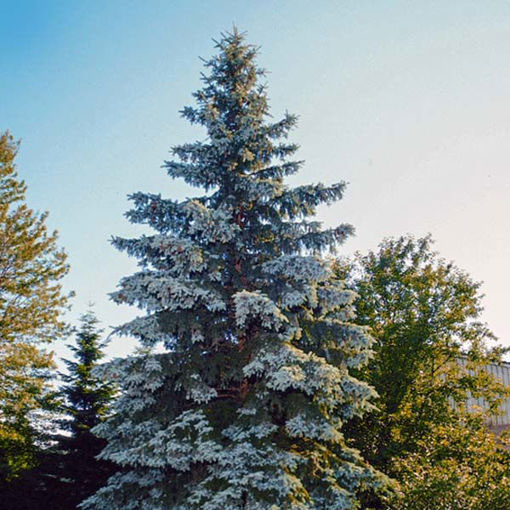
This pine has irregular, narrow, cylindrical shape.

More Info
Attributes:
The Ponderosa pine is popular as a specimen or ornamental tree for its moderate to fast growth, green foliage, interesting bark texture and cinnamon-colored bark, pleasant aroma, large ornamental cones, and its size. It can be used for windbreak, buffer strip, highway, reclamation, lumber, and in the landscape as a mass planting. The mature thick bark helps to make it fire resistant, and its deep taproot very wind resistant. It is long lived to hundreds of years old.
Wildlife Value:
The seeds provide food for birds and small mammals particularly turkeys, nuthatches, crossbills, grosbeaks, pine siskins, grouse, squirrels, chipmunks, and mice. The leaves, twigs, and bark are browsed by porcupines, mule deer, and elk. Snags provide a large number of wildlife species with nesting and roosting sites.
History/Lore/Use:
Ponderosa pine has two recognized varieties: Ponderosa pine var. ponderosa, Pacific ponderosa pine; Ponderosa pine var. scopulorum, Rocky Mountain ponderosa pine. Each variety has two or three races. It is one of the the most widely distributed pines in western North America. It occupies diverse habitats throughout the west from southern British Columbia to Mexico, and Nebraska and Oklahoma to the Pacific coast.
The Scottish botanist David Douglas named this pine for its ponderous or heavy wood. Ponderosa pine forests are valuable for timber production, livestock grazing, recreation, and wildlife habitat. Other common names are western yellow pine, western longleaf pine, bull, ponderosa white, and black jack pine for the black, furrowed bark on the trunks of small trees (blackjacks.)
Native Americans used the inner bark for emergency flour and boiled the young cones for emergency food. In the spring the bark was scraped and eaten raw as a sweet treat. Inner bark gum was used for medicine. The needles were steeped to make a tea.
Moisture:
The ponderosa pine prefers moist, well drained soil, but will grow in dry, arid areas and is highly drought when tolerant well established. It is intolerant of excessively wet sites or sites with poor drainage.
Leaves:
The needles are sharp, stiff but flexible, 5"-10" long, densely crowded on the branchlets in bundles of three (sometimes two), dark-gray green or yellowish green. They persist on the tree for three years and then turn brown and are shed.
Flower Color:
Male flower is yellow, female is red purple in pairs
Bloom Time:
Spring.
Fruit Description:
Cones are solitary or in groups of 3-5, 3"-6" long, light reddish brown, matte or glossy. May be produced as early as seven years with irregular good crops depending upon the variety.
North American native pine. Dark gray-green, olive or yellow green needles. Moderate to rapid growth. Plant in moist, well-drained soil, full sun. In the landscape grows 60'-100' with a 25'-30' spread, in the wild 150'-230'. (zones 3-7)
| Spring Shipping | Fall Shipping | ||||
|---|---|---|---|---|---|
| Color | Zone |
Approximate Ship Dates |
Order Deadline |
Approximate Ship Dates |
Order Deadline |
| 2 | 04/15–05/30 | 05/14 | 11/01–11/26 | 11/12 | |
| 3 | 04/15–05/30 | 05/14 | 11/01–11/26 | 11/12 | |
| 4 | 04/15–05/30 | 05/14 | 11/01–11/26 | 11/12 | |
| 5 | 04/15–05/30 | 05/14 | 11/01–11/26 | 11/12 | |
| 6 | 03/19–05/12 | 05/07 | 11/01–12/03 | 11/19 | |
| 7 | 03/11–05/07 | 04/30 | 11/05–12/10 | 11/26 | |
| 8 | 02/26–04/30 | 04/23 | 11/05–12/10 | 11/26 | |
| 9 | 02/26–04/30 | 04/23 | 11/05–12/10 | 11/26 | |
| 10 | 02/26–04/30 | 04/23 | 11/05–12/10 | 11/26 | |
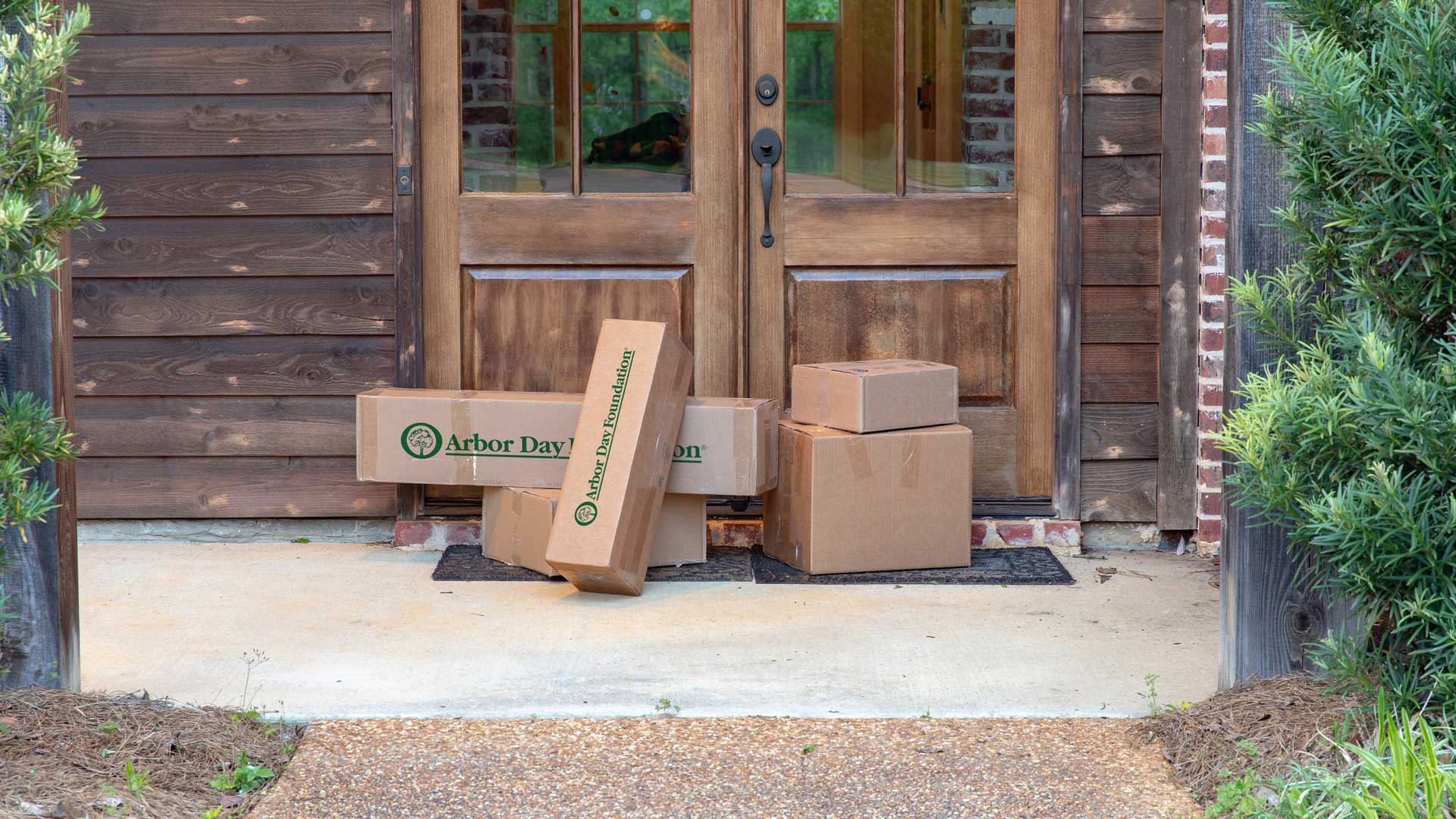
When you order trees from The Arbor Day Foundation, your order is guaranteed to arrive in a good, healthy condition or we'll replace them at no charge. Your trees will be shipped at a suitable time for planting.
Each tree is guaranteed to grow, or we'll replace it at one half the original price, plus shipping and handling.
The benefits of bare-root trees
Our trees are delivered with natural bare roots which have been dipped in hydrating gel prior to shipment to keep the roots moist and healthy. As their abundant, fibrous roots aren't confined by a container, bare-root trees get off to a more vigorous start compared to containerized roots which typically need more time to adjust to transplanting. Bare-root trees typically surpass the size of larger containerized trees in only a few years.


Natural root (also called bare root) trees are shipped without soil around their roots. They are shipped when dormant in the spring and fall seasons. We dip the roots in a hydrating gel to keep them moist during shipping.
Potted (also called containerized) trees come in 4" containers.